 Miguel Ángel
091137e3c3
* chore(producer): shim __filename/__dirname in the CJS banner

Bundled CJS deps like wawoff2 call __dirname; without the shim they throw
"__dirname is not defined in ES module" at render time. Also ignore .zed/.

* chore(producer): use a template literal for the CJS banner (review nit)

* feat(core): add GSAP keyframe + motion-path source mutations

Array-form keyframe removal in both the recast and acorn writers, plus
update/add/remove-motion-path-point and add-motion-path. Exclude _auto and
data from tween property-group classification.

* fix(core): address #1554 review — data-exclusion test, split-fix doc, motion-path sentinel, parity blocks

- Regression test for the `data` GSAP-key exclusion (parallel to _auto).
- splitAnimationsInScript: documented that .fromTo()/.to() correctly stay out of the
  from-branch (only .from() reverts) and the <= boundary; added mid-flight straddle tests.
- addMotionPathToScript failure path returns id: null (was empty-string sentinel); caller updated.
- Parity blocks for addKeyframeToScript array-form + updateKeyframeInScript (mirroring
  removeKeyframeFromScript). Surfaced a latent acorn array-form partial-props merge bug —
  documented as it.skip with a ready assertion (acorn cutover follow-up).

* feat(core): route motion-path mutations through studio-api + fix clip stamping

Wire the new mutations into the file save route. Only authored clips suppress
descendant stamping, so auto-stamped animated scenes can inline-expand.

Hide in-flow timed clips with `display:none` only when they are LEAF clips (no
nested timed clips). `display:none` on a container removes its whole subtree,
hiding descendants that are still inside their own visibility window — e.g. an
in-flow composition root whose effective window clamps to the timeline end would
black out a child video that should still show (the hdr-hlg regression).
Containers keep `visibility:hidden`, which a visible descendant can override; only
leaves leave the flow, which is all the split-overlap case needs.

* feat(core): strip legacy path-offset/rotation + drop obsolete studio lint rule

A position or rotation add/set mutation makes the GSAP timeline the single source of
truth for that channel, so any lingering --hf-studio-offset / --hf-studio-rotation CSS
var must be cleared to avoid double-applying. stripStudioEditsFromTarget now clears both
channels, and the add-strip fires for the position AND rotation property groups.

Also removes the obsolete `gsap_studio_edit_blocked` lint rule: it warned that Studio
cannot save drag/resize edits to elements in a registered timeline — the exact premise
the single-source work inverts (the timeline is now the edit target). Removed the rule,
its now-unused TIMELINE_REGISTRY_ASSIGN_PATTERN import, and its 5 tests.

* fix(core): address #1555 review — complete hold-sync, invalidate clip cache, strip rotation channel

- HOLD_SYNC_MUTATION_TYPES: add add-motion-path (load-bearing — addMotionPathToScript
  authors past t=0 → first-frame snap-to-(0,0) without the hold), update-meta,
  shift-positions, scale-positions, split-animations. (add stays out: flat tweens
  only, syncPositionHoldsBeforeKeyframes is a no-op for non-keyframed tweens.)
- init.ts: timedClip in-flow/leaf WeakMaps now invalidate on clipTreeSignature change;
  visible/hidden branches both go through isTimedClipInFlow (was .get() by accident).
- keyframesWriteRotation mirrors keyframesWritePosition so a rotation-only keyframe set
  strips the stale --hf-studio-rotation channel.

* feat(studio): GSAP runtime read layer + shared helpers

* fix(studio): address #1607 review — cold-parse vs fetch-error budgets, isZeroDurationSet, array-ease tests

- useGsapAnimationFetchFallback: discriminate resolved/fetch-error/cold; only the cold
  (warm-but-zero) race gets the full ~600ms retry budget — a hard fetch error retries once.
- Extract isZeroDurationSet (was !(duration>0) duplicated); rejects NaN, documents intent.
- parsePercentageKeyframes: cite GSAP even-index spread; tests that a per-entry/interior
  ease is stripped without shifting the other keyframes' percentages.

* feat(studio): GSAP drag/commit/bridge editing infra

* fix(studio): address #1608 review — facade awaits commit, strict stale-parse guard, clearProps restore

BLOCKER: useSafeGsapCommitMutation now RETURNS the (.catch-chained) commit promise and the
commitMutation facade awaits it — so await session.commitMutation(...) resolves AFTER the
server save, fixing both consumers (useEnableKeyframes + useGestureCommit's
showToast/requestSeek/idle, which were firing before the save landed). SafeGsapCommitMutation
return type widened void→Promise<void> (fire-and-forget consumers ignore it).
- stale-parse guard uses hasNonHoldTweenForElement (a leftover hold set no longer counts as live).
- commitFlatViaKeyframes snapshots dragged gsap values before clearProps + restores after seek,
  so a failed commit leaves the dropped pose, not a cleared element.

* feat(studio): motion-path geometry + commit helpers

* docs(studio): address #1609 review — document occlusion fade-in invariant, donut limit, nearestPointOnPath t-semantics

* feat(studio): on-canvas motion-path overlay

* fix(studio): address #1610 review — scope dblclick to pan-surface, kind-aware geometry guard, gate createMode, screen-space drag threshold

* feat(studio): keyframes flag, gesture recording + timeline/selection refinements

* fix(studio): address #1611 review — fetch-first keyframe path, gated hydration, dev-gated debug + gesture warn, per-group gesture tweens

- useEnableKeyframes: parse current source first (null-vs-[] distinction) so a delete-all's
  empty parse isn't overridden by a stale selectedGsapAnimations cache.
- useStudioUrlState: freeze the hydration effect's time dep once hydrated (was re-running every tick).
- useGestureRecording: dev-gated console.warn when the live-preview runtime throws (was silent).
- playerStore: gate window.__playerStore behind dev (guarded import.meta.env.DEV).
- useGestureCommit: partition recorded keyframes by property group → one add-with-keyframes per
  group, so a mixed gesture no longer yields an untagged legacy tween.

* feat(studio): single-source manual offset + rotation via the GSAP timeline

Dragging or rotating an element writes into the GSAP timeline (the single source of
truth) instead of a parallel --hf-studio-offset / --hf-studio-rotation CSS var: static
elements commit a tl.set (idempotent on re-edit), tweened elements edit keyframes, and
the live preview moves via gsap.set so what you see equals what is written and renders.
Removes the dual-channel CSS-var/transform reconciliation behind the
fling / disappear / runaway / double-stack / wrong-start bug class — for BOTH position
and rotation (gesture base read from the gsap transform, gsap.set live preview, tl.set/
keyframe commit, dropped the handleDom*Commit CSS fallbacks).

Subcompositions edit the same single-source way, which surfaced and fixes:
- resolve a subcomp element's source file via the composition-id map (the runtime drops
  the source linkage when inlining the subcomposition);
- a selected element's selection box AND motion path use basic visibility, not the
  occlusion heuristic (a backgroundless opacity-1 scene above it is not an opaque cover);
- soft reload rebuilds ONLY the committed composition's timeline, leaving other
  compositions' timelines intact (no cross-composition revert);
- read keyframes from the element's OWN composition timeline (scan all timelines, not
  the first unstable key);
- delete-all uses a soft reload too, so editing no longer hard-reloads the iframe.

* fix(studio): address #1567 review — drop drag-intercept flag, harden softReload onerror, tighten runtime ladder, per-group gestures

- DROP STUDIO_GSAP_DRAG_INTERCEPT_ENABLED: single-source GSAP intercept is the only
  position/rotation channel; the false branch silently killed drag+rotate (and let GSAP
  elements into the keyframe-corrupting CSS path). Removed flag + dead branch + env def + tests.
- gsapSoftReload: plugin onerror no longer fakes success — signals onAsyncFailure so the caller
  full-reloads; honors __hfMotionPathPluginLoading so a concurrent reload can't queue a dup script.
- gsapDragCommit: resolveDragRuntime narrows the as-any ladder; a mid-seek throw logs + drops
  partial reads (no phantom identity) and re-applies the drag override in finally.
- MotionPathOverlay: park-timer cleanup keyed on animId change.
- useGestureCommit: partitionKeyframesByGroup wraps the add-with-keyframes sites (per #1611 review).

* feat(studio): patchRuntimeTweenInPlace — update a tween's values in place

Defensive runtime helper: locate the element's tween in window.__timelines via the
shared resolveRuntimeTween scan, update its set/keyframe vars, invalidate, and re-seek
the playhead — without re-running the whole composition. Returns false (caller falls
back to soft reload) for any shape it can't safely patch (no tween, dynamic/computed
keyframes, motionPath arc, channel mismatch, or any error). Foundation for instant,
flicker-free manual edits.

* fix(studio): address #1612 review — channel-aware set resolution + decline dynamic-expression patches

- resolveRuntimeTween gains an optional channels[] hint; for kind:set it prefers the set whose
  vars carry one of the patched channels and never returns a disjoint-only set (e.g. won't write
  {x,y} into a co-located {rotation} set). patchRuntimeTweenInPlace derives channels from the props.
- patchSet declines (returns false → soft reload) when overwriting a string/dynamic vars[ch],
  instead of silently dropping the computed expression.

* feat(studio): instantPatch fast path in runCommit

A commit carrying an instantPatch option tries patchRuntimeTweenInPlace first; on
success the preview updates in place with NO reload (instant), on false it falls back
to the existing soft reload. Extracts the preview-sync tail into a testable
applyPreviewSync helper. No behavior change when instantPatch is absent.

* feat(studio): route static position/rotation set drags through instantPatch

Static-element position and rotation set commits now attach instantPatch{selector,
change:{kind:set}} so the drag updates in place with no reload. Structural ops (new
tween add, delete-all, convert/split/materialize) and keyframe edits deliberately omit
it and keep the soft reload — keyframe instant-patch needs object-form keyframe support
in patchRuntimeTweenInPlace (deferred).

* fix(studio): address #1613 review — derive instantPatch from the mutation, patch both coalesced commits, wire onAsyncFailure

- commitStaticGsapPosition/Rotation derive instantPatch.change.props from the actual
  update-property mutation(s) sent (one source of truth → findUnsafeMutationValues-validated
  values flow into the patch; can't drift).
- Coalesced x/y: the intermediate x commit also carries instantPatch{x}, the y commit {x,y},
  so a second-POST failure still leaves the preview patched for what persisted.
- applyPreviewSync passes reloadPreview as onAsyncFailure (plugin-CDN load error → full reload);
  per U4 the synchronous false still does NOT escalate.
- (channel disambiguation from #1612 verified end-to-end: {x,y}→position set, {rotation}→rotation set.)

* feat(studio): no full iframe remount for soft-reloadable edits

A softReload edit (and the SDK single-script refresh) no longer escalates to a full
reloadPreview() iframe remount when applySoftReload returns false — the live gsap.set
already shows the value, and a remount is the worst flash + re-inlines subcomps
(reverting their keyframes). verifyTimelinesPopulated now checks the expected target
keys the re-run registers, so a correct scoped re-run doesn't spuriously report empty.
Full reload stays only for the structural (no-softReload) and ambiguous-script paths.

* feat(studio): pre-load MotionPathPlugin so motion-path edits don't async-flash

ensureMotionPathPluginLoaded() runs once at the preview iframe-load seam (NLELayout
onIframeLoad), eagerly loading + registering MotionPathPlugin without killing the
timeline. So when a user adds a motion path to a composition that didn't originally
use one, the soft reload runs synchronously instead of taking the kill-then-await-CDN
async path (the flash). Idempotent + defensive; the existing async fallback stays for
genuine cold-start/CDN-failure.

* fix(studio): don't re-save + reload when source editor syncs externally

The SourceEditor's CodeMirror update listener fired onChange on ANY docChanged —
including the programmatic dispatch that syncs external content (e.g. a manual-edit
commit writing the source back into the open editor). That made the editor re-save the
file and bump refreshKey, fully reloading the preview iframe on every drag/keyframe
edit — defeating the in-place instant patch and causing the flash. Annotate the
programmatic sync (ExternalSync) and skip onChange for it, so only real keystrokes save.

* fix(core): inject MotionPathPlugin into preview when a composition uses motionPath

A studio-created motion path writes a gsap motionPath tween into the single-source
timeline, but the preview HTML only loaded gsap core — so the first render threw
"Invalid property motionPath ... Missing plugin?". Detect motionPath usage and inject
MotionPathPlugin right after the composition's gsap script, version-matched to it.

* fix(studio): dedup __hfMotionPathPluginLoading type decl (restack artifact)

* fix(studio): address #1605 review — distinguish soft-reload failure modes + observability, SourceEditor focus guard

BLOCKER: applySoftReload now returns SoftReloadResult ('applied' | 'verify-failed' |
'cannot-soft-reload') instead of a bare bool. applyPreviewSync + sdkRefresh escalate to a full
reloadPreview() on the PERMANENT 'cannot-soft-reload' (no gsap/rebind hook/scopable key/script,
or sync re-run threw) — fixing the silent-stale-preview U4 dropped — but still suppress the
TRANSIENT 'verify-failed' (live gsap.set is correct). Telemetry: gsap_soft_reload_outcome
(origin/result/escalated) + gsap_instant_patch_fallback, so the U4 invariant is enforced, not asserted.
- SourceEditor: skip the programmatic external-sync replace while the editor is focused, so an
  in-flight commit doesn't clobber the user's uncommitted keystrokes (ExternalSync kept for unfocused).
- Verified ensureMotionPathPluginLoaded already guards __hfMotionPathPluginLoading (no double-append).

* fix(core): align __clipTree and __clipManifest ids via stableClipId

Timeline inline expansion was dead for nested children inside index.html:
the tree keyed id-less elements by a synthetic __clip-N while the manifest
keyed them null, so parent<->child never joined. Both now resolve identity
through stableClipId (id || data-hf-id), which every generated element has.

* fix(core): strip baked runtime + tag comp root in preview assembly

Comps that ship a baked inline runtime were double-loaded (preview injects
its own) and the baked copy failed to parse inline (Unexpected token '<').
Strip it in buildSubCompositionHtml + the disk-fallback preview path. Also
tag the comp root with data-composition-file so the studio resolves a comp's
top-level elements to the right source file instead of defaulting to
index.html (which made the GSAP panel parse the wrong, multi-timeline file).

* feat(studio): set motion-path destination from a toolbar toggle

Replaces the double-click-on-canvas UX (which painted text over the preview)
with a 'Set motion destination' toggle next to Snap/Grid, shown only when the
selected element can take a path. While armed, one canvas press places the
destination. Also removes the dead TimelinePropertyRows component.

* fix(studio): center timeline keyframe diamonds on their percentage

Dropped clampDiamondLeft, which forced boundary keyframes fully inside the
clip so a 0% diamond sat half a diamond right of the 0% point. Each diamond's
midpoint now sits exactly on its % (the clip is overflow-visible).

* fix(studio): resize static elements via tl.set, not a single-stop keyframes tween

Resizing an element with no size animation wrote keyframes:{ <playhead%>:
{width,height} } — one mid-point stop GSAP can't interpolate, so it rendered
NaN/0 dimensions at every other frame and the element vanished (worst off 0%).
Added commitStaticGsapSize (mirrors commitStaticGsapPosition): a static resize
now writes tl.set({width,height}), held at all frames; re-resizing updates it
in place.

* fix(studio): negative-cache failed media probes

Only successful probes were cached, so CORS/404 cross-origin media was
re-probed every rAF-driven timeline re-derive, flooding the console. Remember
failed URLs and skip them.

* fix(studio): type window.setTimeout handle as number

ReturnType<typeof window.setTimeout> infers NodeJS.Timeout when @types/node is
present and clashes with the DOM number the call returns. Type it number.

* fix(studio): drag/resize disappearance, stale-ID duplicates, soft-reload clearProps

- Fix soft-reload clearProps destroying element inline styles — save cssText,
  clear, restore, strip only transform
- Fix resize no-op on re-resize: delete+add instead of two update-property
- Route set tweens through static resize path (convertToKeyframes skips sets)
- Re-fetch animation ID before drag commit to prevent stale-ID duplicates
- Guard editDebugLog for Node test environments
- Fix NLELayout setState-during-render (move reset to useEffect)
- Stop SnapToolbar pointer events propagating to canvas deselect handler
- Enable click-to-add waypoints on cubic motion paths
- Add whole-path drag offset (Alt+drag shifts all keyframes together)
- Add Canvas shortcuts section to ShortcutsPanel
- Extract useMotionPathData + commitGsapPositionFromDrag (filesize compliance)
- Delete dead code (getElementDepth, isElementVisibleInPreview, unused exports)


Write HTML. Render video. Built for agents.
Quickstart | Showcase | Playground | Catalog | Docs | Discord

HyperFrames is an open-source framework for turning HTML, CSS, media, and seekable animations into deterministic MP4 videos. Use it locally with the CLI, from AI coding agents with skills, or as the rendering core behind hosted authoring workflows.
Quick Start
With an AI coding agent
Install the HyperFrames skills, then describe the video you want:
npx skills add heygen-com/hyperframes
Try a prompt like:
Using
/hyperframes, create a 10-second product intro with a fade-in title, a background video, and subtle background music.
The skills teach agents the HyperFrames production loop: plan the video, write valid HTML, wire seekable animations, add media, lint, preview, and render. They work with Claude Code, Cursor, Gemini CLI, Codex, and other coding agents that support skills.
For visual design handoff workflows, see the Claude Design guide and Open Design guide.
Manually with the CLI
npx hyperframes init my-video
cd my-video
npx hyperframes preview      # preview in browser with live reload
npx hyperframes render       # render to MP4
Requirements: Node.js 22+, FFmpeg
What You Can Build
Need ideas? Browse the Showcase for finished videos you can watch, read, run, and remix.
- Product launch videos and feature announcements
- PR walkthroughs with animated code diffs, narration, and captions
- Data visualizations, chart races, and map animations
- Social videos with kinetic captions, overlays, and music
- Docs-to-video, PDF-to-video, and website-to-video explainers
- Reusable motion graphics for automated content pipelines
Frame.md
frame.md — your design system, ready for video.
Every brand has a design.md. None of them were written for a camera. frame.md is the missing translation layer: it takes your web-context design spec and inverts it for the frame — the same tokens, the same rules, but rewritten so an AI agent can compose a promo video without guessing at scale or reaching for web chrome.
The output is a DESIGN.md superset your whole toolchain can read. Atoms stay sacred. Composition stays free. Numbers come from the script.

Biennale Yellow |

BlockFrame |
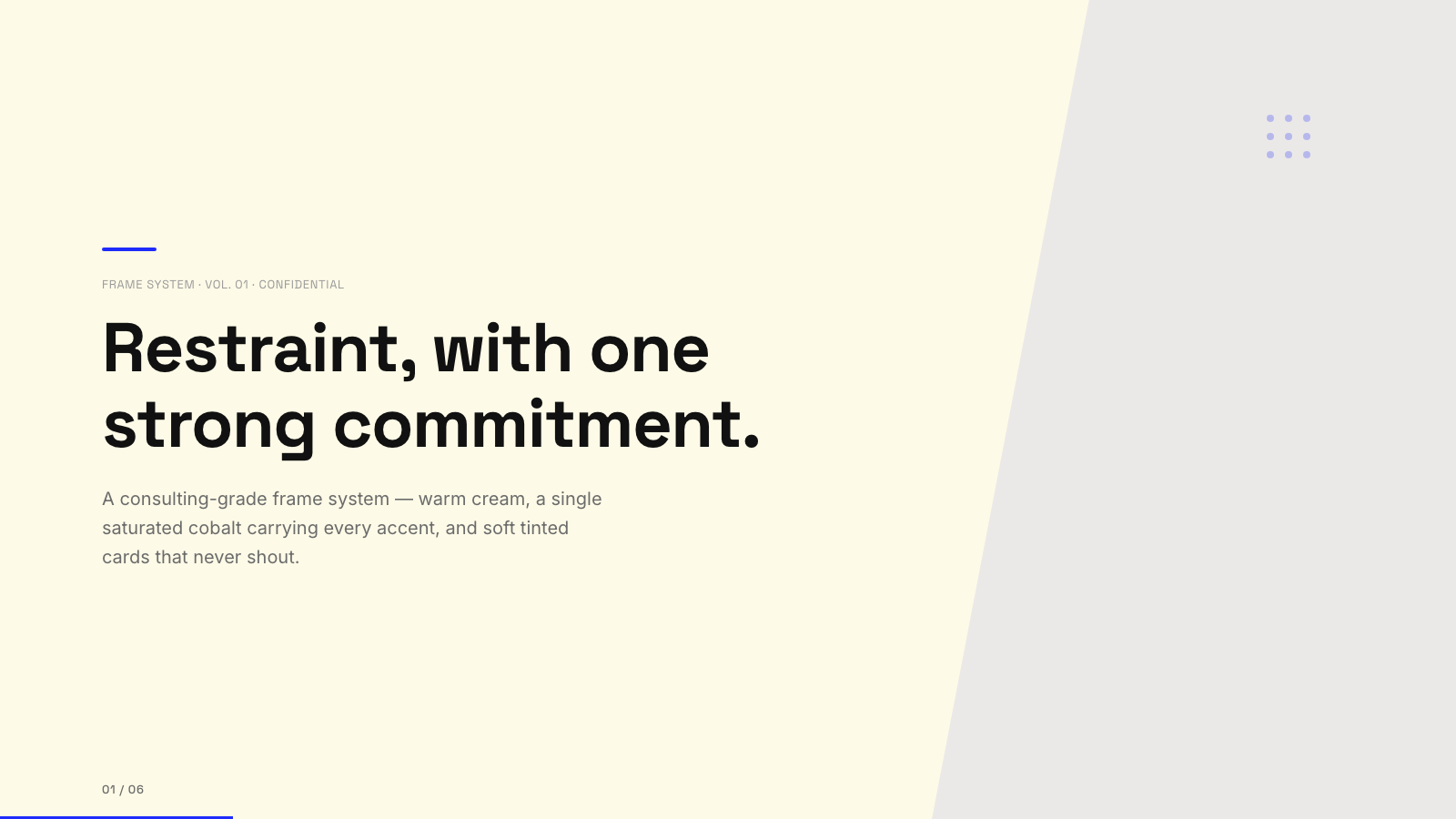
Blue Professional |

Bold Poster |
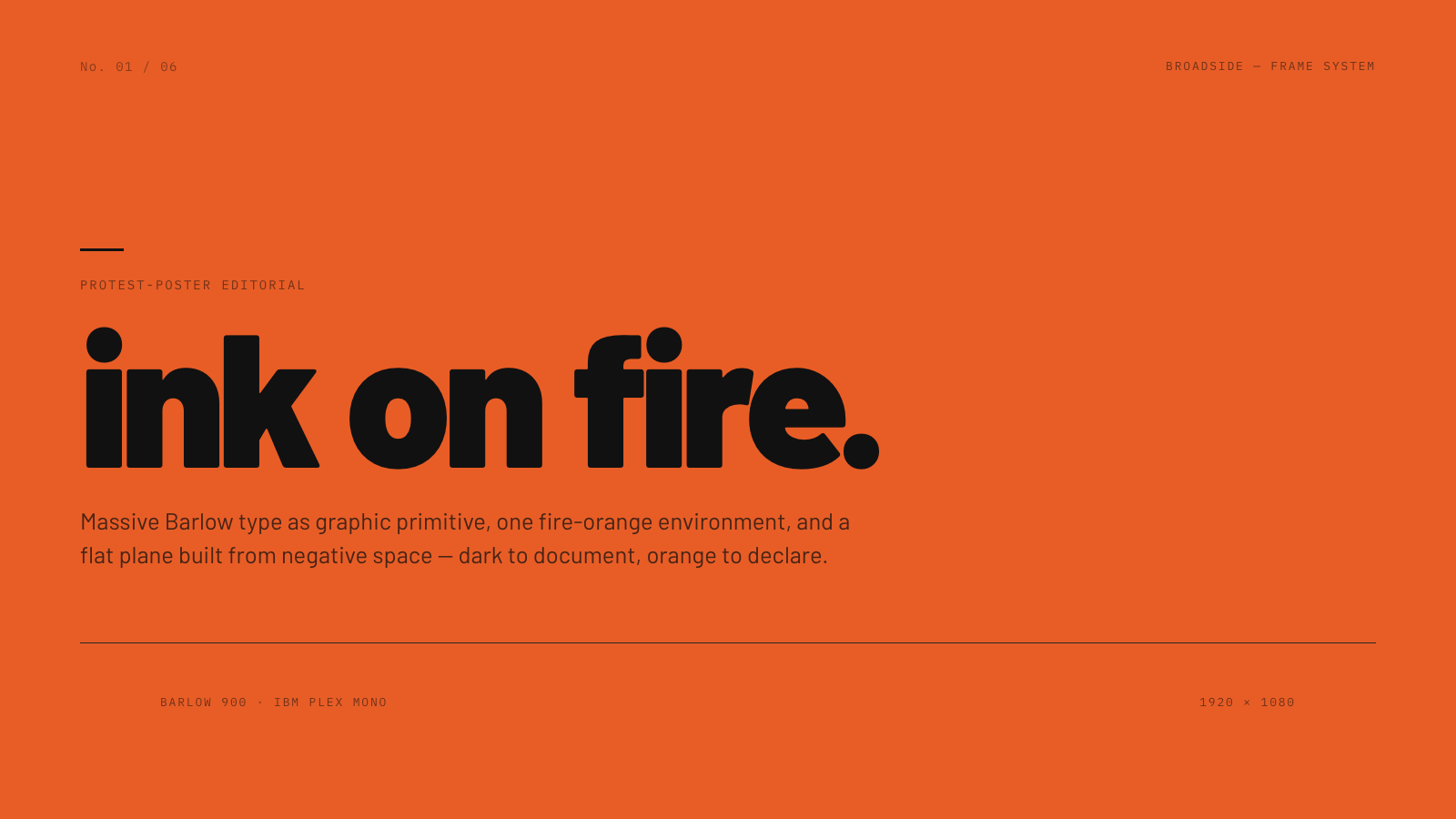
Broadside |
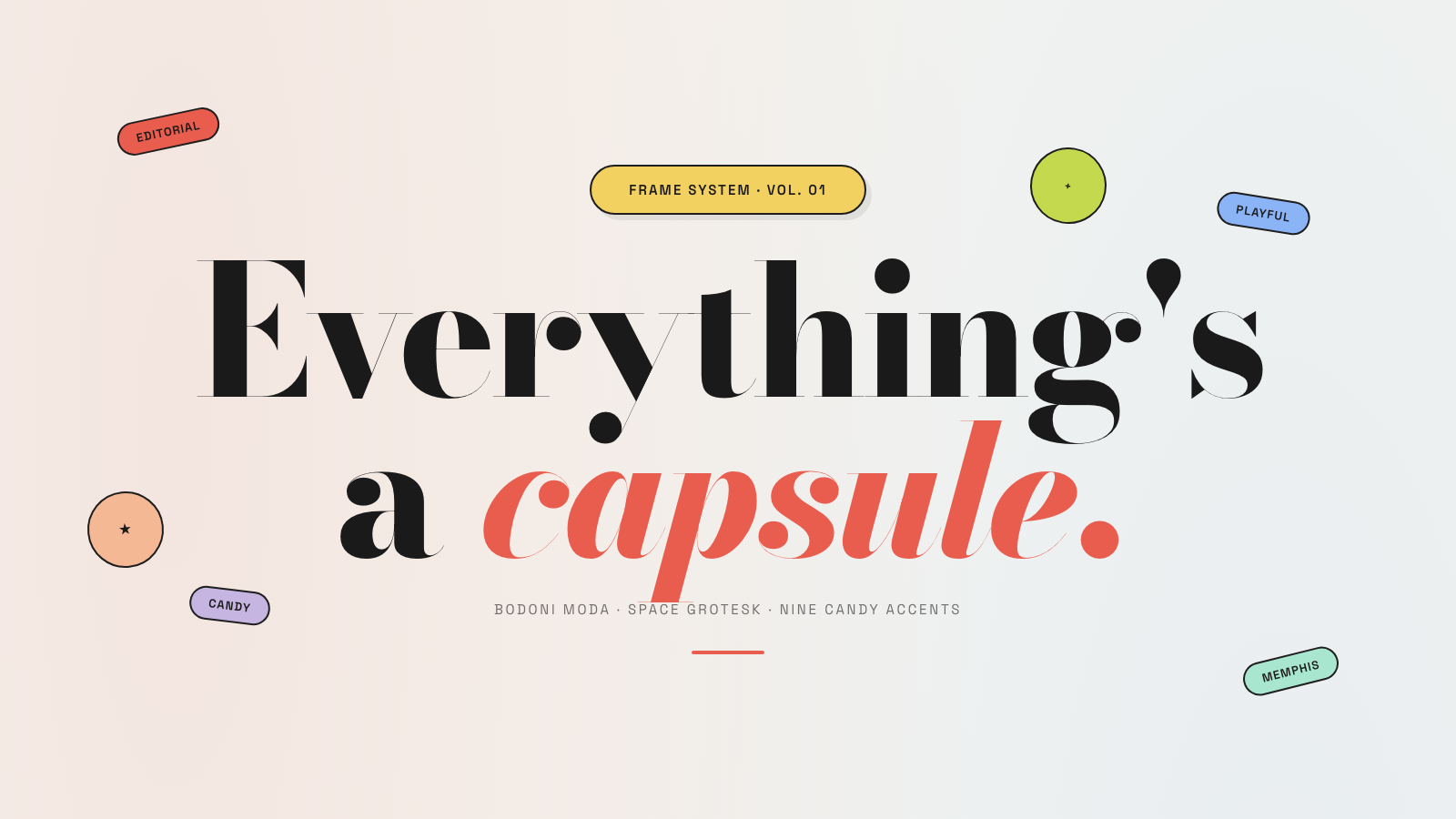
Capsule |
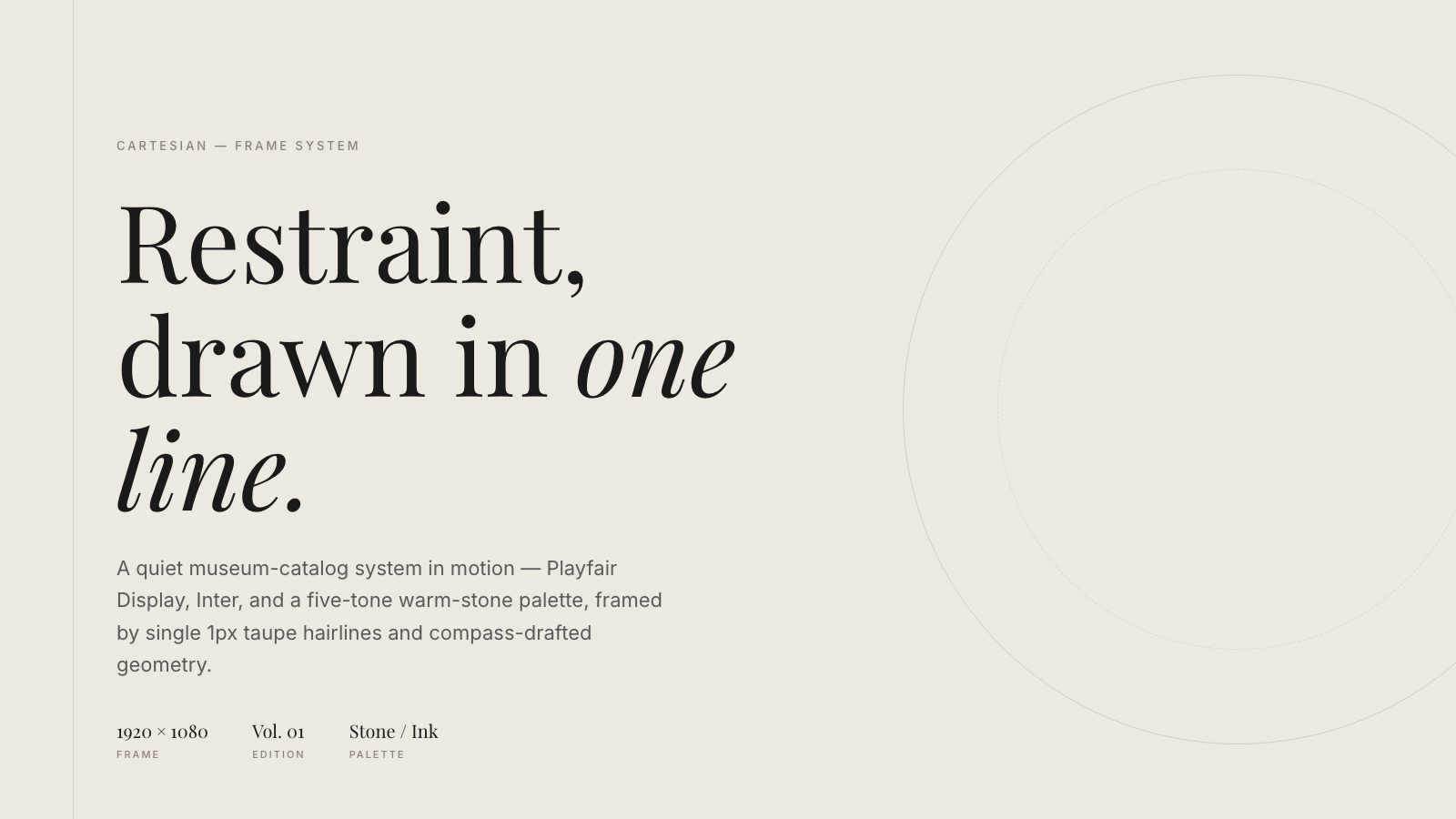
Cartesian |
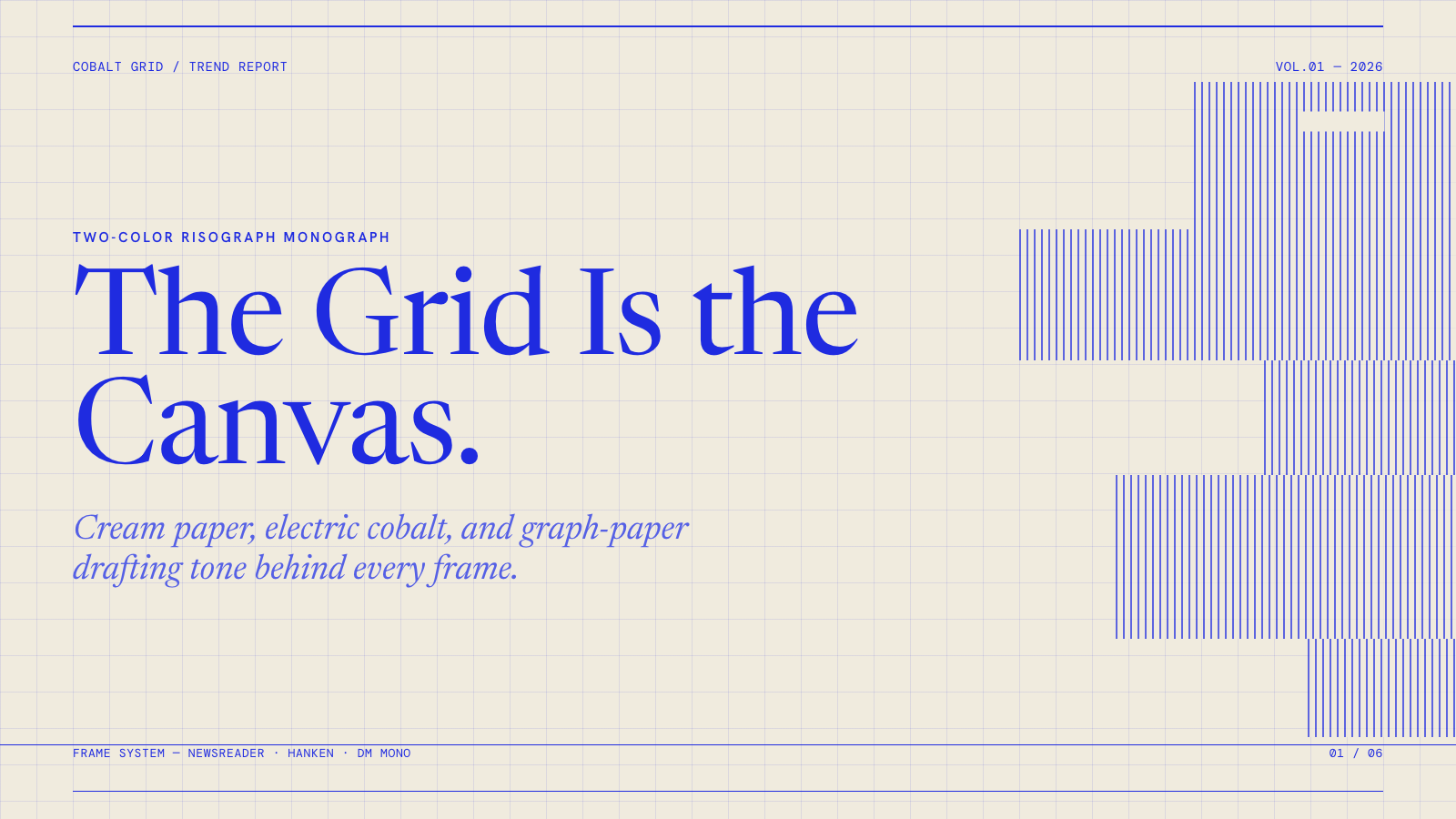
Cobalt Grid |

Coral |

Creative Mode |
Browse and remix them all at hyperframes.dev/design.
How It Works
Define a video as HTML. Add data attributes for timing and tracks. Use GSAP, CSS, Lottie, Three.js, Anime.js, WAAPI, or your own frame adapter for seekable animation.
<div id="stage" data-composition-id="launch" data-start="0" data-width="1920" data-height="1080">
  <video
    class="clip"
    data-start="0"
    data-duration="6"
    data-track-index="0"
    src="intro.mp4"
    muted
    playsinline
  ></video>

  <h1 id="title" class="clip" data-start="1" data-duration="4" data-track-index="1">Launch day</h1>

  <audio
    data-start="0"
    data-duration="6"
    data-track-index="2"
    data-volume="0.5"
    src="music.wav"
  ></audio>

  <script src="https://cdn.jsdelivr.net/npm/gsap@3/dist/gsap.min.js"></script>
  <script>
    const tl = gsap.timeline({ paused: true });
    tl.from("#title", { opacity: 0, y: 40, duration: 0.8 }, 1);
    window.__timelines = window.__timelines || {};
    window.__timelines.launch = tl;
  </script>
</div>
Preview instantly in the browser. Render locally or in Docker. The renderer seeks each frame in headless Chrome and encodes the result with FFmpeg, so the same input produces the same video.
HyperFrames Stack
HyperFrames is the open-source rendering engine, plus a growing set of tools around HTML-native video creation.
| Piece | Status | What it does |
|---|---|---|
| CLI | Available | Scaffold, preview, lint, inspect, and render local video projects |
| Core / Engine / Producer | Available | Parse compositions, drive headless Chrome, encode video, and mix audio |
| Catalog | Available | Reusable blocks and components for transitions, overlays, captions, charts, maps, and effects |
| Agent skills | Available | Teach coding agents the video-production patterns that generic web docs miss |
| Studio | Available, evolving | Browser surface for previewing and editing compositions |
| AWS Lambda rendering | Available | Deploy a distributed render stack and drive renders from your laptop or CI |
| hyperframes.dev | Available | Community playground for previewing, iterating, sharing, and rendering HTML-native video projects |
| frame.md | Available | Invert your design system for the camera — a DESIGN.md superset an agent can compose video from |
Catalog
Install ready-to-use blocks and components:
npx hyperframes add flash-through-white   # shader transition
npx hyperframes add instagram-follow      # social overlay
npx hyperframes add data-chart            # animated chart
Browse the catalog at hyperframes.heygen.com/catalog.
Why HyperFrames?
- HTML-native: compositions are HTML files with data attributes. No React requirement, no proprietary timeline format.
- Agent-friendly: agents already write HTML, and the CLI is non-interactive by default.
- Deterministic: same input, same frames, same output. Built for CI, regression tests, and automated rendering.
- No build step: an
index.htmlcomposition plays as-is and can be previewed directly in the browser. - Adapter-based animation: bring GSAP, CSS animations, Lottie, Three.js, Anime.js, WAAPI, or a custom runtime.
- Open source: Apache 2.0 license, with no per-render fees or commercial-use thresholds.
HyperFrames vs Remotion
HyperFrames is inspired by Remotion. Both tools render video with headless Chrome and FFmpeg. The main difference is the authoring model: Remotion's bet is React components; HyperFrames' bet is plain HTML that humans and agents can both write easily.
| HyperFrames | Remotion | |
|---|---|---|
| Authoring | HTML + CSS + seekable animation | React components |
| Build step | None; index.html plays as-is |
Bundler required |
| Agent handoff | Plain HTML files | JSX / React project |
| Library-clock animations | Seekable, frame-accurate via adapters | Wall-clock animation patterns need care |
| Distributed rendering | Local and AWS Lambda render paths | Remotion Lambda, mature cloud renderer |
| License | Apache 2.0 | Source-available Remotion License |
Read the full comparison in the HyperFrames vs Remotion guide.
Documentation
Full documentation: hyperframes.heygen.com/introduction
Packages
| Package | Description |
|---|---|
hyperframes |
CLI for creating, previewing, linting, and rendering compositions |
@hyperframes/core |
Types, parsers, generators, linter, runtime, and frame adapters |
@hyperframes/engine |
Seekable page-to-video capture engine using Puppeteer and FFmpeg |
@hyperframes/producer |
Full rendering pipeline for capture, encode, and audio mix |
@hyperframes/studio |
Browser-based composition editor UI |
@hyperframes/player |
Embeddable <hyperframes-player> web component |
@hyperframes/shader-transitions |
WebGL shader transitions for compositions |
@hyperframes/aws-lambda |
AWS Lambda SDK and deployment surface for distributed renders |
Community
HyperFrames is used in production at HeyGen, with community examples from teams like tldraw, TanStack, and others in ADOPTERS.md. Open a PR if your team is using HyperFrames.
- Questions and ideas: Discord
- Bugs and feature requests: GitHub Issues
- Security reports: SECURITY.md
- Contributions: CONTRIBUTING.md
Development Note
The repo uses Git LFS for golden regression-test baselines under packages/producer/tests/**/output.mp4 (about 240 MB of .mp4 files). If you're cloning the full repo for development, install Git LFS first:
# macOS
brew install git-lfs

# Ubuntu / Debian
sudo apt install git-lfs

# Windows
winget install GitHub.GitLFS

# Then, once per machine
git lfs install
If you only need source files, you can skip LFS content:
GIT_LFS_SKIP_SMUDGE=1 git clone https://github.com/heygen-com/hyperframes.git