 WaterrrForeverandClaude Opus 5.5
2daedcdafc
* fix(cli,skills): say a step's credits are its total, and keep cost out of retries

An out-of-credits refusal named what the step needs, and an agent read
that as the shortfall. It now says the number is the step's total.

After its last try, an agent told the person what was spent and what
another try would cost. The HeyGen reference now says not to.

* fix(cli): plan avatar credits from the HyperFrames price rows

An avatar's credits came from its old API price, about five times what
the plan charges, so --max-credits refused calls that fit and a top-up
asked for too much. They now use the Avatar IV photo row plus the
general avatar video row, 950 credits a minute.

* fix(cli): pin the avatar price test and keep pricing under the comment share

* fix(cli): plan avatar seconds on the Avatar IV row alone

The general avatar row is only checked at admission and billed on
seconds left after Avatar IV, so adding it to every second made a 15 s
script plan at 238 instead of 200 and a 220 limit refuse a call that fits.

* feat(skills): creator templates on the HyperFrames plan

A Pro account asks for a video in a creator's format and the agent pulls that
template on demand. The packs sit in the private bucket behind the plan-gated
bundle route, so a Free account gets a 402 and the upgrade step. A pull costs
no credits; making the film spends them as Reverse does.

Co-Authored-By: Claude Opus 5.5 <noreply@anthropic.com>

* feat(skills): make creator-remix the one template skill

SKILL.md holds the catalog, the Pro openings, the pull and the credit
rules. references/remix.md is how to make the episode, from Desktop's
creator-remix with only what the app alone has swapped for the CLI.
The packs now hold only the template, so their hashes change.

Co-Authored-By: Claude Opus 5.5 <noreply@anthropic.com>

* feat(skills): the creator-remix skill and its packs

SKILL.md holds the catalog, the Pro openings, the pull and the credit
rules. references/remix.md is how to make the episode, from Desktop's
creator-remix with only what the app alone has swapped for the CLI.
The packs now hold only the template, so their hashes change.

Co-Authored-By: Claude Opus 5.5 <noreply@anthropic.com>

* fix(skills): word creator-remix's sign-in steps the way media-use does

Co-Authored-By: Claude Opus 5.5 <noreply@anthropic.com>

* feat(skills): a creator-remix presenter runs on the plan by default

The person's own HeyGen avatar is recommended, not required: without
one, 小Lin's presenter is made with HeyGen Video 1 from their photo.

Co-Authored-By: Claude Opus 5.5 <noreply@anthropic.com>

* feat(cli): pin template packs whose voice bills the plan first

Co-Authored-By: Claude Opus 5.5 <noreply@anthropic.com>

* fix(cli): offload media named inside template tags

References in a composition's <template> were never rewritten, because the DOM
query stops at the tag and template.content does not serialize, so the file stayed
in the zip. A stem matched as a plain word and a same-named file elsewhere counted
as a mention too. A 5-minute presented film went from 196 MB to 71 MB.

Co-Authored-By: Claude Opus 5.5 <noreply@anthropic.com>

* feat(cli): lipsync, and avatars that speak a finished voice

Video 1 takes audio as a reference and re-paces it, so a shot's lips follow its
own track and drift up to a second from the voice. generate --type lipsync redoes
the mouth to the exact voice. generate --type avatar takes --audio, and --avatar
for the person's own look, so the lips land on the voice from one job.

Also moves the plan rows to the 2026-10-30 price book, estimates a voice's credits
so --max-credits can hold it, logs jobs from a folder with no project, and describes
the resolve flags.

Co-Authored-By: Claude Opus 5.5 <noreply@anthropic.com>

* feat(skills): presenters go avatar first, and a voice can be stock

The person's own avatar, then Avatar IV from their photo, then Video 1 with
lipsync. With no clone or recording, a stock voice named in the credits. Pins the
five rebuilt packs. The archive test keeps its ../ under GNU tar with -P.

Co-Authored-By: Claude Opus 5.5 <noreply@anthropic.com>

* test(cli): fix avatar price and sfx provider tests, trim comments

A wav gives the avatar price test an exact length on every platform. The
sfx tests now expect HeyGen first. Comment share is back under the base.

Co-Authored-By: Claude Opus 5.5 <noreply@anthropic.com>

* fix(core): read a font shorthand whose size nests parentheses

`font: calc(var(--size) * 1px)/1 "X"` cut at the first closing parenthesis, so a
bad family name failed the render.

Co-Authored-By: Claude Opus 5.5 <noreply@anthropic.com>

* fix(cli): one ledger row per job, and search skips a template's own pictures

A job done at once logs one row, transcribe logs to the project, and resolve no
longer offers a component's file for a search. --reuse and --provider get help text.

Co-Authored-By: Claude Opus 5.5 <noreply@anthropic.com>

* feat(skills): pin the tested template packs, and a board needs no voice

Co-Authored-By: Claude Opus 5.5 <noreply@anthropic.com>

* test(cli): read the transcribe ledger row as JSON, for Windows paths

Co-Authored-By: Claude Opus 5.5 <noreply@anthropic.com>

* chore(cli): pin the Big Questions pack without the film length check

Co-Authored-By: Claude Opus 5.5 <noreply@anthropic.com>

* docs(skills): call them style templates, and the docs example pulls a real slug

Co-Authored-By: Claude Opus 5.5 <noreply@anthropic.com>

* chore(cli): pin the cleaned template packs

Co-Authored-By: Claude Opus 5.5 <noreply@anthropic.com>

* docs(skills): drop the stock-presenter ban and the no-spend-before-storyboard rule

Co-Authored-By: Claude Opus 5.5 <noreply@anthropic.com>

* chore(cli): pin the Paper Trail and Long Story Short packs without the stock-presenter ban

Co-Authored-By: Claude Opus 5.5 <noreply@anthropic.com>

* feat(skills): rename creator-remix to style-remix, and the five templates to names that say the look

Co-Authored-By: Claude Opus 5.5 <noreply@anthropic.com>

* feat(skills): style-remix lists the five templates when none is named

Co-Authored-By: Claude Opus 5.5 <noreply@anthropic.com>

* chore(cli): pin the Finance Explainer pack that varies its motion graphics

Co-Authored-By: Claude Opus 5.5 <noreply@anthropic.com>

* feat(cli): media-use generate --type cutout takes a shot out of its background on the plan

Co-Authored-By: Claude Opus 5.5 <noreply@anthropic.com>

* chore(cli): pin the Finance Explainer pack without the provisional variety rule

Co-Authored-By: Claude Opus 5.5 <noreply@anthropic.com>

* chore(cli): pin the five style packs with variety rules measured on real films

Animated Science gets a worlds-and-boards budget, 3D True Crime a main board and a
brief corner note, 3D Brand caps by measured rate, Finance and Collage set pieces and
more than one look.

Co-Authored-By: Claude Opus 5.5 <noreply@anthropic.com>

* docs(skills): media-use names the on-plan cutout and lipsync commands, not the heygen CLI ones

Co-Authored-By: Claude Opus 5.5 <noreply@anthropic.com>

* fix(cli): cutout retries dedupe on request_id, uploads carry their real type; style-remix is public

The background-removal route dedupes on the body's request_id and ignores the Idempotency-Key
header, so a retry after a lost answer started a second job: runJob now also sends the key in the
body for such a route. Uploads typed every non-MP4 file as audio, so WebM and MOV inputs were
refused: they now take their type from the extension. Fails without the fix: the new cutout test
in generate.test.ts sees audio/mpeg for WebM and MOV.

style-remix drops metadata.internal and is listed with the other published skills.

Co-Authored-By: Claude Opus 5.5 <noreply@anthropic.com>

* chore(cli): keep the comment share of the touched files at main's

Co-Authored-By: Claude Opus 5.5 <noreply@anthropic.com>

* docs: count style-remix in the README and CLAUDE.md skill lists

Co-Authored-By: Claude Opus 5.5 <noreply@anthropic.com>

* feat(skills): rename style-remix to style-sampling

Co-Authored-By: Claude Opus 5.5 <noreply@anthropic.com>

---------

Co-authored-by: Claude Opus 5.5 <noreply@anthropic.com>


Write HTML. Render video. Built for agents.
Studio | Quickstart | Showcase | Playground | Catalog | Docs | Discord
Download the desktop app: macOS · Windows · Linux (.deb)
HyperFrames is an open-source framework for turning HTML, CSS, media, and seekable animations into deterministic MP4 videos. Use it locally with the CLI, from AI coding agents with skills, or as the rendering core behind hosted authoring workflows.
Using Claude Code, Codex, Cursor, or another coding agent? Run npx hyperframes skills update once, then ask your agent to make a video.
Quick Start
With an AI coding agent
For Claude Code, install the versioned plugin:
claude plugin marketplace add heygen-com/hyperframes
claude plugin install hyperframes@hyperframes
To enable auto-update for the hyperframes marketplace, run claude in a
terminal in your project. In Claude Code's terminal UI, run /plugin, then select
Marketplaces → hyperframes → Enable auto-update. Afterward, use
/hyperframes:hyperframes. See the plugin guide
for Copilot, VS Code, Cursor, Gemini CLI, updates, and migration.
For standalone skills (including OpenCode), use:
npx skills add heygen-com/hyperframes
The picker opens with nothing pre-selected — the Core Skills group is all you need;
/slideshow,/remotion-to-hyperframes,/reverse-any-video,/style-samplingand/figmainstall on demand. Agents and non-interactive runs should usenpx hyperframes skills updateinstead — it installs exactly the core set, whereasskills add --allinstalls all 9 published skills. The six repo-internal skills under.claude/skills/.agents/skillsare excluded by default. For the full published set usenpx hyperframes skills.
skills addresolves the skills.sh registry blob, which can lagmainby hours.npx hyperframes skills updateinstalls from the currentmain, so reach for it when you need the newest copy of a skill.
Run project-local installs from your video project's directory. From a HyperFrames
checkout, use npx hyperframes skills update for a global install instead: a
project-local installer target can overlap the tracked skills/ source and
overwrite uncommitted edits. See contributor setup.
Try a prompt like:
Using
/hyperframes, create a 10-second product intro with a fade-in title, a background video, and subtle background music.
The skills teach agents the HyperFrames production loop: plan the video, write valid HTML, wire seekable animations, add media, lint, preview, and render. They work with Claude Code, Codex, Cursor, Gemini CLI, IBM Bob, and other coding agents that support skills.
Skills
HyperFrames ships 9 skills. Make any video by asking for it; the /hyperframes skill carries the contract and the references (film, captions, overlays, motion, look). Read it first.
For standalone installation, default to the core set (/hyperframes, /hyperframes-cli, /hyperframes-registry, /media-use). npx hyperframes skills update installs exactly that from anywhere; the interactive picker (npx skills add heygen-com/hyperframes) lists it as the "Core Skills" group, nothing pre-selected. The picker is interactive-only — a non-interactive or agent run without --skill installs all 9. Use npx skills add heygen-com/hyperframes --all to install the complete published set deliberately (skips the picker), or npx skills add heygen-com/hyperframes --skill <name> for just one (bare name, no leading /).
Standalone installs stay lean after that: npx hyperframes init installs the core set only when it is missing and never touches a skill you already have (npx hyperframes skills update refreshes them, and never removes one); /figma, /slideshow, /remotion-to-hyperframes and /reverse-any-video install on demand with npx hyperframes skills update <name>. Nothing re-pulls the full set behind your back.
Plugin packages
Plugins bundle the full skill catalog and use their agent's update manager.
bun run package:agent-plugin builds the committed portable ZIP, source metadata,
and SHA-256 checksum. See the maintainer checklist.
Upload to Codex
Build the upload-ready Codex plugin archive from the committed HEAD version of the manifest, brand assets, and skills:
bun run package:codex-plugin
This writes dist/hyperframes-plugin.zip with a hyperframes/ root folder and fails if the archive exceeds Codex's 100 MB upload limit.
Core set
| Skill | Use when |
|---|---|
/hyperframes |
Read first for any request to make, edit, animate or render a video, motion graphic, captions or overlays with HyperFrames (HTML rendered to video). Holds the render contract and the work loop, and points to the references for format, motion, look, captions, whole films and storyboards. |
/hyperframes-cli |
The HyperFrames CLI by job — scaffold, check, look at frames, edit the timeline, preview, render locally or in the cloud, publish, project history — plus reading its JSON and recovering from build or render failures. |
/hyperframes-registry |
About 450 ready-made blocks and components installed as editable source — transitions, overlays, titles, kinetic type, captions, charts, maps, 3D, camera moves. Use before hand-building any named visual; also for hyperframes add and catalog. |
/media-use |
Get or make any media for a video — music, sound effects, images, icons, logos, voiceover, avatar and generated video, transcripts, cutouts, colour grades and looks — with HeyGen or free local tools, and mix placed audio. Also for footage that looks dark, flat or dull. |
On demand
| Skill | Use when |
|---|---|
/figma |
Bring Figma into a video — rendered assets, brand tokens, components, storyboard frames as reconstructed motion, shaders and connector-assisted motion. Use when you paste a figma.com link. |
/slideshow |
A presentation, pitch deck or interactive deck — discrete slides, fragment reveals, branching, hotspot navigation, presenter mode with speaker notes. Output is a navigable deck, not a rendered MP4. |
/remotion-to-hyperframes |
Bringing existing video code or footage into HyperFrames (Remotion first; also Motion Canvas, Lottie, Three.js, canvas, other tools' renders), verified frame by frame. |
/reverse-any-video |
Rebuilding any video file as an editable HyperFrames project (motion graphics, talking heads, live action, AI-generated footage), checked frame by frame against the original. HyperFrames Pro. |
/style-sampling |
Making a new episode on your topic in one of five proven styles: Collage Explainer, Finance Explainer, Animated Science Explainer, 3D Brand Explainer, 3D True Crime. HyperFrames Pro. |
For visual design handoff workflows, see the Claude Design guide and Open Design guide.
Manually with the CLI
npx hyperframes init my-video
cd my-video
npx hyperframes preview      # preview in browser with live reload
npx hyperframes render       # render to MP4
Requirements: Node.js 22+, FFmpeg
What You Can Build
Need ideas? Browse the Showcase for finished videos you can watch, read, run, and remix.
- Product launch videos and feature announcements
- PR walkthroughs with animated code diffs, narration, and captions
- Data visualizations, chart races, and map animations
- Social videos with kinetic captions, overlays, and music
- Docs-to-video, PDF-to-video, and site-tour explainers
- Reusable motion graphics for automated content pipelines
Frame.md
frame.md — your design system, ready for video.
Every brand has a design.md. None of them were written for a camera. frame.md is the missing translation layer: it takes your web-context design spec and inverts it for the frame — the same tokens, the same rules, but rewritten so an AI agent can compose a promo video without guessing at scale or reaching for web chrome.
The output is a DESIGN.md superset your whole toolchain can read. Atoms stay sacred. Composition stays free. Numbers come from the script.

Biennale Yellow |

BlockFrame |
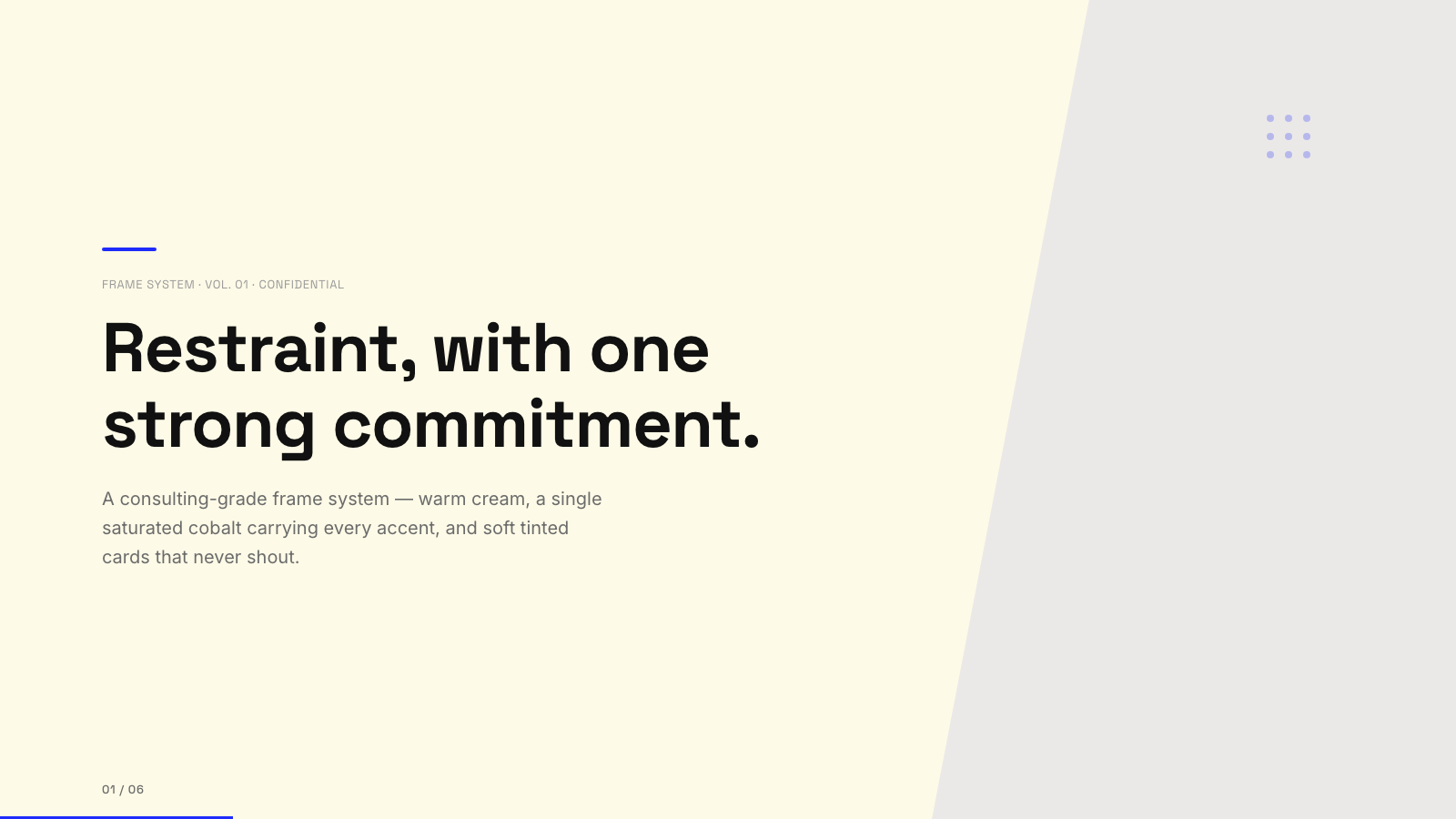
Blue Professional |

Bold Poster |
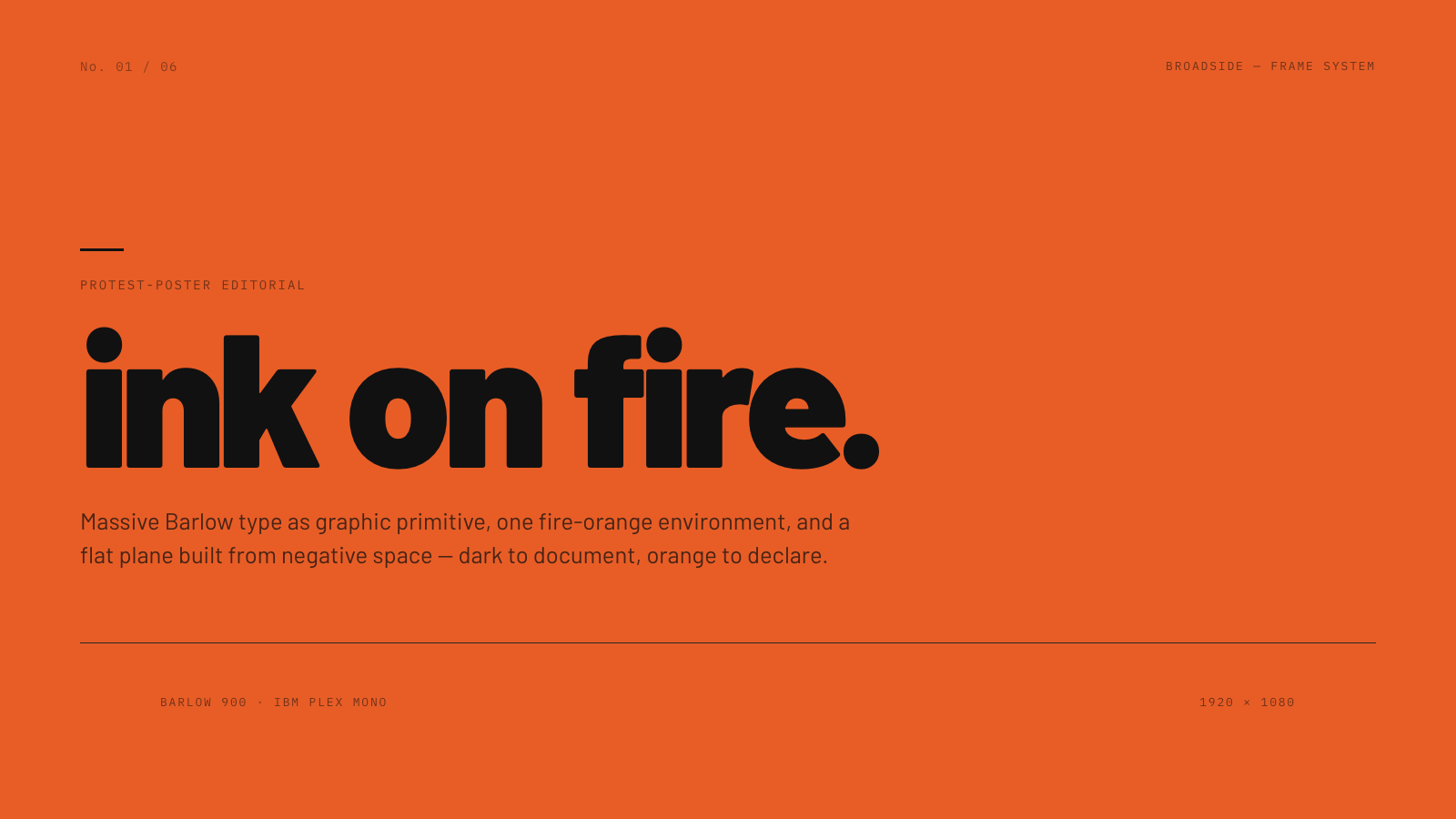
Broadside |
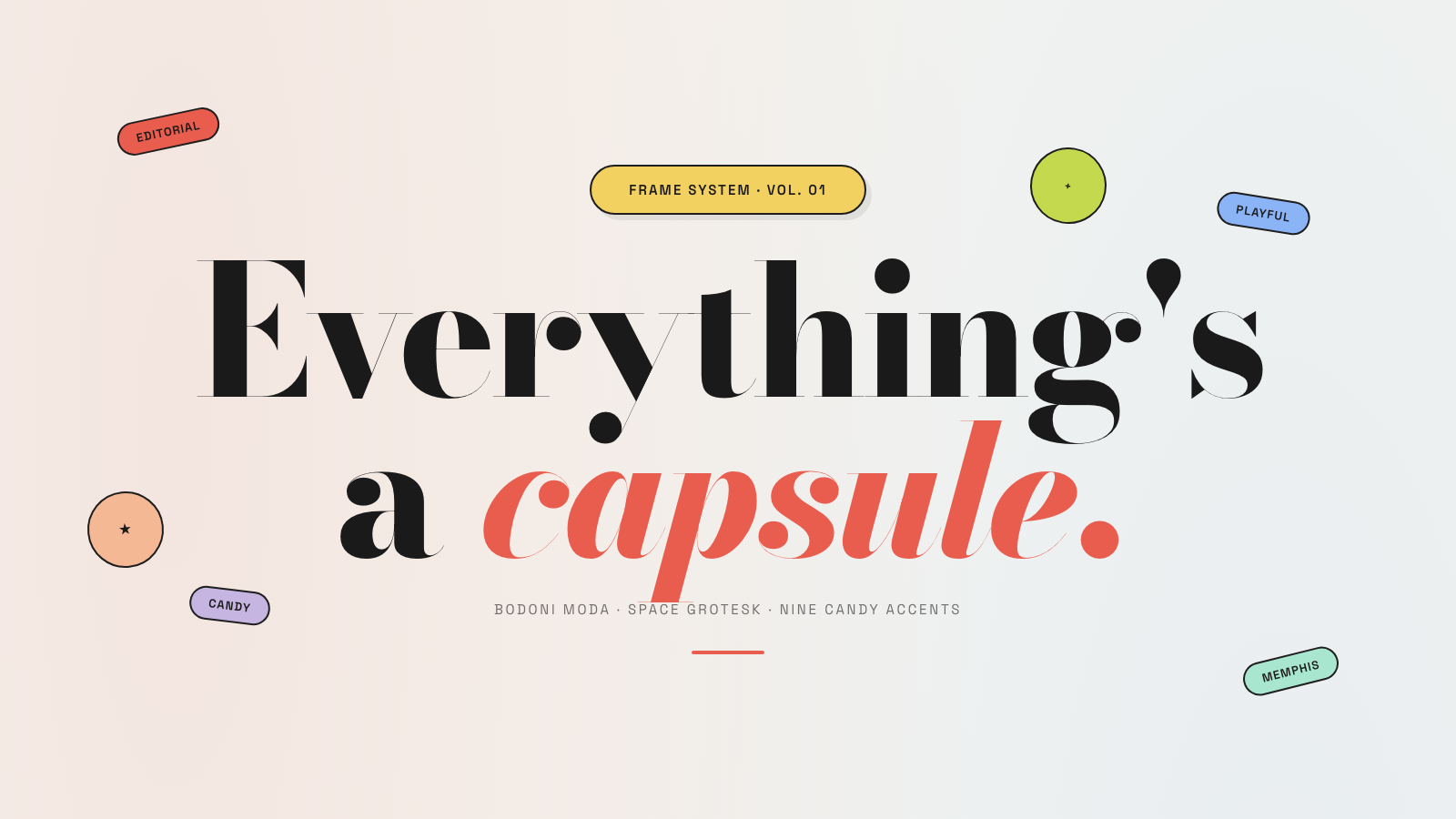
Capsule |
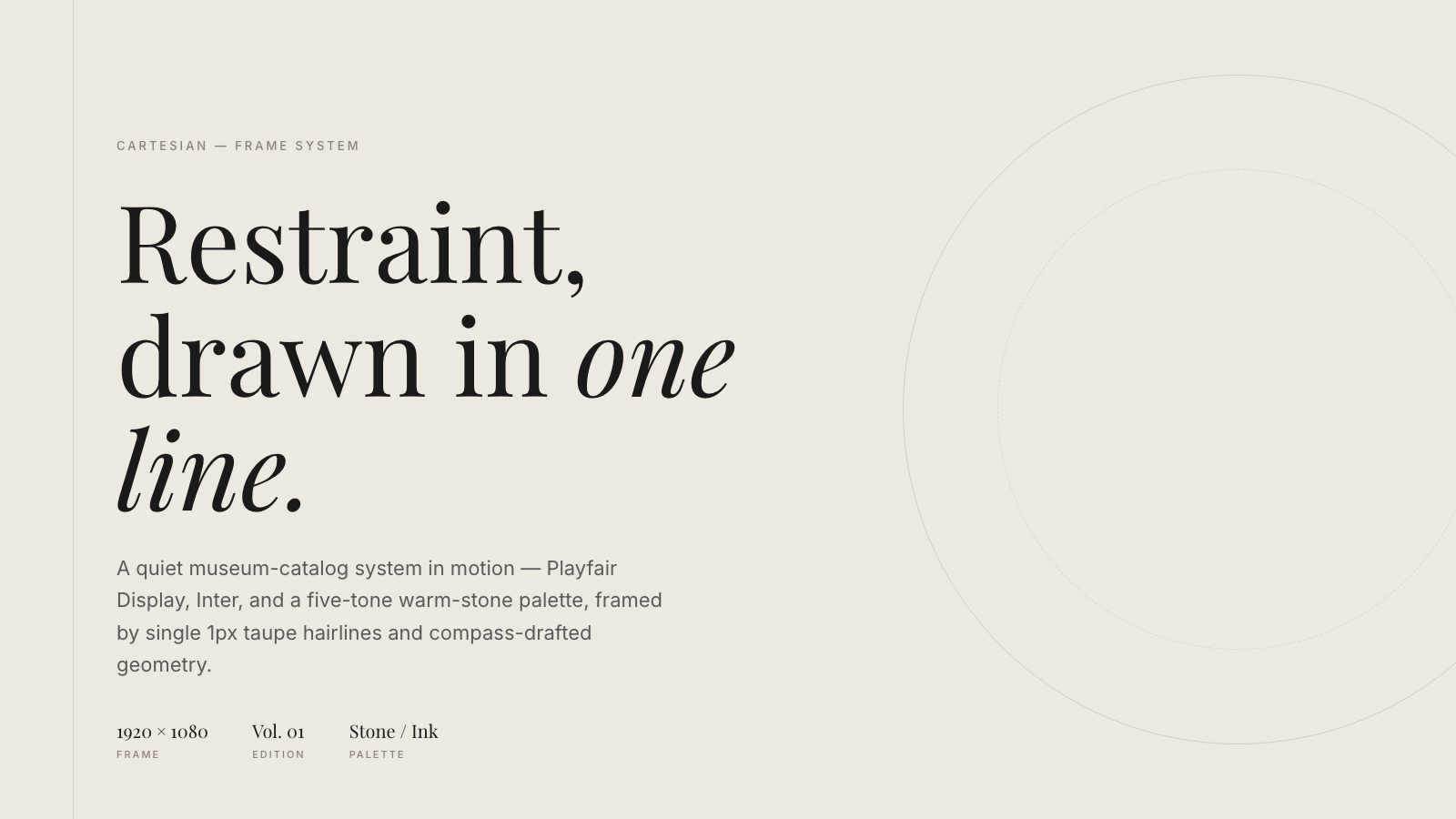
Cartesian |
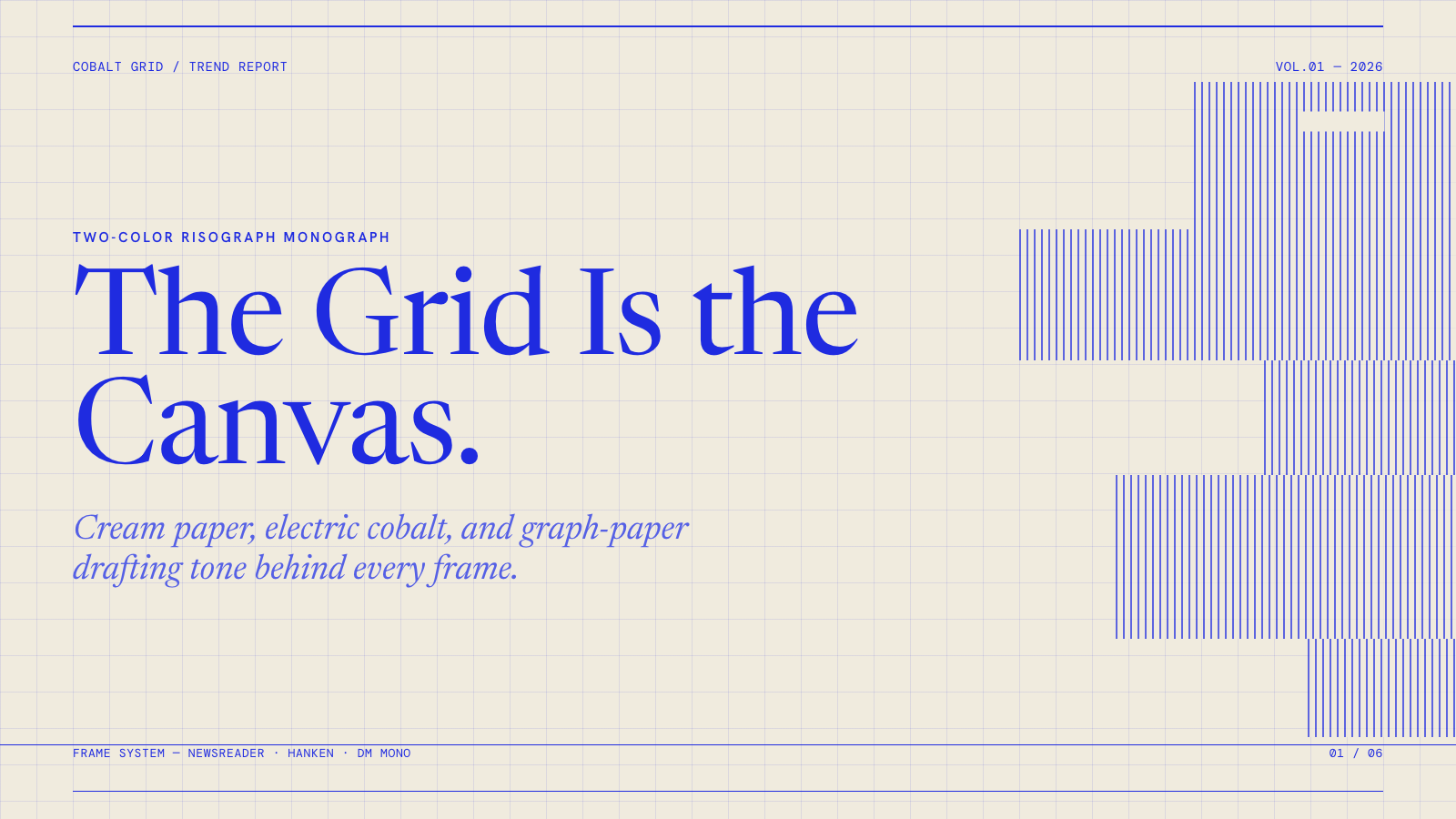
Cobalt Grid |

Coral |
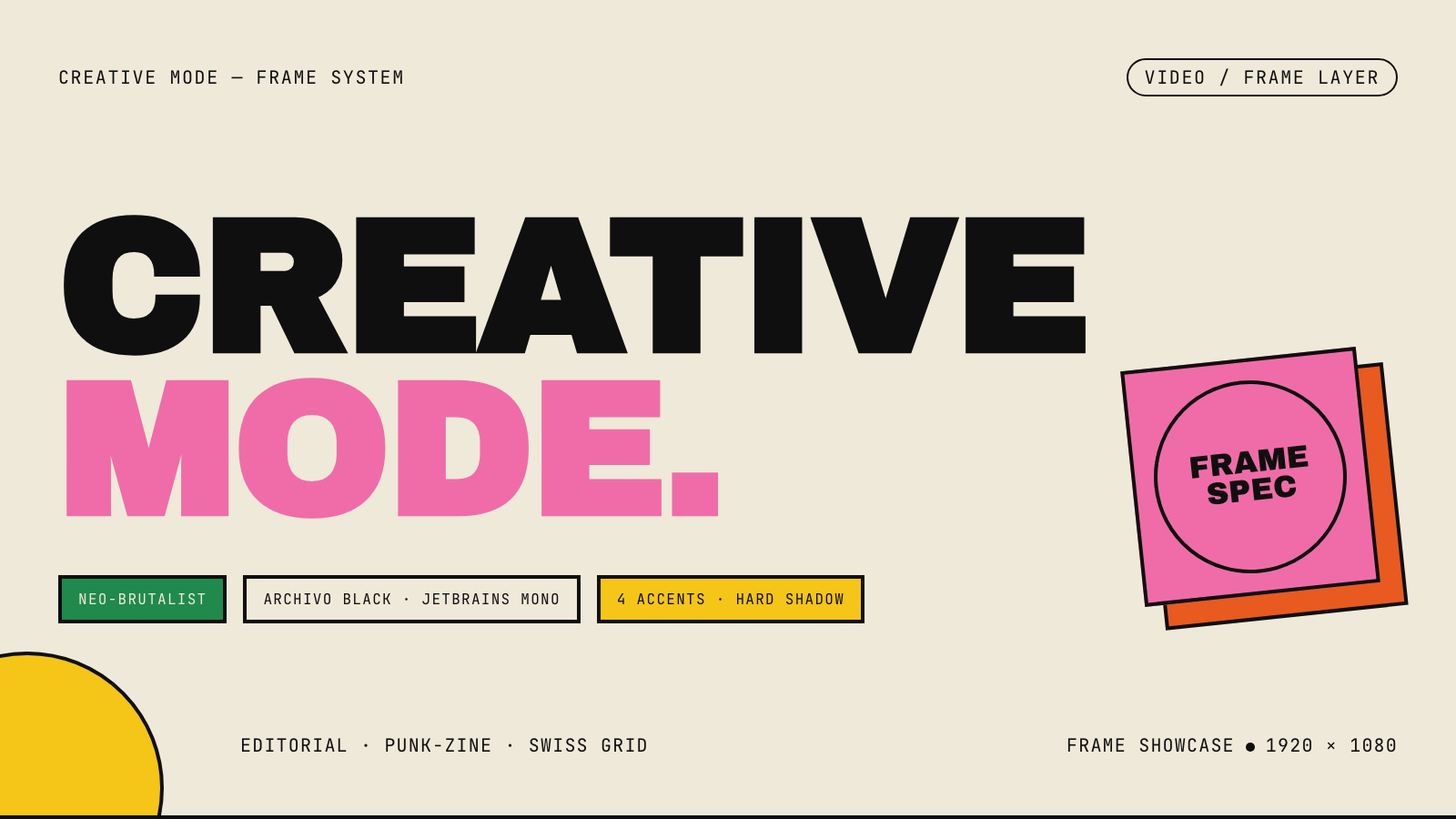
Creative Mode |
Browse and remix them all at hyperframes.studio/design.
How It Works
Define a video as HTML. Add data attributes for timing and tracks. Use GSAP, CSS, Lottie, Three.js, Anime.js, WAAPI, or your own frame adapter for seekable animation.
<div id="stage" data-composition-id="launch" data-start="0" data-width="1920" data-height="1080">
  <video
    class="clip"
    data-start="0"
    data-duration="6"
    data-track-index="0"
    src="intro.mp4"
    muted
    playsinline
  ></video>

  <h1 id="title" class="clip" data-start="1" data-duration="4" data-track-index="1">Launch day</h1>

  <audio
    data-start="0"
    data-duration="6"
    data-track-index="2"
    data-volume="0.5"
    src="music.wav"
  ></audio>

  <script src="https://cdn.jsdelivr.net/npm/gsap@3/dist/gsap.min.js"></script>
  <script>
    const tl = gsap.timeline({ paused: true });
    tl.from("#title", { opacity: 0, y: 40, duration: 0.8 }, 1);
    window.__timelines = window.__timelines || {};
    window.__timelines.launch = tl;
  </script>
</div>
Preview instantly in the browser. Render locally or in Docker. The renderer seeks each frame in headless Chrome and encodes the result with FFmpeg, so the same input produces the same video.
HyperFrames Stack
HyperFrames is the open-source rendering engine, plus a growing set of tools around HTML-native video creation.
| Piece | Status | What it does |
|---|---|---|
| CLI | Available | Scaffold, preview, lint, inspect, and render local video projects |
| Core / Engine / Producer | Available | Parse compositions, drive headless Chrome, encode video, and mix audio |
| Catalog | Available | Reusable blocks and components for transitions, overlays, captions, charts, maps, and effects |
| Agent skills | Available | Teach coding agents the video-production patterns that generic web docs miss |
| Studio | Available, evolving | Browser surface for previewing and editing compositions |
| AWS Lambda rendering | Available | Deploy a distributed render stack and drive renders from your laptop or CI |
| hyperframes.studio | Available | Community playground for previewing, iterating, sharing, and rendering HTML-native video projects |
| frame.md | Available | Invert your design system for the camera — a DESIGN.md superset an agent can compose video from |
Catalog
Install ready-to-use blocks and components:
npx hyperframes add flash-through-white   # shader transition
npx hyperframes add instagram-follow      # social overlay
npx hyperframes add data-chart            # animated chart
Browse the catalog at hyperframes.heygen.com/catalog.
Why HyperFrames?
- HTML-native: compositions are HTML files with data attributes. No React requirement, no proprietary timeline format.
- Agent-friendly: agents already write HTML, and the CLI is non-interactive by default.
- Deterministic: same input, same frames, same output. Built for CI, regression tests, and automated rendering.
- No build step: an
index.htmlcomposition plays as-is and can be previewed directly in the browser. - Adapter-based animation: bring GSAP, CSS animations, Lottie, Three.js, Anime.js, WAAPI, or a custom runtime.
- Open source: Apache 2.0 license, with no per-render fees or commercial-use thresholds.
HyperFrames vs Remotion
HyperFrames is inspired by Remotion. Both tools render video with headless Chrome and FFmpeg. The main difference is the authoring model: Remotion's bet is React components; HyperFrames' bet is plain HTML that humans and agents can both write easily.
| HyperFrames | Remotion | |
|---|---|---|
| Authoring | HTML + CSS + seekable animation | React components |
| Build step | None; index.html plays as-is |
Bundler required |
| Agent handoff | Plain HTML files | JSX / React project |
| Library-clock animations | Seekable, frame-accurate via adapters | Wall-clock animation patterns need care |
| Distributed rendering | Local and AWS Lambda render paths | Remotion Lambda, mature cloud renderer |
| License | Apache 2.0 | Source-available Remotion License |
Read the full comparison in the HyperFrames vs Remotion guide.
Documentation
Full documentation: hyperframes.heygen.com/introduction
Packages
| Package | Description |
|---|---|
hyperframes |
CLI for creating, previewing, linting, and rendering compositions |
@hyperframes/core |
Types, parsers, generators, linter, runtime, and frame adapters |
@hyperframes/engine |
Seekable page-to-video capture engine using Puppeteer and FFmpeg |
@hyperframes/producer |
Full rendering pipeline for capture, encode, and audio mix |
@hyperframes/studio |
Browser-based composition editor UI |
@hyperframes/player |
Embeddable <hyperframes-player> web component |
@hyperframes/shader-transitions |
WebGL shader transitions for compositions |
@hyperframes/aws-lambda |
AWS Lambda SDK and deployment surface for distributed renders |
Community
HyperFrames is used in production at HeyGen, with community examples from teams like tldraw, TanStack, and others in ADOPTERS.md. Open a PR if your team is using HyperFrames.
- Questions and ideas: Discord
- Bugs and feature requests: GitHub Issues
- User research: Book a casual 30-minute conversation with the HyperFrames team — no preparation or sales pitch
- Security reports: SECURITY.md
- Contributions: CONTRIBUTING.md
Development Note
The repo uses Git LFS for golden regression-test baselines under packages/producer/tests/**/output.mp4 (about 240 MB of .mp4 files). If you're cloning the full repo for development, install Git LFS first:
# macOS
brew install git-lfs

# Ubuntu / Debian
sudo apt install git-lfs

# Windows
winget install GitHub.GitLFS

# Then, once per machine
git lfs install
If you only need source files, you can skip LFS content:
GIT_LFS_SKIP_SMUDGE=1 git clone https://github.com/heygen-com/hyperframes.git