 WaterrrForeverandClaude Fable 5
6ad738b580
WaterrrForeverandClaude Fable 5
6ad738b580
* feat(skills): storyboard duration becomes an advisory expectation

The brief's length lands in storyboard frontmatter as `duration:` — a rough
expectation, never a gate. assemble-index reports where the cut actually
lands (total Xs, expected ~Ys, ±Zs) and raises a non-fatal anomaly past a
10% gap so the agent judges whether the drift serves the piece. Never
exits non-zero for it.

* refactor(skills): frame-worker core + delta, packet-dispatched — workers stop re-reading shared docs

The three narrative frame workers (product-launch 17.7KB / faceless-explainer
17KB / pr-to-video 21.3KB) were near-verbatim clones already drifting apart.
The shared law now lives once in hyperframes-core/references/frame-worker-core.md;
each workflow's sub-agents/frame-worker.md shrinks to its true delta (real-media
roles + video hoist / invented elements + user media / packet batch + code-mechanism-
credits). music-to-video keeps its own model, untouched.

Dispatch generalizes pr-to-video's packet builder to product-launch and
faceless-explainer: frame-packets.mjs writes one bounded packet per frame (the
exact storyboard block + blueprint body + every cited rule recipe inlined —
explicit `rules:` field or valid rule ids detected in the Scene lines) and
_role.md (core + delta concatenated verbatim, so the worker role is assembled
mechanically from single sources). Workers read only their packet + frame.md —
never STORYBOARD.md, the skill docs, or hyperframes-core.

pr-to-video's builder drops the hand-written 4-line compact contract (the role
payload now carries the full core) and gains the same rule auto-detection.
Tests: 2 new vendored suites + a _role.md guardrail; 138 pass, lint:skills green.

* feat(skills): duration advisory for faceless-explainer + pr-to-video

Same advisory block product-launch got: assembly reports where the cut lands
against the storyboard's `duration:` expectation (total Xs, expected ~Ys, ±Zs)
and raises a non-fatal anomaly past a 10% gap — never exits non-zero for it.
Step 3 gains the one-line write instruction. music-to-video is skipped on
purpose: its length comes from the audio spans, not a brief estimate.

Also: subagent-dispatch.md's DISPATCH contract named agents/<role>.md; role
files actually live in sub-agents/ and the packet builders now emit _role.md —
the wording follows the reality.

* fix(skills): script main-guard survives symlinked invocation paths

pathToFileURL(process.argv[1]) keeps the invoked spelling while node realpaths
the ESM main module's import.meta.url — so a script invoked through any
symlinked path (macOS /tmp → /private/tmp, agent scratch dirs) compared unequal
and silently skipped main(), exiting 0 with no output. Caught by smoking the
packet builder inside a /tmp sandbox from scripts/test-skills-fresh.sh.

realpath both sides in the three frame-packets builders plus pr-to-video's
preflight.mjs and project-dir.mjs (same latent guard).

* refactor(skills): media-use thin index + per-verb references

P9 from the athrix trace audit: media-use/SKILL.md (34.3KB) was read 4x per
run (137KB) for ~12KB of actually-consumed content. Split it remotion-style:

- SKILL.md becomes a 3.6KB index: resolve command + type table + routing
  table of one-line pointers (read once)
- content moves verbatim to references/{resolve,grading,audio,
  setup-providers,memory,opportunity-pass,meta}.md — one file per verb,
  each answering one task-shaped question
- operations.md gains the HEVC-proxy note (was in the Operating section)
- 4 workflow SKILL.md pointers follow Providers to setup-providers.md

Per-media-task read cost: index 3.6KB once + one topic file (<=8.8KB).
lint:skills 31 files green; coverage+resolve tests 14/14 (coverage.test.mjs
asserts entrypoints, not SKILL.md text - no test coupling).

* feat(skills): general-video scene dispatch via frame packets

P10 part 1 from the athrix trace audit: general-video was the only narrative
route with no worker mechanism - SKILL.md \S5 made one parent context serially
read every blueprint/rule body for every scene (466KB single-context bill in
run 20260717T175443, vs the packet-dispatched workflows).

- scripts/frame-packets.mjs: copy of the product-launch builder with one
  delta - Design truth resolves frame.md -> design.md -> DESIGN.md (\S6 order)
- sub-agents/frame-worker.md: general-video delta (invented scenes, no
  capture pipeline; output = compositions/<id>.html + <id>.motion.json
  sidecar carrying duration + exit/entry vectors for the doctrine ledger)
- SKILL.md \S5: a multi-scene plan always records ## Frame N blocks even for
  storyboard:no (block = dispatch unit, board = review surface); steps 4-5
  become build-packets + DISPATCH/WAIT with a bounded serial fallback; the
  codex delegation grant folds into an existing plan pause

Tests: frame-packets.test.mjs 4/4 (incl. design-truth resolution);
lint:skills 31 files green.

* refactor(skills): seam catalog split + packet seam-inlining

P10 part 2 from the athrix trace audit: cut-the-curve was a 18.8KB
7-technique catalog read twice per run for the ~2KB one seam consumes.

- cut-the-curve splits into seams/*.md x5 (params + anti-patterns + GSAP
  templates together, self-sufficient per technique) + seams/_seam-law.md
  (the fixed ~1KB cross-variant law excerpt); SKILL.md becomes the catalog
  index; examples/gsap-implementation.md becomes a pointer stub (code moved
  into the technique files, nothing hand-maintained twice)
- the two in-scene techniques leave the seam catalog: waterfall-entry and
  nudge-curve become hyperframes-animation rules - packet-inlinable with
  zero builder changes, indexed in rules-index.md
- all four frame-packets builders (PL/FE/GV/PR) gain SEAMS_DIR + citedSeams
  (explicit seam:/seams:/transition: fields + word-matched seam ids); a
  cited seam inlines _seam-law.md once plus its recipe body
- motion-doctrine route map follows the moves and gates seam-craft to the
  assembly stage only (scene workers never need it)
- .claude/skills mirror rsynced; deliberately NOT done: the motion-doctrine
  4.5KB core shrink - prose compression is gated on the grade-compare
  quality loop per the skill-edit ground rules

Tests: 54/54 across the four builders (incl. new seam-inlining case,
which also exercises the repo-layout .agents/skills fallback path);
lint:skills 31 files green.

* refactor(skills): route-once routing layer

P4' from the athrix trace audit: the routing layer (SKILL.md 24.4KB +
workflow-catalog 6KB + route-briefs 7.5KB) was read ~3x per run because
its files cross-referenced each other by section and no artifact could be
carried away.

- SKILL.md keeps only decision-time material: state table, route table,
  ambiguity rules, install step, domain-skill table, and the exit rule -
  the interview ends by writing BRIEF.md, the only routing artifact a
  workflow reads afterward (10.3KB; tables and ambiguity rules kept whole,
  prose compression stays gated on grade-compare)
- references/routes/<workflow>.md x10: each route's catalog contract +
  interview entry merged into one 0.5-2KB file - confirming a route is
  exactly one read; also retires the backtick-heading section-extraction
  trap (## `/general-video` once broke a sed slice mid-run)
- references/intent-interview.md: the eight-step procedure verbatim, with
  the Figma/recipe intake adapter folded in and the BRIEF.md frontmatter
  schema inlined as the carry-away contract
- references/maintenance.md: the CLI pin-upgrade ritual out of the router
- workflow-catalog.md / route-briefs.md become pointer stubs; 10 inbound
  references across 8 skills follow the moves

Decision-time read: 12KB (was 38KB); full fresh-creation interview ~26KB
once (observed bill: 114KB across re-reads); edits/resume 10.3KB.
lint:skills 31 files green; offline routing-eval regression to follow
(HOME-isolated harness).

* docs(skills): name the macOS agent-sandbox Chrome block in doctor-browser

Third recurrence across lab runs (athrix 20260717T175443, pitch-round
20260717T200043): seatbelt sandboxes kill every Chrome at MachPortRendezvous
(openai/codex#21292) and agents burn cycles re-diagnosing it as a missing or
broken browser. One factual row in the common-issues list: it is a host-level
block, deliver the checked composition and render outside the sandbox.

* fix(skills): cli pin probe covers every resumed project

The P4' move of the pin-upgrade ritual to references/maintenance.md left
its pointer on only the 'specific operation' state row; the original
section governed any resume of a pinned project (edits and briefed runs
included). One sentence after the state table restores full coverage.

* fix(skills): fold the cli pin ritual back into the entry skill

Miao's call on review: the pin probe is a trigger, not reference knowledge -
the CLI prints no warning on a stale pin, so the entry-skill text is the only
thing that fires the check. Behind a pointer it silently stops happening, and
the 1.6KB saved never justified that risk. references/maintenance.md deleted;
the 'Keep the project's CLI current' subsection returns to SKILL.md verbatim.
Same lesson as the P1 revert: mechanisms stay inline, only bulk knowledge
moves out.

* fix(skills): de-engineer three siblings of the maintenance fold-back

Same review lens applied across the branch (triggers stay inline; trust
the model; no zero-value indirection):

- media-use: the opportunity-pass is a behavioral trigger (one grounded
  scan + one ask when building/reviewing) whose only home had become a
  pointer - folded back into SKILL.md, references/opportunity-pass.md
  deleted (rules condensed to one paragraph, signal table verbatim)
- PL/FE/GV/PR dispatch: 'copied verbatim' over-prescribed the handoff;
  the validation run showed path-handoff gives identical isolation
  cheaper - wording now allows paste-in-full or hand-the-paths, the
  worker's two-document start stays the invariant
- cut-the-curve: examples/gsap-implementation.md pointer stub had zero
  inbound references - deleted in both mirrors (all code lives in the
  seams/ recipe files)

lint:skills 31 files green.

* refactor(skills): seam recipes move into hyperframes-animation

Miao's namespace rule: the repo-native layer (.agents/skills +
.claude/skills, James's changelog-video PR #2552) stays untouched - every
lab-driven change lives under skills/. Applied retroactively:

- .agents/skills and .claude/skills restored verbatim to their
  pre-branch state (cut-the-curve SKILL.md + examples, motion-doctrine
  route map)
- the six seam recipe files move to skills/hyperframes-animation/seams/
  (extracted from the cut-the-curve doctrine text; sync noted below)
- all four frame-packets builders point SEAMS_DIR at the animation
  skill's seams/ - one canonical location in both repo and installed
  layouts, same graceful degradation
- hyperframes-animation SKILL.md routing table gains the seams row

Known duplication across the namespace boundary: seams/*.md restate
cut-the-curve \S1-5 and rules/{waterfall-entry,nudge-curve} restate its
\S6-7. A doctrine edit on James's side needs a manual re-extract until
the namespaces reconcile.

Builder tests 11/11; lint:skills 31 files green.

Co-Authored-By: Claude Fable 5 <noreply@anthropic.com>

* revert(skills): drop the seam-recipe extraction entirely

Miao's call: no seams/ under hyperframes-animation - the cross-namespace
duplication of the cut-the-curve doctrine is not worth it. Removed the six
extracted files, the SKILL.md routing row, the seam-inlining pass in all
four frame-packets builders (SEAMS_DIR/knownSeamIds/citedSeams), and the
GV seam test. Workers that need a seam recipe read the doctrine skill as
before. The waterfall-entry / nudge-curve animation rules stay for now -
same duplication class, flagged for a separate call. Builder tests 10/10;
lint 31 green.

Co-Authored-By: Claude Fable 5 <noreply@anthropic.com>

* feat(skills): round-3 fixes from the three-run trace forensics

Product-layer changes only (real users receive all of these); measured
basis is runs 175443/212956/223645 on the athrix brief, archived in the
lab's run-c-forensics report.

- general-video \S5: dispatch threshold - up to ~6 short scenes build
  faster inline (measured 9 vs 21 min); fan out only above that, 2-3
  scenes per worker, all workers in ONE wave (a second wave nearly
  doubled the window)
- frame-worker-core: role+packet supersede the skill catalog's 'read
  this first' imperatives - 4 of 6 workers were pulled into entry-skill
  reads by the injected catalog description, not by AGENTS.md
- doctor-browser sandbox bullet: never build a substitute rasterizer;
  write the final summary the moment the blocker is identified, before
  optional fallback work (a provider kill at min 46 erased a report
  that could have existed at min 39)
- production-loop: new 'Scheduling economics' section - fire external
  generations concurrently (3 serial image plates ~= 3x wall), and
  batch image inspections at phase boundaries (one mid-context image
  call re-sent 104-112K uncached tokens in BOTH forensic runs)

Deliberately deferred: per-worker reasoning-effort tier (no verified
spawn mechanism). Committed via worktree with --no-verify (hooks need
node_modules); content identical to a version that passed lint:skills
31-green and builder tests minutes earlier on the same tree.

Co-Authored-By: Claude Fable 5 <noreply@anthropic.com>

* style(skills): oxfmt the two hand-ported media-use tables

The merge-conflict resolution ported main's video rows into meta.md and
setup-providers.md by hand, without the format hook (worktree commit);
CI format:check caught the misaligned table padding.

Co-Authored-By: Claude Fable 5 <noreply@anthropic.com>

* style(skills): oxfmt the python-patched scripts + manifest resync

CI format:check flagged 7 .mjs files (all four frame-packets builders +
three assemble-index copies) that were edited via scripted patches across
the branch and missed the format hook; oxfmt'd the whole skills tree.
skills-manifest.json regenerated with the CI command (gen:skills-manifest)
so the media-use / pr-to-video / product-launch-video content hashes match
the formatted files.

Co-Authored-By: Claude Fable 5 <noreply@anthropic.com>

* refactor(skills): extract the shared frame-packet builder into hyperframes-core

Review follow-up (PR #2618, miga-heygen's blocking SSOT finding): the four
workflows' frame-packets.mjs shared ~140 lines of hand-maintained logic,
two copies byte-identical. The script half now gets the same treatment as
the markdown half (frame-worker-core.md + delta):

- new skills/hyperframes-core/scripts/lib/frame-packets-core.mjs owns
  frame splitting, rule citation, packet assembly + bounds, _role.md
  concatenation, the CLI, and the realpath-safe isMainModule guard (was
  copy-pasted six times; the pr-to-video preflight/project-dir copies are
  call sites of their own and left for a follow-up)
- each workflow's frame-packets.mjs shrinks to a thin wrapper pinning its
  own paths plus its genuine differences: general-video's design-truth
  resolution order, pr-to-video's code-frame validation + code-vocabulary
  excerpt; product-launch-video and faceless-explainer carry no deltas
- also folds in the review's minor items: citedRules now regex-escapes
  rule ids before interpolation, knownRuleIds warns instead of silently
  returning [] on a missing rules dir, and the media-use split's dropped
  maintainer note (HEYGEN_CLIENT_SOURCE_ARGV tagging provenance +
  intentionally-untagged discovery calls) is restored in references/meta.md

Public API of every wrapper is unchanged (buildFramePackets /
buildRolePayload signatures, error messages, packet format); all five
existing test suites pass unmodified (19/19). skills-manifest regenerated.

Co-Authored-By: Claude Fable 5 <noreply@anthropic.com>

---------

Co-authored-by: Claude Fable 5 <noreply@anthropic.com>






Write HTML. Render video. Built for agents.
Quickstart | Showcase | Playground | Catalog | Docs | Discord

HyperFrames is an open-source framework for turning HTML, CSS, media, and seekable animations into deterministic MP4 videos. Use it locally with the CLI, from AI coding agents with skills, or as the rendering core behind hosted authoring workflows.
Quick Start
With an AI coding agent
Install the HyperFrames skills, then describe the video you want:
npx skills add heygen-com/hyperframes --full-depth
The picker opens with nothing pre-selected — the Core Skills group is all you need: the
/hyperframesrouter installs each creation workflow on demand. Agents and non-interactive runs should usenpx hyperframes skills updateinstead — it installs exactly the core set, whereas a non-interactiveskills addwithout--skillinstalls all 19.
--full-depthdoes a full clone of the repo's currentmain. Without it,skills addfetches the skills.sh registry blob, which lagsmainby hours — you'd get an older copy of a skill. (hyperframes skills updatealready installs full-depth.)
Try a prompt like:
Using
/hyperframes, create a 10-second product intro with a fade-in title, a background video, and subtle background music.
The skills teach agents the HyperFrames production loop: plan the video, write valid HTML, wire seekable animations, add media, lint, preview, and render. They work with Claude Code, Cursor, Gemini CLI, Codex, and other coding agents that support skills.
Skills
HyperFrames ships 19 skills agents load on demand. Read /hyperframes first — it's the router and capability map; it picks a workflow for any "make me a…" request — video, deck, or composition port — and points to the domain skills below.
Default to the core set — the router installs each creation workflow on demand. npx hyperframes skills update installs exactly that from anywhere; the interactive picker (npx skills add heygen-com/hyperframes --full-depth) lists it as the "Core Skills" group, nothing pre-selected. The picker is interactive-only — a non-interactive or agent run without --skill installs all 19. Use npx skills add heygen-com/hyperframes --all --full-depth to install all 19 deliberately (skips the picker), or npx skills add heygen-com/hyperframes --skill <name> --full-depth for just one (bare name, no leading /). Keep --full-depth — it installs the current main; without it skills add fetches the skills.sh blob, which lags by hours.
Installs stay lean after that: npx hyperframes init keeps the core set fresh (the router, the hyperframes-* domain skills, and media-use — plus whatever is already installed; /figma stays on demand) and never expands a partial install; the creation workflows install on demand — the router runs npx hyperframes skills update <workflow> before entering one. Nothing re-pulls the full set behind your back.
Router
| Skill | Use when |
|---|---|
/hyperframes |
Read first for any request to make / create / edit / animate / render a video, animation, or motion graphic. Capability map for the domain skills, the intent layer that confirms every creation brief up front, and intent router for the creation workflows below. |
Creation workflows
| Skill | Use when |
|---|---|
/product-launch-video |
Any website — marketing / launching / promoting a product (from its URL, a brief, or a script), or a site tour / showcase / social clip featuring the site's own visuals. Up to ~3 min (sweet spot 30-90s). |
/faceless-explainer |
Explaining a topic / concept from arbitrary text — no product, no URL, no website capture; every visual is LLM-invented (typography / abstract / diagram / data-viz). |
/pr-to-video |
A GitHub pull request (PR URL, owner/repo#N ref, or "this PR") → changelog / feature-reveal / fix / refactor explainer, read via the gh CLI. |
/embedded-captions |
Adding captions / subtitles to an existing talking-head video (footage untouched) — verbatim rail, embedded climax behind the subject, or pure-cinematic embed. |
/talking-head-recut |
Packaging an existing talking-head / interview / podcast video with designed graphic overlays — lower-thirds, data callouts, kinetic titles, pull-quotes, side panels, PiP. |
/motion-graphics |
A short, unnarrated, design-led motion graphic (~under 10s) — kinetic type, stat / chart hit, logo sting, lower-third, animated tweet / headline. MP4 or transparent overlay. |
/music-to-video |
A music track (audio file, or video to pull audio from) → a beat-synced video — lyric, slideshow, or kinetic promo; music drives pacing. |
/slideshow |
A presentation / pitch deck / interactive deck — discrete slides, fragment reveals, branching, hotspot navigation, presenter mode. Output is a navigable deck, not a rendered video. |
/general-video |
Anything else — longer or multi-scene pieces, brand / sizzle reel, title card, static loop, freeform composition. Input- and length-agnostic fallback, and the home of companion mode (co-create with the full toolbox). |
/remotion-to-hyperframes |
Porting an existing Remotion (React) composition's source to HyperFrames HTML. One-way migration, not creation. |
Domain skills (loaded on demand)
Atomic capabilities the creation workflows compose against — pull one when you need that specific layer.
| Skill | Covers |
|---|---|
/hyperframes-core |
The composition contract — data-* timing attributes, class="clip", tracks, sub-compositions, variables, framework-owned media playback, determinism rules. |
/hyperframes-animation |
All animation knowledge — atomic motion rules, scene blueprints, transitions, runtime adapters (GSAP / Lottie / Three.js / Anime.js / CSS / WAAPI / TypeGPU). |
/hyperframes-keyframes |
Seek-safe keyframe authoring across runtimes — GSAP timelines, CSS keyframes, Anime.js, WAAPI, FLIP, paths, masks, SVG morph/draw, 3D depth — plus hyperframes keyframes diagnostics for rendered motion. |
/hyperframes-creative |
Non-animation creative direction — frame.md / design.md, palettes, typography, narration, beat planning, audio-reactive visuals, composition patterns. |
/media-use |
The media OS — resolve any media need (BGM, SFX, image, icon, logo, voice, color grade, LUT) into a frozen local file or paste-ready block + ledger record, generate via TTS/music/image models when the catalog misses, transcribe, caption, remove backgrounds, and reuse assets across projects. One shared audio engine + manifest tracking. |
/hyperframes-cli |
CLI dev loop — init, lint, check, snapshot, preview, render, publish, doctor, plus HeyGen-hosted cloud rendering (cloud render) and AWS Lambda rendering (lambda deploy / render / progress). |
/hyperframes-registry |
Install and wire registry blocks and components into compositions via hyperframes add. Authoring a new block or component to contribute upstream. |
/figma |
Import Figma assets, tokens, components, and storyboard sections → reconstructed motion (frames read as states, not slides) (REST/CLI) plus Motion animations (MCP) and shaders (MCP source / native export) into a composition. |
For visual design handoff workflows, see the Claude Design guide and Open Design guide.
Manually with the CLI
npx hyperframes init my-video
cd my-video
npx hyperframes preview      # preview in browser with live reload
npx hyperframes render       # render to MP4
Requirements: Node.js 22+, FFmpeg
What You Can Build
Need ideas? Browse the Showcase for finished videos you can watch, read, run, and remix.
- Product launch videos and feature announcements
- PR walkthroughs with animated code diffs, narration, and captions
- Data visualizations, chart races, and map animations
- Social videos with kinetic captions, overlays, and music
- Docs-to-video, PDF-to-video, and site-tour explainers
- Reusable motion graphics for automated content pipelines
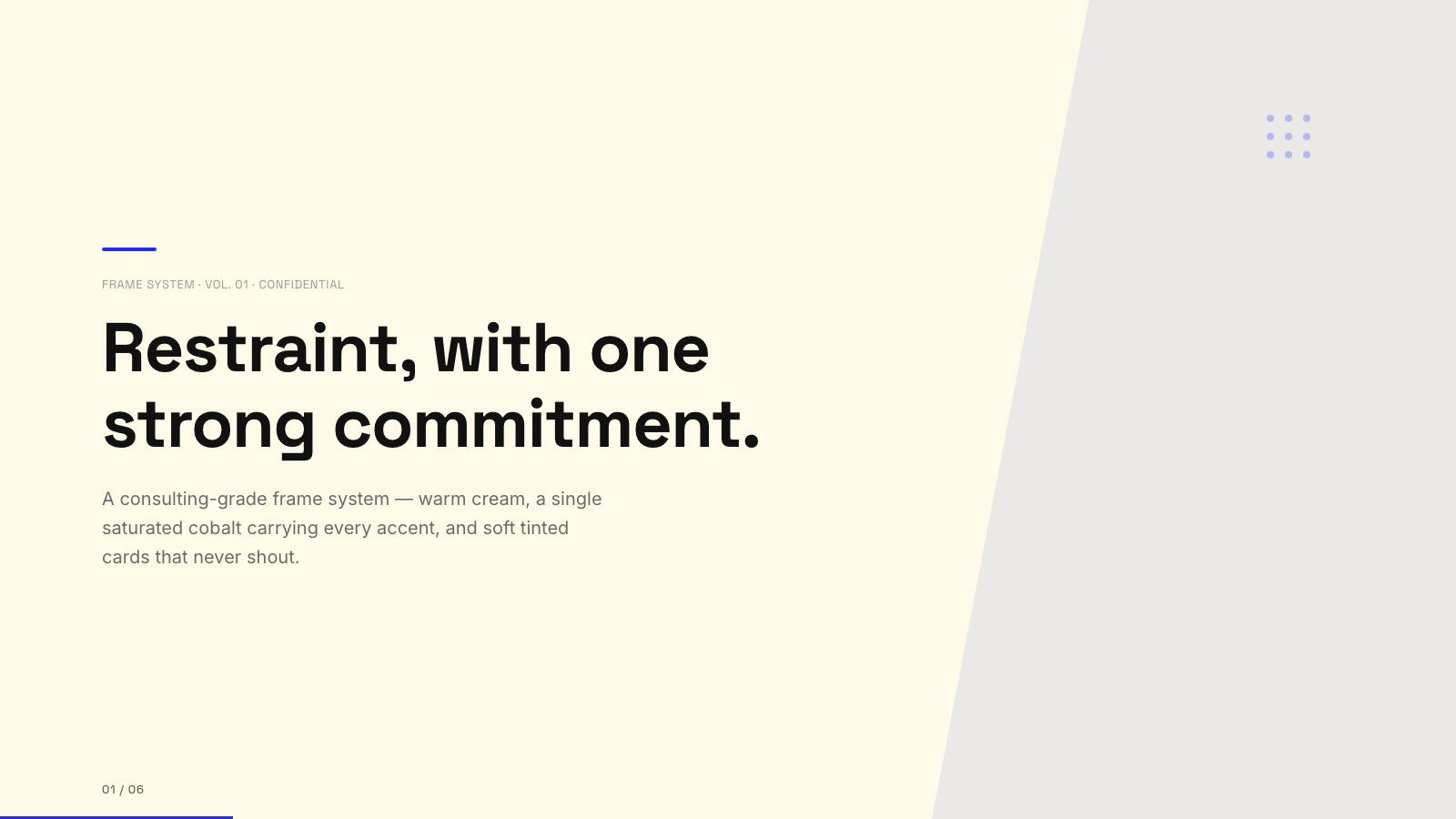
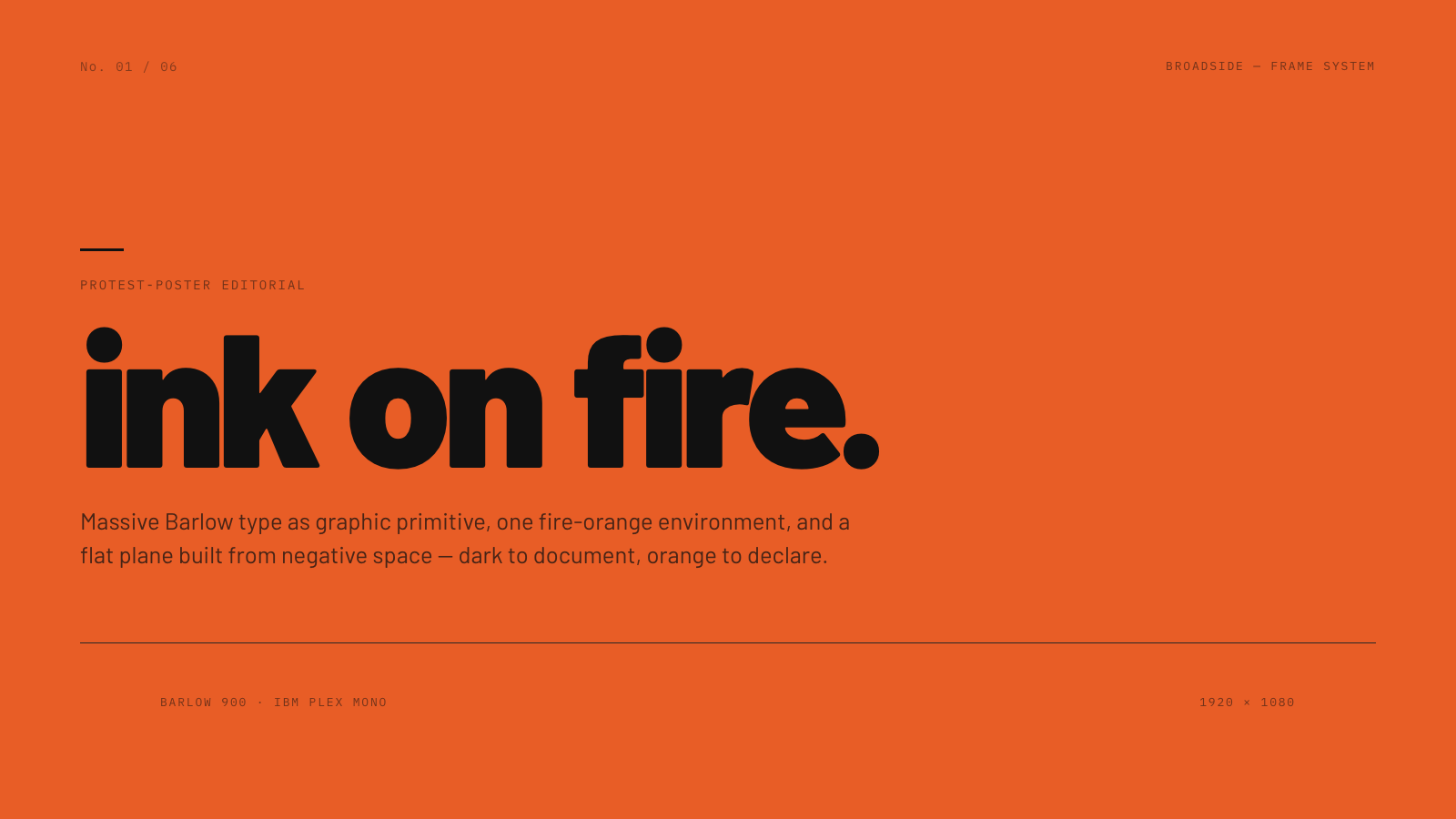
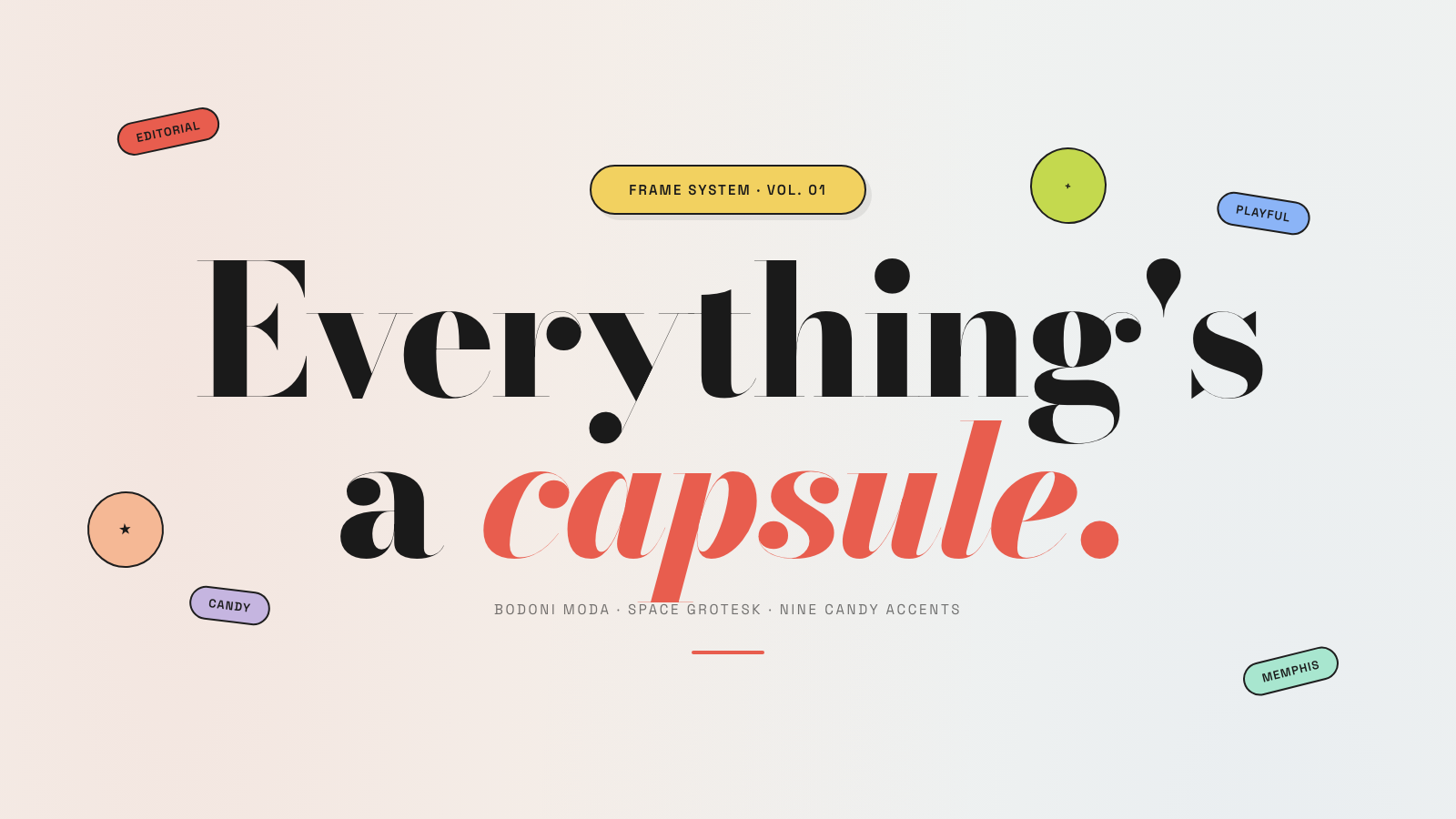
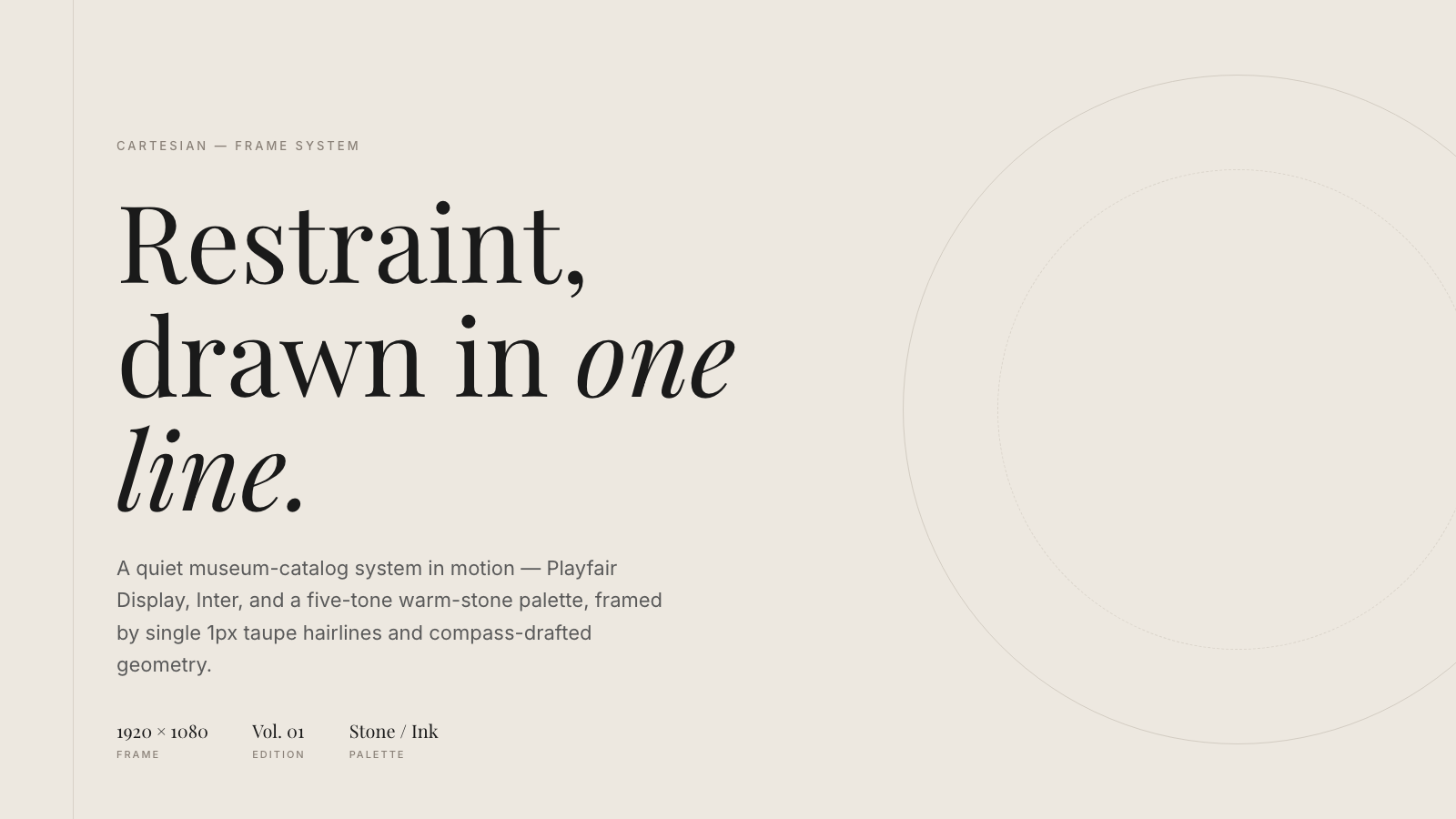
Frame.md
frame.md — your design system, ready for video.
Every brand has a design.md. None of them were written for a camera. frame.md is the missing translation layer: it takes your web-context design spec and inverts it for the frame — the same tokens, the same rules, but rewritten so an AI agent can compose a promo video without guessing at scale or reaching for web chrome.
The output is a DESIGN.md superset your whole toolchain can read. Atoms stay sacred. Composition stays free. Numbers come from the script.

Biennale Yellow |

BlockFrame |
Blue Professional |

Bold Poster |
Broadside |
Capsule |
Cartesian |
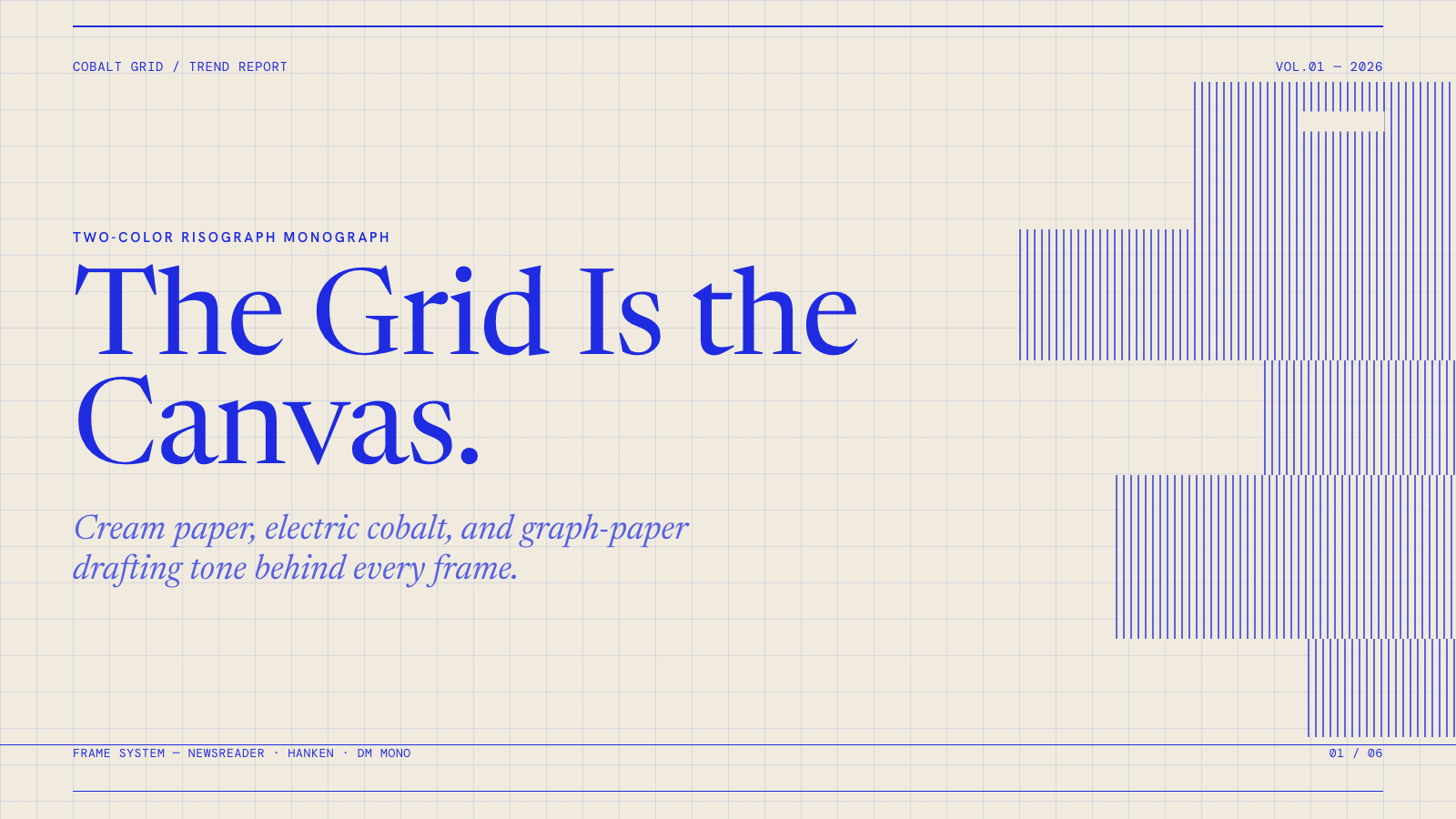
Cobalt Grid |

Coral |
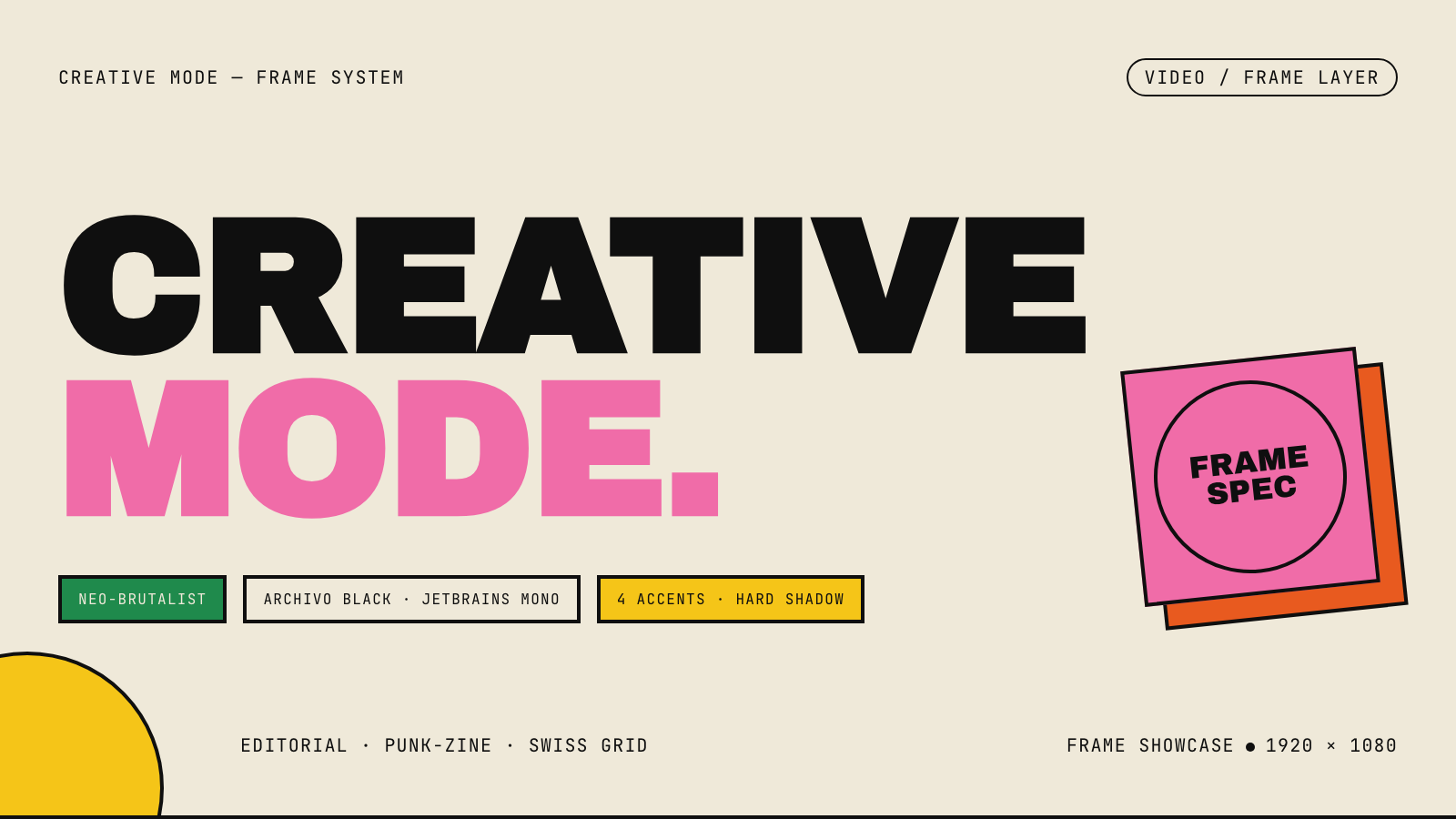
Creative Mode |
Browse and remix them all at hyperframes.dev/design.
How It Works
Define a video as HTML. Add data attributes for timing and tracks. Use GSAP, CSS, Lottie, Three.js, Anime.js, WAAPI, or your own frame adapter for seekable animation.
<div id="stage" data-composition-id="launch" data-start="0" data-width="1920" data-height="1080">
  <video
    class="clip"
    data-start="0"
    data-duration="6"
    data-track-index="0"
    src="intro.mp4"
    muted
    playsinline
  ></video>

  <h1 id="title" class="clip" data-start="1" data-duration="4" data-track-index="1">Launch day</h1>

  <audio
    data-start="0"
    data-duration="6"
    data-track-index="2"
    data-volume="0.5"
    src="music.wav"
  ></audio>

  <script src="https://cdn.jsdelivr.net/npm/gsap@3/dist/gsap.min.js"></script>
  <script>
    const tl = gsap.timeline({ paused: true });
    tl.from("#title", { opacity: 0, y: 40, duration: 0.8 }, 1);
    window.__timelines = window.__timelines || {};
    window.__timelines.launch = tl;
  </script>
</div>
Preview instantly in the browser. Render locally or in Docker. The renderer seeks each frame in headless Chrome and encodes the result with FFmpeg, so the same input produces the same video.
HyperFrames Stack
HyperFrames is the open-source rendering engine, plus a growing set of tools around HTML-native video creation.
| Piece | Status | What it does |
|---|---|---|
| CLI | Available | Scaffold, preview, lint, inspect, and render local video projects |
| Core / Engine / Producer | Available | Parse compositions, drive headless Chrome, encode video, and mix audio |
| Catalog | Available | Reusable blocks and components for transitions, overlays, captions, charts, maps, and effects |
| Agent skills | Available | Teach coding agents the video-production patterns that generic web docs miss |
| Studio | Available, evolving | Browser surface for previewing and editing compositions |
| AWS Lambda rendering | Available | Deploy a distributed render stack and drive renders from your laptop or CI |
| hyperframes.dev | Available | Community playground for previewing, iterating, sharing, and rendering HTML-native video projects |
| frame.md | Available | Invert your design system for the camera — a DESIGN.md superset an agent can compose video from |
Catalog
Install ready-to-use blocks and components:
npx hyperframes add flash-through-white   # shader transition
npx hyperframes add instagram-follow      # social overlay
npx hyperframes add data-chart            # animated chart
Browse the catalog at hyperframes.heygen.com/catalog.
Why HyperFrames?
- HTML-native: compositions are HTML files with data attributes. No React requirement, no proprietary timeline format.
- Agent-friendly: agents already write HTML, and the CLI is non-interactive by default.
- Deterministic: same input, same frames, same output. Built for CI, regression tests, and automated rendering.
- No build step: an
index.htmlcomposition plays as-is and can be previewed directly in the browser. - Adapter-based animation: bring GSAP, CSS animations, Lottie, Three.js, Anime.js, WAAPI, or a custom runtime.
- Open source: Apache 2.0 license, with no per-render fees or commercial-use thresholds.
HyperFrames vs Remotion
HyperFrames is inspired by Remotion. Both tools render video with headless Chrome and FFmpeg. The main difference is the authoring model: Remotion's bet is React components; HyperFrames' bet is plain HTML that humans and agents can both write easily.
| HyperFrames | Remotion | |
|---|---|---|
| Authoring | HTML + CSS + seekable animation | React components |
| Build step | None; index.html plays as-is |
Bundler required |
| Agent handoff | Plain HTML files | JSX / React project |
| Library-clock animations | Seekable, frame-accurate via adapters | Wall-clock animation patterns need care |
| Distributed rendering | Local and AWS Lambda render paths | Remotion Lambda, mature cloud renderer |
| License | Apache 2.0 | Source-available Remotion License |
Read the full comparison in the HyperFrames vs Remotion guide.
Documentation
Full documentation: hyperframes.heygen.com/introduction
Packages
| Package | Description |
|---|---|
hyperframes |
CLI for creating, previewing, linting, and rendering compositions |
@hyperframes/core |
Types, parsers, generators, linter, runtime, and frame adapters |
@hyperframes/engine |
Seekable page-to-video capture engine using Puppeteer and FFmpeg |
@hyperframes/producer |
Full rendering pipeline for capture, encode, and audio mix |
@hyperframes/studio |
Browser-based composition editor UI |
@hyperframes/player |
Embeddable <hyperframes-player> web component |
@hyperframes/shader-transitions |
WebGL shader transitions for compositions |
@hyperframes/aws-lambda |
AWS Lambda SDK and deployment surface for distributed renders |
Community
HyperFrames is used in production at HeyGen, with community examples from teams like tldraw, TanStack, and others in ADOPTERS.md. Open a PR if your team is using HyperFrames.
- Questions and ideas: Discord
- Bugs and feature requests: GitHub Issues
- Security reports: SECURITY.md
- Contributions: CONTRIBUTING.md
Development Note
The repo uses Git LFS for golden regression-test baselines under packages/producer/tests/**/output.mp4 (about 240 MB of .mp4 files). If you're cloning the full repo for development, install Git LFS first:
# macOS
brew install git-lfs

# Ubuntu / Debian
sudo apt install git-lfs

# Windows
winget install GitHub.GitLFS

# Then, once per machine
git lfs install
If you only need source files, you can skip LFS content:
GIT_LFS_SKIP_SMUDGE=1 git clone https://github.com/heygen-com/hyperframes.git