 Vance IngallsandClaude Opus 4.8
7310223b66
* feat(engine): static-frame dedup for screenshot capture (opt-in)

Skip re-seeking + re-screenshotting frames byte-identical to their predecessor. A
frame is dedupable iff no GSAP tween or clip cut is active in it or its predecessor
(predicted from window.__timelines + clip schedule) AND an empirical anchor-compare
confirms it. Opt-in HF_STATIC_DEDUP=true, default off.

Correctness (designed for the multi-worker / distributed render paths):
- Reuse is keyed by the ABSOLUTE composition frame (derived from the frame's time),
  NOT the captureFrameCore frameIndex arg — chunked/parallel callers pass a chunk-
  relative index. Validated lossless (PSNR=inf) on both single- and multi-worker
  renders of a static-hold comp.
- verifyStaticFramesSafe checks EVERY run (no longest-first budget truncation that
  left runs armed-but-unverified), and samples each run's FIRST reused frame, its END,
  and interior points at a stride; a hard cap disables dedup rather than trust an
  unverified set.
- Conservative arming: skipped when capture mode != screenshot (BeginFrame tick
  semantics + the verifier's screenshot path wouldn't transfer), when a before-capture
  hook is set (per-frame video injection), when page-side compositing is active (shader
  / drawElement composite the plain verification screenshot can't reproduce), and when
  any data-start is a non-numeric reference expression the clip-boundary parser can't
  protect, or duration is unknown/zero.
- Session reuse (prepareCaptureSessionForReuse) resets lastFrameBuffer + dedup counter
  so a probe/prior-render buffer can't bleed into the first static frame; the armed set
  is kept (same-composition reuse). Cost calibration bypasses dedup for its sparse,
  non-contiguous sample sweep, then restores the armed set.
- HF_STATIC_DEDUP_SAMPLES is NaN-guarded.

Disqualifies on signals the GSAP predictor can't see: video, canvas/webgl, zero
tweens, running CSS/WAAPI animation. Pays on static-hold content (title cards,
slideshow/kiosk loops, data-viz pauses); no-op on continuously-animated comps.

Co-Authored-By: Claude Opus 4.8 (1M context) <noreply@anthropic.com>

* feat(engine): static-frame dedup default-on + render telemetry

Flip dedup from opt-in (HF_STATIC_DEDUP=true) to default-on (opt-out
HF_STATIC_DEDUP=false). Verification (verifyStaticFramesSafe) is the
safety net that keeps reuse sound at scale.

Add end-to-end dedup observability. The capture session records
enabled / armed / skipReason / predicted; these surface via
CapturePerfSummary -> a dedupPerfs accumulator (disk sequential +
parallel AND streaming sequential + parallel) -> aggregated into
RenderPerfSummary.staticDedup (OR armed, SUM frames across workers) ->
render_complete props static_dedup_{enabled,armed,skip_reason,
predicted_frames,reused_frames}. skip_reason is a low-cardinality code:
capture_mode | video_injection | page_composite | ineligible |
verification_failed.

Distributed chunks run on Linux/beginframe where dedup never arms, so
they pass a throwaway dedupPerfs sink (no per-chunk reporting).

Tests: aggregation logic (OR/SUM/skip-reason) + opt-out passthrough.

Co-Authored-By: Claude Opus 4.8 (1M context) <noreply@anthropic.com>

* fix(engine): address review on dedup default-on + telemetry

Review feedback (miga-heygen) + self-review fixes:

- Retry double-count: executeDiskCaptureWithAdaptiveRetry pushed worker
  dedup perf inside the retry loop, so an adaptive retry counted frames
  twice (reused/predicted could exceed totalFrames). Reset dedupPerfs at
  the start of each attempt — retry now REPLACES rather than accumulates;
  common no-retry path is unchanged.
- Opt-out parsing: HF_STATIC_DEDUP now disables on {false,0,off}
  case/space-insensitive (was strict !== "false", so `False`/`0` silently
  kept dedup on — the kill-switch could no-op).
- Verification budget vs drift: verifyStaticFramesSafe returns
  {badFrame, budgetExhausted}; armStaticDedup reports a distinct
  `verification_budget` skip reason so a telemetry spike means "raise
  HF_STATIC_DEDUP_SAMPLES", not "compositions are non-static".
- Index idiom: captureFrameCore now uses Math.floor(time*fps + 1e-9)
  (matches quantizeTimeToFrame) so the dedup lookup agrees with the frame
  the seek lands on even for non-exact times.
- Stale "opt-in HF_STATIC_DEDUP=true" comments -> "opt-out
  HF_STATIC_DEDUP=false" across frameCapture.ts + types.ts.
- Extract pushWorkerDedupPerfs helper (perfSummary.ts), used by the disk
  and streaming parallel paths — removes the duplicated push loop and
  drops captureStreamingStage back under the complexity threshold.
- dedupPerfs is now required (not optional) on
  executeDiskCaptureWithAdaptiveRetry — a missing arg silently dropped
  telemetry.
- Test: captureStreamingStage createInput() now provides the required
  dedupPerfs field.

Co-Authored-By: Claude Opus 4.8 (1M context) <noreply@anthropic.com>

* refactor(engine): address deferred dedup-review items

- Derivable state: drop session.staticDedupArmed/staticDedupPredicted;
  derive both from session.staticFrames in getCapturePerfSummary
  (armed ⟺ non-empty set, predicted === size) so they can't desync.
- Config altitude: HF_STATIC_DEDUP now resolves into
  EngineConfig.staticFrameDedup (resolveConfig, opt-out on {false,0,off}),
  alongside forceScreenshot/browserGpuMode — armStaticDedup reads config
  instead of process.env. Default-on preserved (missing config → enabled).
- Lossy aggregation: aggregateDedup now reports DISTINCT skip reasons
  (sorted, `|`-joined) across diverging unarmed workers instead of just
  the first.
- discardWarmupCapture: also snapshot/restore staticDedupCount and
  lastFrameBuffer so a warmup capture can't leak a phantom reuse or a
  stale buffer anchor into the real summary.
- Convention: perfSummary-dedup.test builds its job via createRenderJob
  instead of `as unknown as RenderJob`.
- Docs: verification_budget added to skip-reason lists.

Co-Authored-By: Claude Opus 4.8 (1M context) <noreply@anthropic.com>

---------

Co-authored-by: Claude Opus 4.8 (1M context) <noreply@anthropic.com>


Write HTML. Render video. Built for agents.
Quickstart | Showcase | Playground | Catalog | Docs | Discord

HyperFrames is an open-source framework for turning HTML, CSS, media, and seekable animations into deterministic MP4 videos. Use it locally with the CLI, from AI coding agents with skills, or as the rendering core behind hosted authoring workflows.
Quick Start
With an AI coding agent
Install the HyperFrames skills, then describe the video you want:
npx skills add heygen-com/hyperframes
Try a prompt like:
Using
/hyperframes, create a 10-second product intro with a fade-in title, a background video, and subtle background music.
The skills teach agents the HyperFrames production loop: plan the video, write valid HTML, wire seekable animations, add media, lint, preview, and render. They work with Claude Code, Cursor, Gemini CLI, Codex, and other coding agents that support skills.
For visual design handoff workflows, see the Claude Design guide and Open Design guide.
Manually with the CLI
npx hyperframes init my-video
cd my-video
npx hyperframes preview      # preview in browser with live reload
npx hyperframes render       # render to MP4
Requirements: Node.js 22+, FFmpeg
What You Can Build
Need ideas? Browse the Showcase for finished videos you can watch, read, run, and remix.
- Product launch videos and feature announcements
- PR walkthroughs with animated code diffs, narration, and captions
- Data visualizations, chart races, and map animations
- Social videos with kinetic captions, overlays, and music
- Docs-to-video, PDF-to-video, and website-to-video explainers
- Reusable motion graphics for automated content pipelines
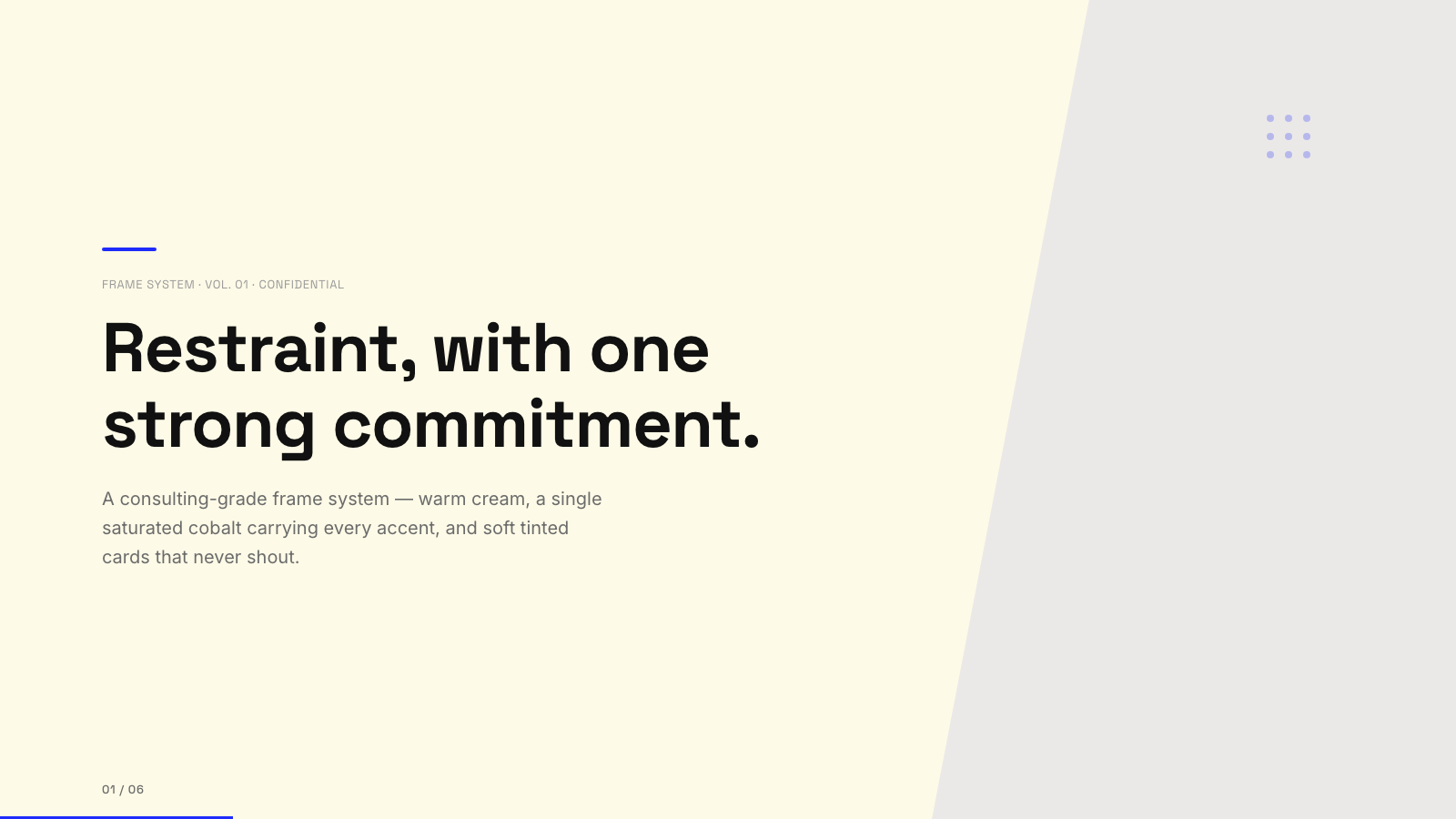
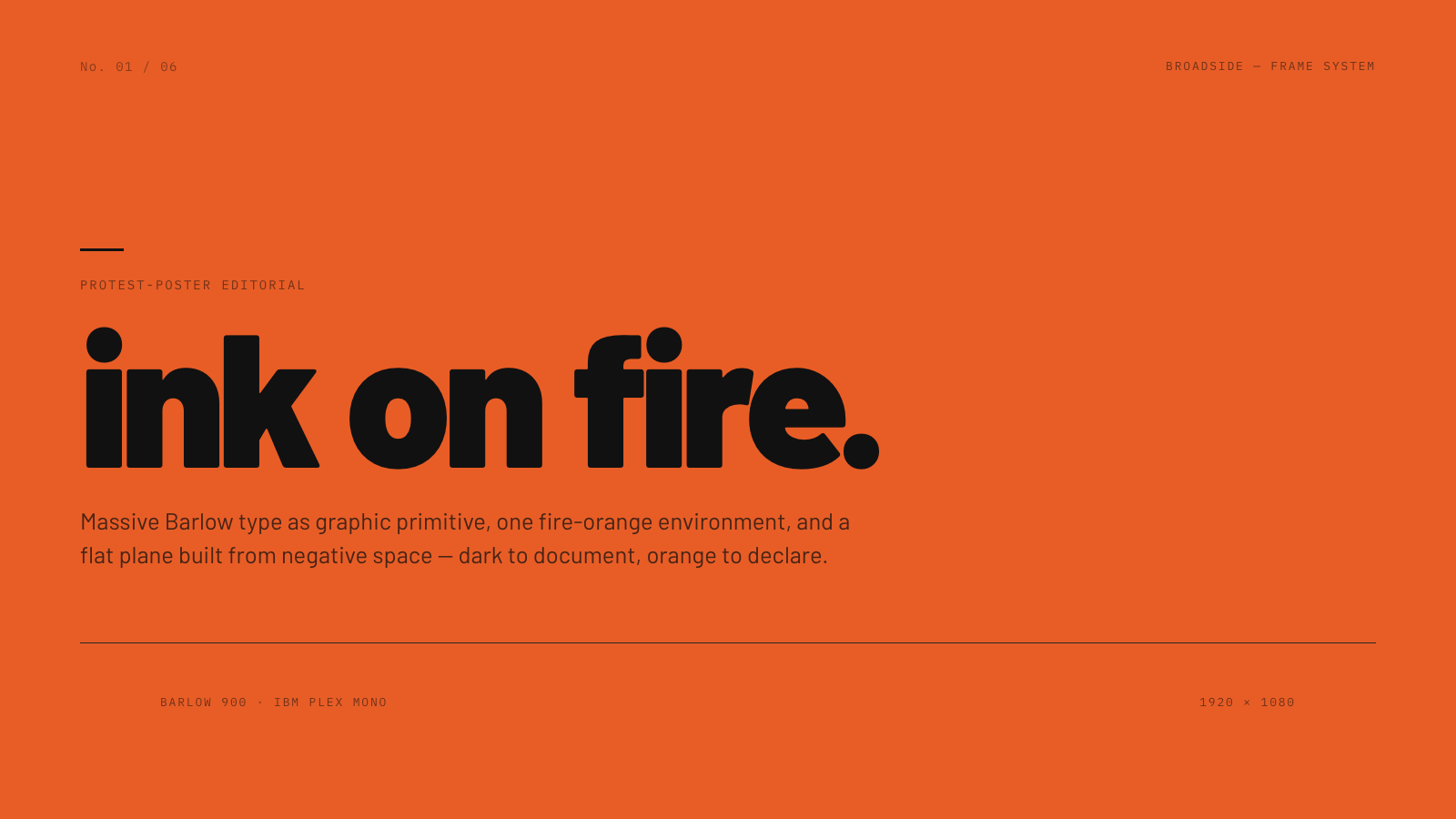
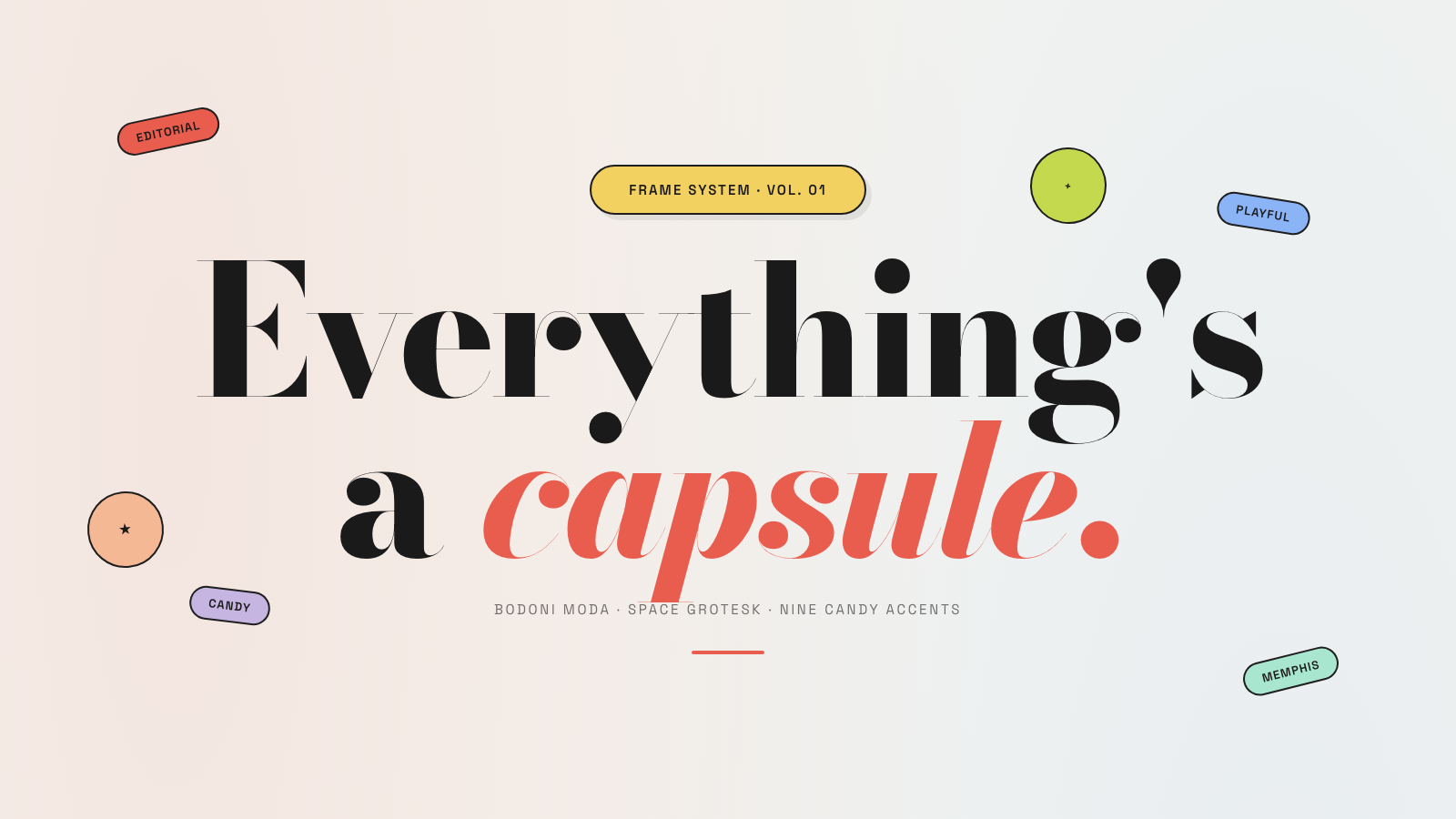
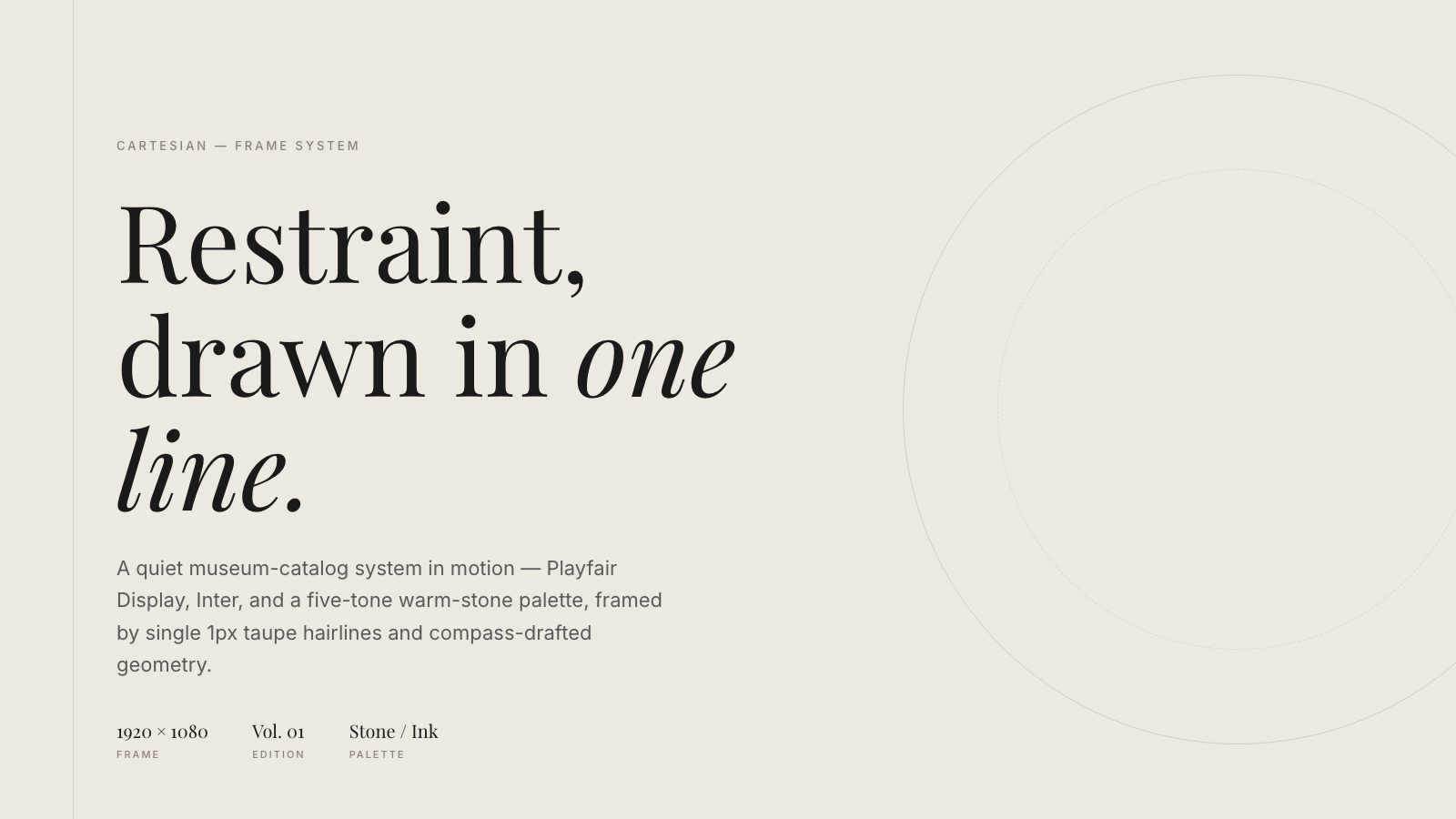
Frame.md
frame.md — your design system, ready for video.
Every brand has a design.md. None of them were written for a camera. frame.md is the missing translation layer: it takes your web-context design spec and inverts it for the frame — the same tokens, the same rules, but rewritten so an AI agent can compose a promo video without guessing at scale or reaching for web chrome.
The output is a DESIGN.md superset your whole toolchain can read. Atoms stay sacred. Composition stays free. Numbers come from the script.

Biennale Yellow |

BlockFrame |
Blue Professional |

Bold Poster |
Broadside |
Capsule |
Cartesian |
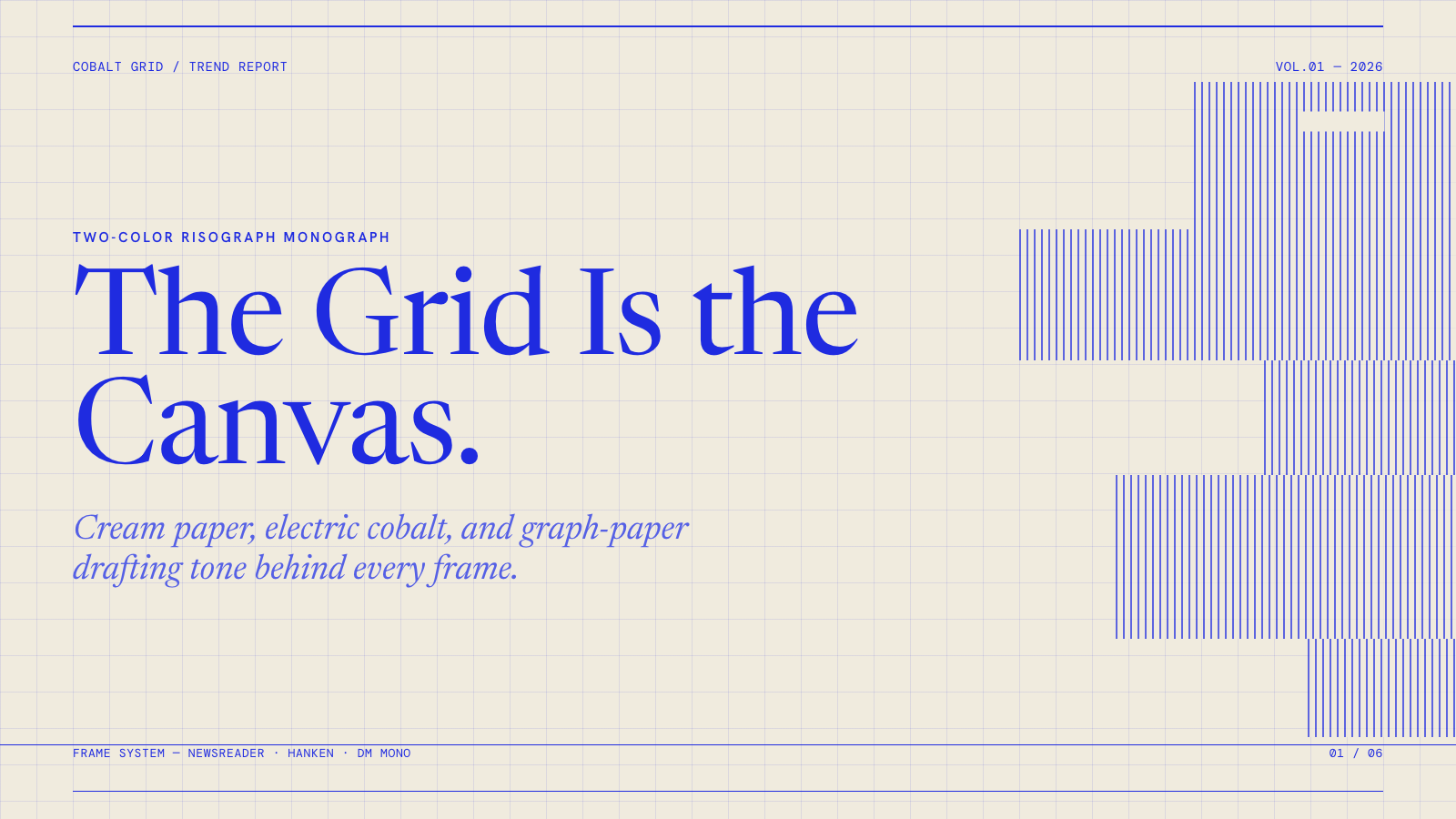
Cobalt Grid |

Coral |

Creative Mode |
Browse and remix them all at hyperframes.dev/design.
How It Works
Define a video as HTML. Add data attributes for timing and tracks. Use GSAP, CSS, Lottie, Three.js, Anime.js, WAAPI, or your own frame adapter for seekable animation.
<div id="stage" data-composition-id="launch" data-start="0" data-width="1920" data-height="1080">
  <video
    class="clip"
    data-start="0"
    data-duration="6"
    data-track-index="0"
    src="intro.mp4"
    muted
    playsinline
  ></video>

  <h1 id="title" class="clip" data-start="1" data-duration="4" data-track-index="1">Launch day</h1>

  <audio
    data-start="0"
    data-duration="6"
    data-track-index="2"
    data-volume="0.5"
    src="music.wav"
  ></audio>

  <script src="https://cdn.jsdelivr.net/npm/gsap@3/dist/gsap.min.js"></script>
  <script>
    const tl = gsap.timeline({ paused: true });
    tl.from("#title", { opacity: 0, y: 40, duration: 0.8 }, 1);
    window.__timelines = window.__timelines || {};
    window.__timelines.launch = tl;
  </script>
</div>
Preview instantly in the browser. Render locally or in Docker. The renderer seeks each frame in headless Chrome and encodes the result with FFmpeg, so the same input produces the same video.
HyperFrames Stack
HyperFrames is the open-source rendering engine, plus a growing set of tools around HTML-native video creation.
| Piece | Status | What it does |
|---|---|---|
| CLI | Available | Scaffold, preview, lint, inspect, and render local video projects |
| Core / Engine / Producer | Available | Parse compositions, drive headless Chrome, encode video, and mix audio |
| Catalog | Available | Reusable blocks and components for transitions, overlays, captions, charts, maps, and effects |
| Agent skills | Available | Teach coding agents the video-production patterns that generic web docs miss |
| Studio | Available, evolving | Browser surface for previewing and editing compositions |
| AWS Lambda rendering | Available | Deploy a distributed render stack and drive renders from your laptop or CI |
| hyperframes.dev | Available | Community playground for previewing, iterating, sharing, and rendering HTML-native video projects |
| frame.md | Available | Invert your design system for the camera — a DESIGN.md superset an agent can compose video from |
Catalog
Install ready-to-use blocks and components:
npx hyperframes add flash-through-white   # shader transition
npx hyperframes add instagram-follow      # social overlay
npx hyperframes add data-chart            # animated chart
Browse the catalog at hyperframes.heygen.com/catalog.
Why HyperFrames?
- HTML-native: compositions are HTML files with data attributes. No React requirement, no proprietary timeline format.
- Agent-friendly: agents already write HTML, and the CLI is non-interactive by default.
- Deterministic: same input, same frames, same output. Built for CI, regression tests, and automated rendering.
- No build step: an
index.htmlcomposition plays as-is and can be previewed directly in the browser. - Adapter-based animation: bring GSAP, CSS animations, Lottie, Three.js, Anime.js, WAAPI, or a custom runtime.
- Open source: Apache 2.0 license, with no per-render fees or commercial-use thresholds.
HyperFrames vs Remotion
HyperFrames is inspired by Remotion. Both tools render video with headless Chrome and FFmpeg. The main difference is the authoring model: Remotion's bet is React components; HyperFrames' bet is plain HTML that humans and agents can both write easily.
| HyperFrames | Remotion | |
|---|---|---|
| Authoring | HTML + CSS + seekable animation | React components |
| Build step | None; index.html plays as-is |
Bundler required |
| Agent handoff | Plain HTML files | JSX / React project |
| Library-clock animations | Seekable, frame-accurate via adapters | Wall-clock animation patterns need care |
| Distributed rendering | Local and AWS Lambda render paths | Remotion Lambda, mature cloud renderer |
| License | Apache 2.0 | Source-available Remotion License |
Read the full comparison in the HyperFrames vs Remotion guide.
Documentation
Full documentation: hyperframes.heygen.com/introduction
Packages
| Package | Description |
|---|---|
hyperframes |
CLI for creating, previewing, linting, and rendering compositions |
@hyperframes/core |
Types, parsers, generators, linter, runtime, and frame adapters |
@hyperframes/engine |
Seekable page-to-video capture engine using Puppeteer and FFmpeg |
@hyperframes/producer |
Full rendering pipeline for capture, encode, and audio mix |
@hyperframes/studio |
Browser-based composition editor UI |
@hyperframes/player |
Embeddable <hyperframes-player> web component |
@hyperframes/shader-transitions |
WebGL shader transitions for compositions |
@hyperframes/aws-lambda |
AWS Lambda SDK and deployment surface for distributed renders |
Community
HyperFrames is used in production at HeyGen, with community examples from teams like tldraw, TanStack, and others in ADOPTERS.md. Open a PR if your team is using HyperFrames.
- Questions and ideas: Discord
- Bugs and feature requests: GitHub Issues
- Security reports: SECURITY.md
- Contributions: CONTRIBUTING.md
Development Note
The repo uses Git LFS for golden regression-test baselines under packages/producer/tests/**/output.mp4 (about 240 MB of .mp4 files). If you're cloning the full repo for development, install Git LFS first:
# macOS
brew install git-lfs

# Ubuntu / Debian
sudo apt install git-lfs

# Windows
winget install GitHub.GitLFS

# Then, once per machine
git lfs install
If you only need source files, you can skip LFS content:
GIT_LFS_SKIP_SMUDGE=1 git clone https://github.com/heygen-com/hyperframes.git