 Vance IngallsandClaude Fable 5
924727a0b4
Vance IngallsandClaude Fable 5
924727a0b4
* feat(producer,cli): drawElement priority inversion — single-worker streaming over auto-parallel

clamp:parallel eats 50% of local renders (1,326/fortnight; DE engagement
stuck at 3.8%) by routing multi-worker renders to unverified screenshot
capture. Benchmarks (2026-07-08, 4 comps x W1/W2/W3/W5) show that above the
~900-frame amortization crossover, single-worker VERIFIED drawElement
streaming beats screenshot-parallel at EVERY worker count (2,380f: 66s vs
109-127s; 3,600f: 33s vs 39-56s; parallel scaling flattens past W2), while
below it DE's fixed init cost loses by <=2.2s.

- shouldPreferSingleWorkerDrawElement (exported predicate + 7 unit tests):
  inverts an AUTO-resolved multi-worker render to workerCount=1 when the
  comp matches the benchmarked configuration — default-on DE (darwin
  hardware clamp upstream), no compile gate, no forced-screenshot hint,
  mp4 output, single-worker streaming eligible, and totalFrames >=
  HF_DE_SINGLE_MIN_FRAMES (default 900; 0 disables). Explicit --workers N
  is always honored.
- Inverted renders keep the probe session and land on the worker-encode
  streaming drain — the ONLY path with runtime self-verification, so this
  moves ~40% of previously-clamped renders onto the verified fast path.
  Comps that later hit an init-time gate (~1.5% of local renders) render
  single-worker screenshot streaming; accepted trade.
- Telemetry: de_worker_inversion on render_complete (orchestrator ->
  perfSummary.workerInversion -> CLI), plus the worker_resolution
  observability checkpoint now records deWorkerInversion.

Validation: e2e matrix on 2,381f comp — auto->5 workers inverted to 1,
DE verified 4x inf PSNR, RENDER_OK; short comp (360f) auto stays 5-worker;
explicit WORKERS=3 honored; HF_DE_SINGLE_MIN_FRAMES=0 disables. Canary
suite 7/7 (PSNRs identical). renderOrchestrator tests 86/86.
tsc/oxlint/oxfmt clean.

Co-Authored-By: Claude Fable 5 <noreply@anthropic.com>

* fix(producer): review fixes — inversion routing guards, calibration skip, retry revert

Max code-review round on the inversion (13 confirmed findings):

- Streaming spawn-failure disk fallback now clamps default-on drawElement
  (deClampReason=disk_path, DE-mode probe closed) exactly like the
  pre-capture clamp — previously it carried useDrawElement=true onto the
  unverified disk path, the hole the verified-path confinement exists to
  close, newly reachable for every inverted render.
- Predicate gained the routing knowledge it was blind to: layered/HDR and
  shader-transition comps (drawElement never runs there), supersampling
  (deviceScaleFactor>1 init gate), a probe session whose init gates already
  disengaged DE, and the PRODUCER_EXPERIMENTAL_FAST_CAPTURE=true explicit
  parallel-DE opt-in (honored like --workers N).
- Eligibility is evaluated BEFORE capture calibration and skips it when the
  inversion pins workers to 1 regardless of the estimate — the throwaway
  calibration browser + sample captures cost ~41s on the 2,381-frame
  benchmark comp (auto render: 111.6s -> 70.1s total).
- Self-verify retry reverts the inversion: the re-render returns to the
  pre-inversion parallel screenshot path (disk) instead of single-worker
  screenshot streaming, the slowest shape for exactly the comps drawElement
  damages.
- HF_DE_SINGLE_MIN_FRAMES="" (set-but-empty) now falls back to the 900
  default instead of aliasing the 0 kill switch.
- Timeout advisory uses the RESOLVED worker count — an inverted render that
  times out no longer prints "Retry with --workers 1" (the configuration
  that just failed).
- Telemetry: deWorkerInversion recorded in capture observability (failed
  renders are attributable), emitted as literal false when not fired
  (queryable denominator), and the drawElement perf input shape is one
  exported DrawElementPerfInput type instead of three copies.
- Tests: requestedWorkers undefined (the value production actually passes)
  + the four new predicate guards; 91/91.

Validation: e2e auto render — calibration skipped (deInversionEligible),
inversion fires, DE verified 4x inf, total 70.1s (was 111.6s);
HF_DE_SINGLE_MIN_FRAMES=0 restores calibration + parallel; canary suite
7/7 (PSNRs identical); tsc/oxlint/oxfmt clean.

Co-Authored-By: Claude Fable 5 <noreply@anthropic.com>

* fix(producer,cli): review round 2 — loss-cohort telemetry, retry-plan helper, boundary tests

- de_worker_inversion is now a tri-state string ("inverted" | "reverted" |
  "none") instead of a boolean: the self-verify retry marks the render
  "reverted" rather than resetting to false, so the dashboard can segment
  the lost-inversion cohort first-class instead of inferring it from
  deSelfVerifyFallback + frame-count joins (james-russo #1).
- The retry rollback is extracted to resolveInversionRetryPlan (pure,
  exported) with unit coverage: pre-inversion worker-count restore,
  streaming re-resolution (multi-worker retry -> disk), "reverted" state,
  null when never inverted (james-russo #2).
- WOULD_RESOLVE_MULTI_WORKER named constant replaces the bare sentinel 2
  (james-russo #5); minFrames: -1 boundary case added (miga #3).

94/94 renderOrchestrator tests; tsc/oxlint/oxfmt clean.

Co-Authored-By: Claude Fable 5 <noreply@anthropic.com>

* feat(producer,cli): emit de_pre_inversion_workers for the parallel counterfactual

The ramp-down decision needs "did DE beat the parallel render it displaced",
not just "did DE beat single-worker screenshot". Emitting the worker count
the auto-resolution chose BEFORE the inversion pinned it to 1 makes the
parallel counterfactual computable per render (screenshot ms/frame from the
verify samples / W x the measured parallel-efficiency curve). Set only when
the inversion fired.

Smoke: 2,381f auto render -> de_worker_inversion="inverted",
de_pre_inversion_workers=5, mode=drawelement, verify armed 4. 99/99 tests.

Co-Authored-By: Claude Fable 5 <noreply@anthropic.com>

---------

Co-authored-by: Claude Fable 5 <noreply@anthropic.com>






Write HTML. Render video. Built for agents.
Quickstart | Showcase | Playground | Catalog | Docs | Discord

HyperFrames is an open-source framework for turning HTML, CSS, media, and seekable animations into deterministic MP4 videos. Use it locally with the CLI, from AI coding agents with skills, or as the rendering core behind hosted authoring workflows.
Quick Start
With an AI coding agent
Install the HyperFrames skills, then describe the video you want:
npx skills add heygen-com/hyperframes --yes
Try a prompt like:
Using
/hyperframes, create a 10-second product intro with a fade-in title, a background video, and subtle background music.
The skills teach agents the HyperFrames production loop: plan the video, write valid HTML, wire seekable animations, add media, lint, preview, and render. They work with Claude Code, Cursor, Gemini CLI, Codex, and other coding agents that support skills.
Skills
HyperFrames ships 20 skills agents load on demand. Read /hyperframes first — it's the router and capability map; it picks a workflow for any "make me a…" request — video, deck, or composition port — and points to the domain skills below.
Run npx skills add heygen-com/hyperframes for the interactive picker, npx skills add heygen-com/hyperframes --all to install all 20 at once (skips the picker), or npx skills add heygen-com/hyperframes --skill <name> for just one (bare name, no leading /).
Router
| Skill | Use when |
|---|---|
/hyperframes |
Read first for any request to make / create / edit / animate / render a video, animation, or motion graphic. Capability map for the domain skills and intent router for the creation workflows below. |
Creation workflows
| Skill | Use when |
|---|---|
/product-launch-video |
Marketing / launching / promoting a product — from its URL, a brief, or a script (even if the site is only named). Up to ~3 min (sweet spot 30-90s). |
/website-to-video |
Turning a general website into a video — site tour, portfolio / landing-page showcase, social clip from the site's own visuals. |
/faceless-explainer |
Explaining a topic / concept from arbitrary text — no product, no URL, no website capture; every visual is LLM-invented (typography / abstract / diagram / data-viz). |
/pr-to-video |
A GitHub pull request (PR URL, owner/repo#N ref, or "this PR") → changelog / feature-reveal / fix / refactor explainer, read via the gh CLI. |
/embedded-captions |
Adding captions / subtitles to an existing talking-head video (footage untouched) — verbatim rail, embedded climax behind the subject, or pure-cinematic embed. |
/talking-head-recut |
Packaging an existing talking-head / interview / podcast video with designed graphic overlays — lower-thirds, data callouts, kinetic titles, pull-quotes, side panels, PiP. |
/motion-graphics |
A short, unnarrated, design-led motion graphic (~under 10s) — kinetic type, stat / chart hit, logo sting, lower-third, animated tweet / headline. MP4 or transparent overlay. |
/music-to-video |
A music track (audio file, or video to pull audio from) → a beat-synced video — lyric, slideshow, or kinetic promo; music drives pacing. |
/slideshow |
A presentation / pitch deck / interactive deck — discrete slides, fragment reveals, branching, hotspot navigation, presenter mode. Output is a navigable deck, not a rendered video. |
/general-video |
Anything else — longer or multi-scene pieces, brand / sizzle reel, title card, static loop, freeform composition. Input- and length-agnostic fallback. |
/remotion-to-hyperframes |
Porting an existing Remotion (React) composition's source to HyperFrames HTML. One-way migration, not creation. |
Domain skills (loaded on demand)
Atomic capabilities the creation workflows compose against — pull one when you need that specific layer.
| Skill | Covers |
|---|---|
/hyperframes-core |
The composition contract — data-* timing attributes, class="clip", tracks, sub-compositions, variables, framework-owned media playback, determinism rules. |
/hyperframes-animation |
All animation knowledge — atomic motion rules, scene blueprints, transitions, runtime adapters (GSAP / Lottie / Three.js / Anime.js / CSS / WAAPI / TypeGPU). |
/hyperframes-keyframes |
Seek-safe keyframe authoring across runtimes — GSAP timelines, CSS keyframes, Anime.js, WAAPI, FLIP, paths, masks, SVG morph/draw, 3D depth — plus hyperframes keyframes diagnostics for rendered motion. |
/hyperframes-creative |
Non-animation creative direction — frame.md / design.md, palettes, typography, narration, beat planning, audio-reactive visuals, composition patterns. |
/media-use |
The media OS — resolve any media need (BGM, SFX, image, icon, voice) into a frozen local file + ledger record, generate via TTS/music/image models when the catalog misses, transcribe, caption, remove backgrounds, and reuse assets across projects. One shared audio engine + manifest tracking. |
/hyperframes-cli |
CLI dev loop — init, lint, validate, inspect, preview, render, publish, doctor, plus AWS Lambda cloud rendering (lambda deploy / render / progress). |
/hyperframes-registry |
Install and wire registry blocks and components into compositions via hyperframes add. Authoring a new block or component to contribute upstream. |
/figma |
Import Figma assets, tokens, components, and storyboard sections → reconstructed motion (frames read as states, not slides) (REST/CLI) plus Motion animations (MCP) and shaders (MCP source / native export) into a composition. |
For visual design handoff workflows, see the Claude Design guide and Open Design guide.
Manually with the CLI
npx hyperframes init my-video
cd my-video
npx hyperframes preview      # preview in browser with live reload
npx hyperframes render       # render to MP4
Requirements: Node.js 22+, FFmpeg
What You Can Build
Need ideas? Browse the Showcase for finished videos you can watch, read, run, and remix.
- Product launch videos and feature announcements
- PR walkthroughs with animated code diffs, narration, and captions
- Data visualizations, chart races, and map animations
- Social videos with kinetic captions, overlays, and music
- Docs-to-video, PDF-to-video, and website-to-video explainers
- Reusable motion graphics for automated content pipelines
Frame.md
frame.md — your design system, ready for video.
Every brand has a design.md. None of them were written for a camera. frame.md is the missing translation layer: it takes your web-context design spec and inverts it for the frame — the same tokens, the same rules, but rewritten so an AI agent can compose a promo video without guessing at scale or reaching for web chrome.
The output is a DESIGN.md superset your whole toolchain can read. Atoms stay sacred. Composition stays free. Numbers come from the script.

Biennale Yellow |

BlockFrame |
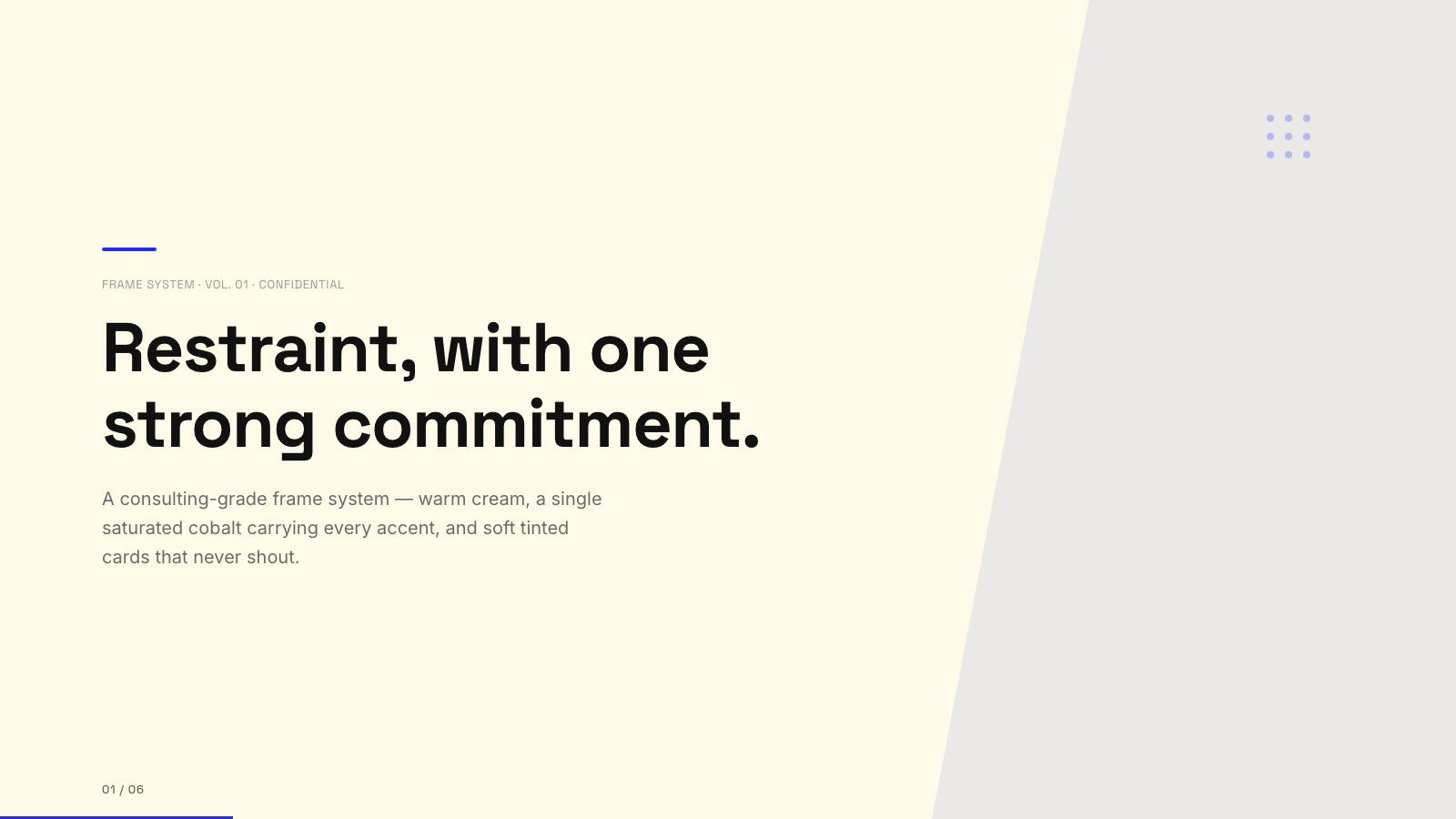
Blue Professional |

Bold Poster |
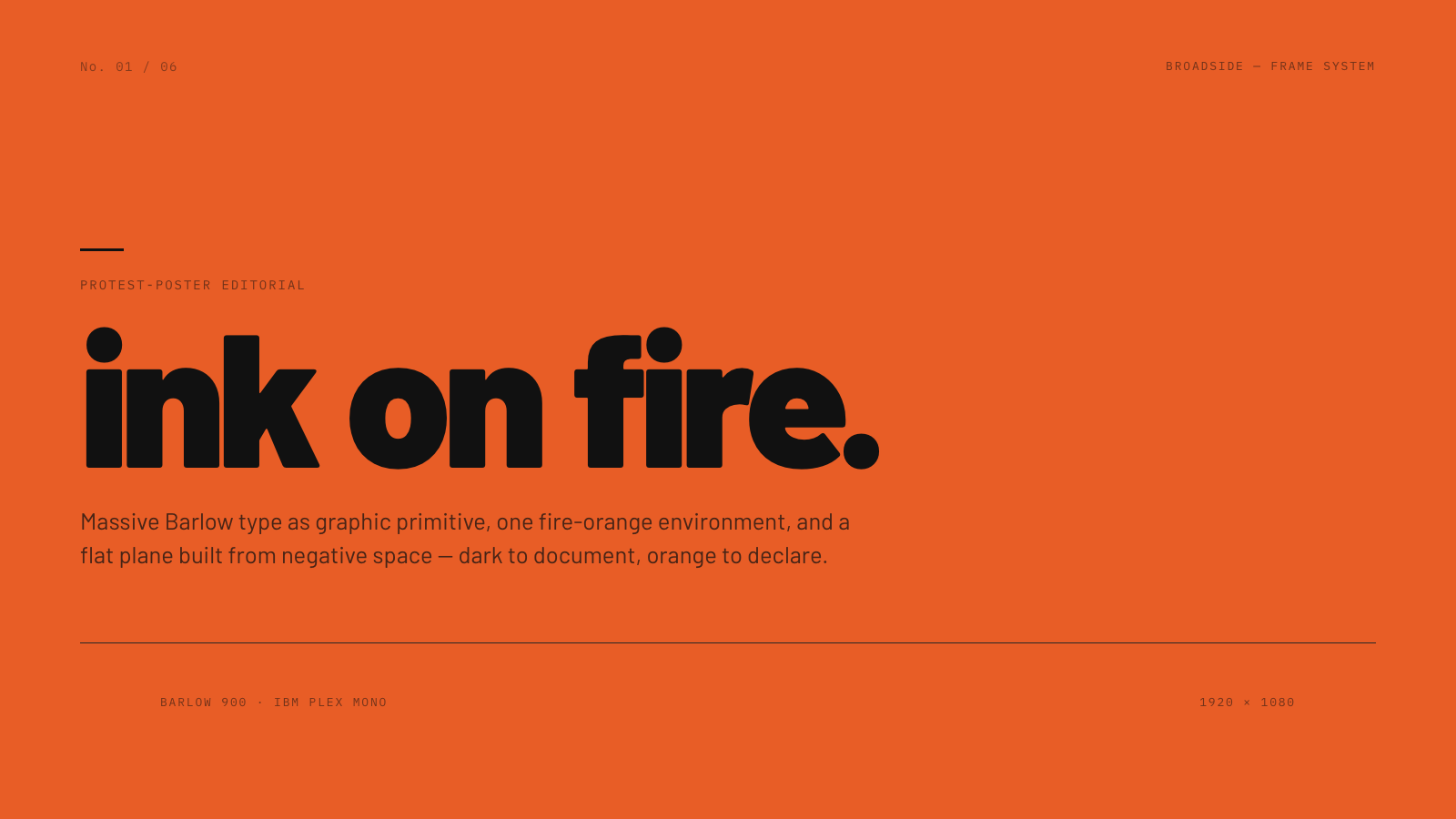
Broadside |
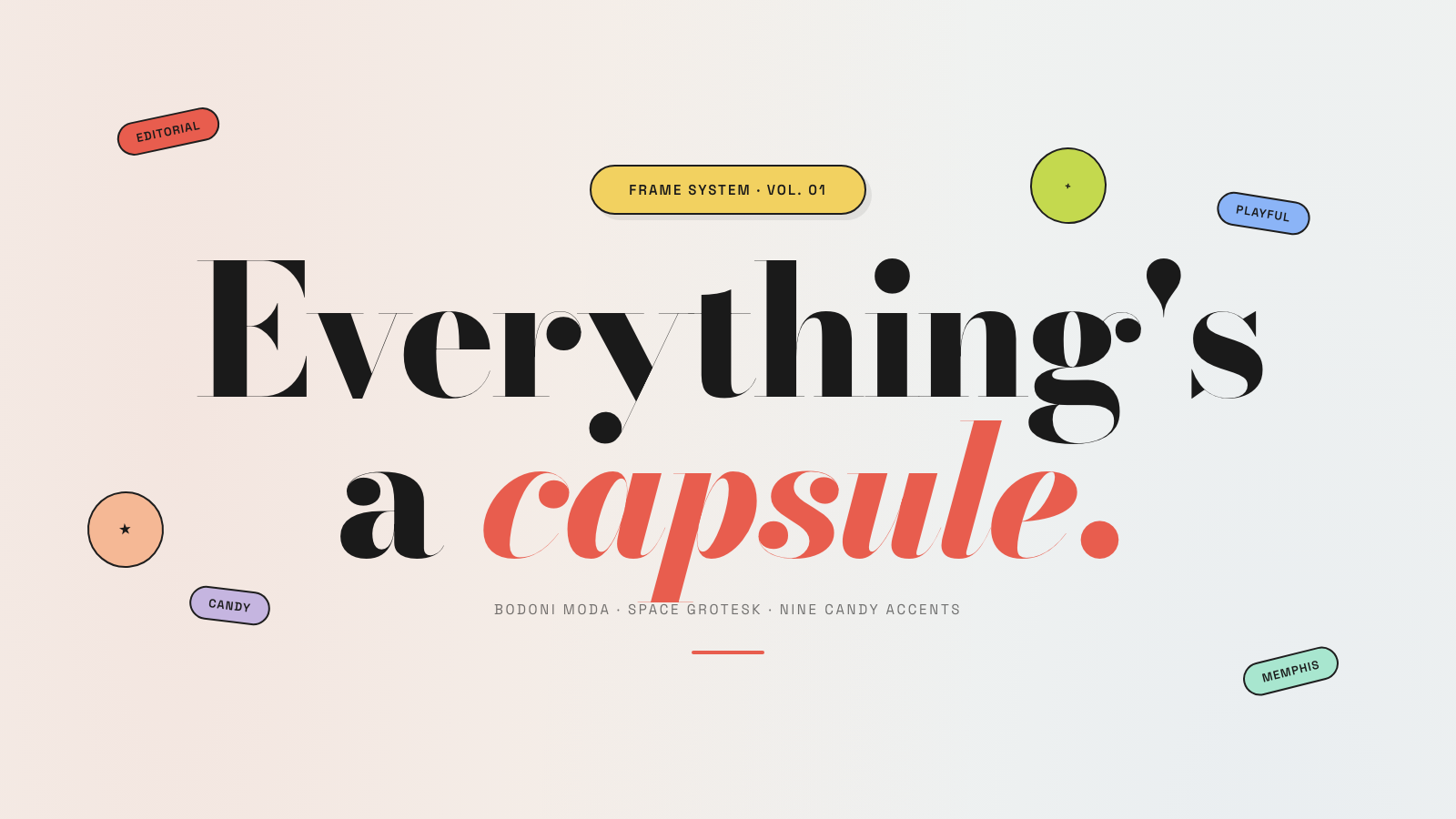
Capsule |
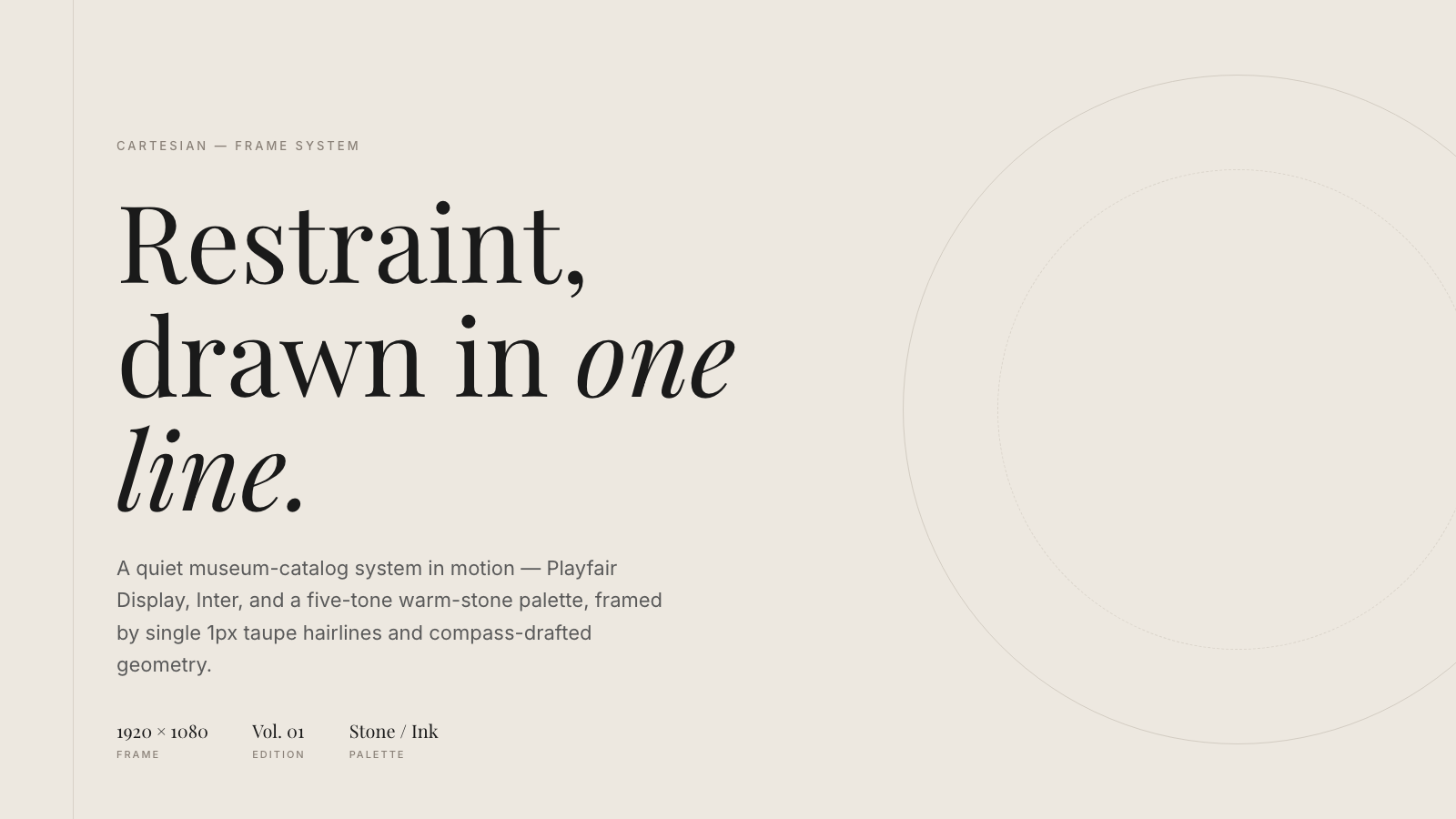
Cartesian |
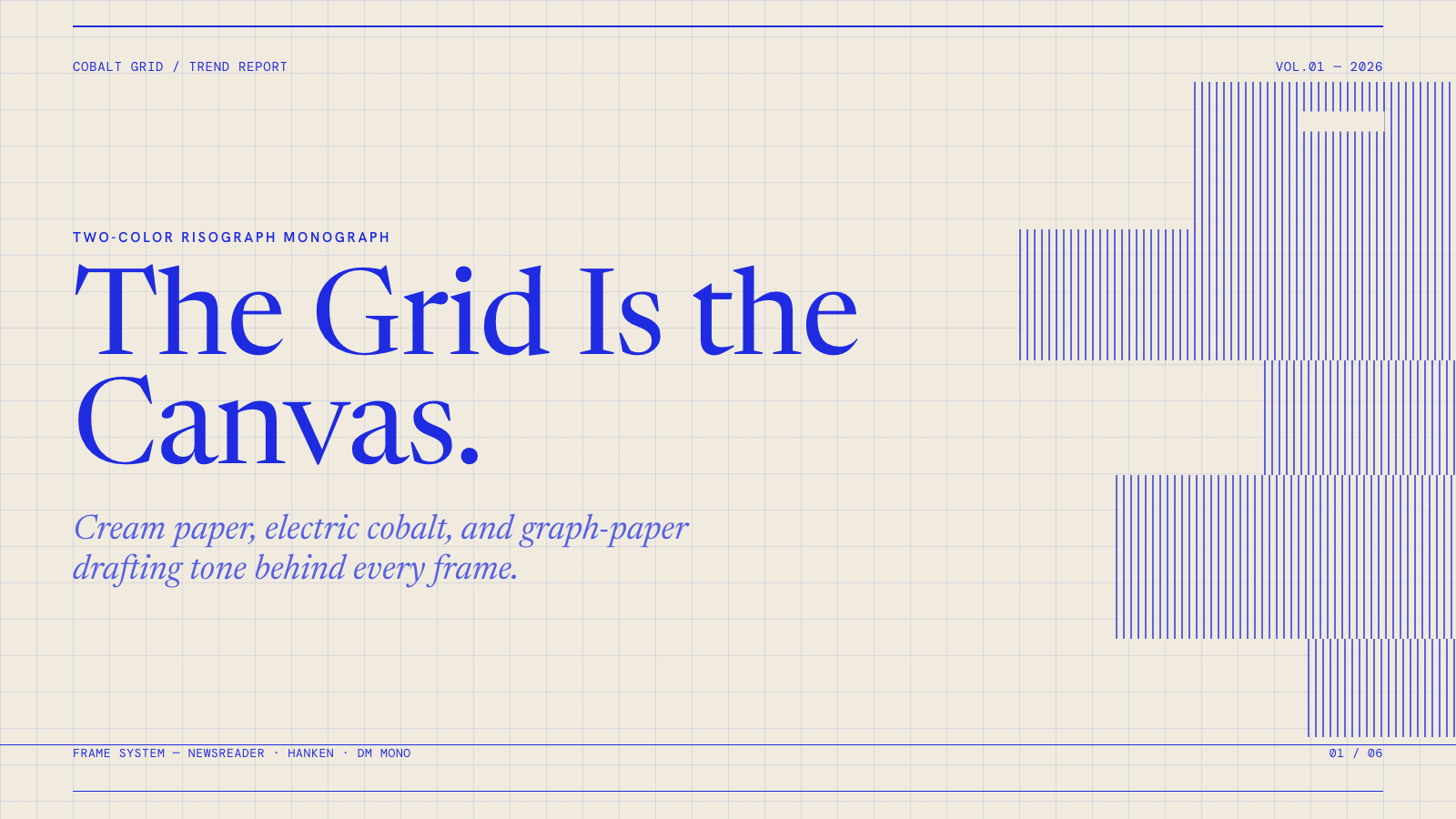
Cobalt Grid |

Coral |
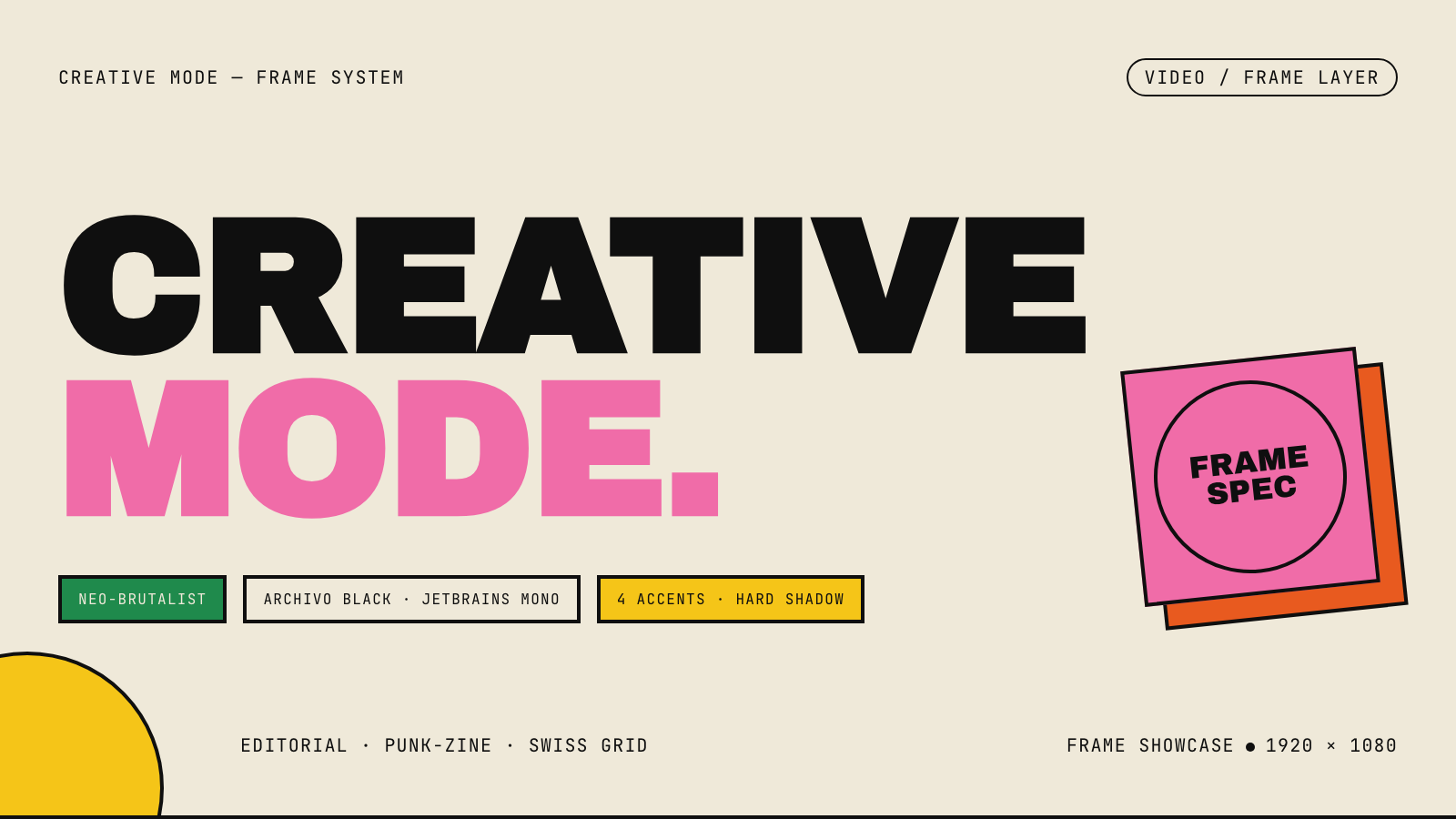
Creative Mode |
Browse and remix them all at hyperframes.dev/design.
How It Works
Define a video as HTML. Add data attributes for timing and tracks. Use GSAP, CSS, Lottie, Three.js, Anime.js, WAAPI, or your own frame adapter for seekable animation.
<div id="stage" data-composition-id="launch" data-start="0" data-width="1920" data-height="1080">
  <video
    class="clip"
    data-start="0"
    data-duration="6"
    data-track-index="0"
    src="intro.mp4"
    muted
    playsinline
  ></video>

  <h1 id="title" class="clip" data-start="1" data-duration="4" data-track-index="1">Launch day</h1>

  <audio
    data-start="0"
    data-duration="6"
    data-track-index="2"
    data-volume="0.5"
    src="music.wav"
  ></audio>

  <script src="https://cdn.jsdelivr.net/npm/gsap@3/dist/gsap.min.js"></script>
  <script>
    const tl = gsap.timeline({ paused: true });
    tl.from("#title", { opacity: 0, y: 40, duration: 0.8 }, 1);
    window.__timelines = window.__timelines || {};
    window.__timelines.launch = tl;
  </script>
</div>
Preview instantly in the browser. Render locally or in Docker. The renderer seeks each frame in headless Chrome and encodes the result with FFmpeg, so the same input produces the same video.
HyperFrames Stack
HyperFrames is the open-source rendering engine, plus a growing set of tools around HTML-native video creation.
| Piece | Status | What it does |
|---|---|---|
| CLI | Available | Scaffold, preview, lint, inspect, and render local video projects |
| Core / Engine / Producer | Available | Parse compositions, drive headless Chrome, encode video, and mix audio |
| Catalog | Available | Reusable blocks and components for transitions, overlays, captions, charts, maps, and effects |
| Agent skills | Available | Teach coding agents the video-production patterns that generic web docs miss |
| Studio | Available, evolving | Browser surface for previewing and editing compositions |
| AWS Lambda rendering | Available | Deploy a distributed render stack and drive renders from your laptop or CI |
| hyperframes.dev | Available | Community playground for previewing, iterating, sharing, and rendering HTML-native video projects |
| frame.md | Available | Invert your design system for the camera — a DESIGN.md superset an agent can compose video from |
Catalog
Install ready-to-use blocks and components:
npx hyperframes add flash-through-white   # shader transition
npx hyperframes add instagram-follow      # social overlay
npx hyperframes add data-chart            # animated chart
Browse the catalog at hyperframes.heygen.com/catalog.
Why HyperFrames?
- HTML-native: compositions are HTML files with data attributes. No React requirement, no proprietary timeline format.
- Agent-friendly: agents already write HTML, and the CLI is non-interactive by default.
- Deterministic: same input, same frames, same output. Built for CI, regression tests, and automated rendering.
- No build step: an
index.htmlcomposition plays as-is and can be previewed directly in the browser. - Adapter-based animation: bring GSAP, CSS animations, Lottie, Three.js, Anime.js, WAAPI, or a custom runtime.
- Open source: Apache 2.0 license, with no per-render fees or commercial-use thresholds.
HyperFrames vs Remotion
HyperFrames is inspired by Remotion. Both tools render video with headless Chrome and FFmpeg. The main difference is the authoring model: Remotion's bet is React components; HyperFrames' bet is plain HTML that humans and agents can both write easily.
| HyperFrames | Remotion | |
|---|---|---|
| Authoring | HTML + CSS + seekable animation | React components |
| Build step | None; index.html plays as-is |
Bundler required |
| Agent handoff | Plain HTML files | JSX / React project |
| Library-clock animations | Seekable, frame-accurate via adapters | Wall-clock animation patterns need care |
| Distributed rendering | Local and AWS Lambda render paths | Remotion Lambda, mature cloud renderer |
| License | Apache 2.0 | Source-available Remotion License |
Read the full comparison in the HyperFrames vs Remotion guide.
Documentation
Full documentation: hyperframes.heygen.com/introduction
Packages
| Package | Description |
|---|---|
hyperframes |
CLI for creating, previewing, linting, and rendering compositions |
@hyperframes/core |
Types, parsers, generators, linter, runtime, and frame adapters |
@hyperframes/engine |
Seekable page-to-video capture engine using Puppeteer and FFmpeg |
@hyperframes/producer |
Full rendering pipeline for capture, encode, and audio mix |
@hyperframes/studio |
Browser-based composition editor UI |
@hyperframes/player |
Embeddable <hyperframes-player> web component |
@hyperframes/shader-transitions |
WebGL shader transitions for compositions |
@hyperframes/aws-lambda |
AWS Lambda SDK and deployment surface for distributed renders |
Community
HyperFrames is used in production at HeyGen, with community examples from teams like tldraw, TanStack, and others in ADOPTERS.md. Open a PR if your team is using HyperFrames.
- Questions and ideas: Discord
- Bugs and feature requests: GitHub Issues
- Security reports: SECURITY.md
- Contributions: CONTRIBUTING.md
Development Note
The repo uses Git LFS for golden regression-test baselines under packages/producer/tests/**/output.mp4 (about 240 MB of .mp4 files). If you're cloning the full repo for development, install Git LFS first:
# macOS
brew install git-lfs

# Ubuntu / Debian
sudo apt install git-lfs

# Windows
winget install GitHub.GitLFS

# Then, once per machine
git lfs install
If you only need source files, you can skip LFS content:
GIT_LFS_SKIP_SMUDGE=1 git clone https://github.com/heygen-com/hyperframes.git