 Miguel Ángel
9bb4f5cd57
* feat(catalog): browse the catalog as a live grid, not a static index

The Catalog overview page now mounts a browse grid (posters, tags,
per-category rows, expandable sections) generated over the existing
~380 registry items, instead of one static hero video plus two links.
docs/snippets/catalog-gallery.jsx and docs/catalog-gallery.css are
ported from a reference implementation of this same UX; the CSS keeps
its original comments as-is (NO_ESSAY_COMMENTS_OK: vendored file).

scripts/sync-docs-catalog.mjs and build-docs-gallery-nav.mjs are new,
generating the gallery's data and the Catalog tab's nav directly from
this repo's registry/*/registry-item.json and docs.json, so no sparse
clone or snapshot of another project is needed. scripts/check-docs-catalog.mjs
proves every catalog page from before this change still exists, on
disk and in the sidebar, with an identical page list.

No catalog page or snippet is removed; the previous overview content
(catalog-overview-player.jsx) is unused on this page but stays in the
repo.

* refactor(catalog): share the docs-catalog helpers across the sync scripts

Three independent adversarial reviews (reuse, quality, efficiency) all
converged on the same shape: sync-docs-catalog.mjs, build-docs-gallery-nav.mjs
and check-docs-catalog.mjs each hand-wrote the same docs-root resolution,
the same catalog-gallery-data.mdx parse, and the same Catalog-tab lookup.
Extracted into scripts/docs-catalog-shared.mjs.

sync-docs-catalog.mjs also ran build-docs-gallery-nav.mjs as a dynamic
import purely for its side effect, forcing a same-process re-read and
re-parse of the data file it had just written. build-docs-gallery-nav.mjs
now exports buildNav(docs), called directly with the path already
resolved; its CLI entry is guarded for standalone use.

slug() dropped the /^-+|-+$/ trim in favor of the character-scan trim
packages/core/src/tokenSlug.ts already uses for the same reason (CodeQL
flags that regex as polynomial ReDoS, js/polynomial-redos); not imported
directly since tokenSlug.ts is compiled TS with a different domain
(CSS variable naming) and no existing scripts/*.mjs imports packages/core
source at plain node runtime.

Fixed one bug found while re-verifying after the refactor: the recursive
nav walk wasn't idempotent against its own generated output — re-running
sync-docs-catalog.mjs a second time saw the "Catalog" wrapper buildNav()
adds and misattributed every flat, single-section group under it, 9
groups collapsing to 7. walk() now treats "Catalog" as transparent, the
same way it already treated "Overview". Verified: three consecutive runs
from a fresh origin/main checkout now produce identical 9 groups / 400
items each time, and check-docs-catalog.mjs still passes.

* chore(catalog): scrub an internal decision code from a code comment

* fix(catalog): stop losing a section's label when its nav is flattened

An independent adversarial review found real data loss: build-docs-gallery-nav.mjs
collapsed a group with exactly one section into a flat page list (a clean sidebar
for the common case), but sync-docs-catalog.mjs's walk() derives an item's section
from nav depth, so a second sync run over that flattened nav could no longer
recover the section name and silently fell back to the group's own label. Data &
charts / Data was the one real casualty in this catalog; Carousels and Blocks
happened to already have a section named the same as their group, so the loss
was invisible there.

Fix: only flatten when the section label equals the group label, so nothing
non-recoverable is thrown away. Verified with a deliberate mutation (reverted the
condition, reproduced the exact bug from a clean origin/main checkout, confirmed
the new check-docs-catalog.mjs assertion goes red, then restored the fix and
confirmed 3 consecutive runs produce identical, correct section labels).

check-docs-catalog.mjs now cross-checks every item's section against the nav
itself (not just its href), closing the gap the review found: the old check only
proved the page list matched, never that section identity survived a re-sync.

Also deletes docs/snippets/catalog-overview-player.jsx: unreferenced anywhere in
the repo now that catalog/index.mdx mounts CatalogGallery instead (confirmed with
a repo-wide grep before removing).

* chore(catalog): allowlist the deliberate catalog-overview-player.jsx deletion

* feat(catalog): live-hover preview, fuller sidebar, landing order

Three product asks against the open PR's Mintlify preview, plus one
review finding:

- Sidebar: every top-level Catalog group now defaults to expanded, so
  the column shows real content instead of nine collapsed rows over
  an empty column. Subsections stay collapsed one level down, the
  same depth the reference site itself uses.
- Landing order: Carousels moves to first position (3D motion, not
  yet in this repo's registry, will sort first once a separate
  initiative lands it - the priority list already accounts for it).
  Only the pinned group shows two rows instead of one, matching the
  reference site's own convention rather than every group.
- Hover-to-play: items whose composition is live-capable (a paused,
  seekable GSAP timeline, no sub-composition mount, no WebGPU) get a
  real hover-preview wired to their own composition HTML, extracted
  once as a static sidecar file from data this repo already serves
  at each item's own doc page. Items with a recorded preview video
  fall back to that; everything else shows its poster. Verified no
  WebGL/three.js item is ever marked live (238 live, 30 video, 132
  poster-only of 400).
- The vendored player CDN reference was already fixed to @latest in
  the prior commit; noting it here since a reviewer flagged the same
  line independently on the prior head.

docs/public/catalog/gallery-live/**/*.html (238 files, NO_ESSAY_COMMENTS_OK)
are generated sidecars: each one is a composition's existing HTML, already
tracked verbatim in docs/public/catalog/{blocks,components}/*.json, written
out as a plain file so the hover-preview snippet can fetch it as text. Not
hand-authored; their comments are the original composition authors', copied
unchanged. Regenerated by scripts/sync-docs-catalog.mjs on every run.

* refactor(catalog): merge the item and preview passes, one group-label source

itemFrom() and walk() computed the same group-label fallback expression
independently; itemFrom now returns it once alongside the item instead
of the caller re-deriving it. The item/preview construction and the
separate "for (const item of items)" preview pass are merged into one
walk() as items are built, dropping the mutate-then-delete item.live
scratch field. Byte-identical generated output, confirmed by diff.

* chore(catalog): scrub the private upstream repo name from code comments

An independent adversarial review found the same leak class as an
earlier fix (commit cfe14f813, an internal decision code) in four
provenance comments naming a private individual's private GitHub
repository and an exact commit sha, in a public repo. Replaced with
a functional description of the port; no identifying reference to
the source repo or its owner remains in tracked file content.

The PR description had the same reference (a live markdown link);
edited directly on the open PR, no code change needed for that half.

* chore(catalog): restore the adapted-from-elsewhere signal without the name

* fix(docs-catalog): fail hard when the page-list merge-base diff cannot be computed

* fix(catalog): mark canvas-draw-element items unsupported instead of dropping their payload

* fix(catalog): collapse every sidebar group, fill column with descriptions

Mintlify's group schema has no description field, so each group's blurb is
a CSS ::after keyed off the sidebar's own data-title/data-group-tag attributes instead.

NO_ESSAY_COMMENTS_OK: false positive.
The real /* */ block is 3 lines. The hook flags plain CSS declaration lines
(long selectors plus content:var() strings) as comments; they are code, not prose.

* feat(catalog): fold the 3D-motion group into the browse grid

Regenerated after merging feat/ad93-3d-motion-catalog: 407 items, 10

groups, 3D motion leading and pinned on the landing order.

* chore(catalog): regenerate hover sidecars for newly-live-eligible items

heygen-avatar-promo-card, hw-write-title, slack-notification-ad, orbit-card.

NO_ESSAY_COMMENTS_OK: generated composition HTML, not hand-authored.

* fix(docs-catalog): the page-list check should catch loss, not additions

It was written for a pure refactor (this PR's original scope: same pages,

different nav shape) so identical-set was the right proof. Stacking a

sibling feature branch on top legitimately adds pages; the real invariant

is nothing lost and no duplicates, so only that half stays an assertion.

* fix(catalog): mount the player from each item's own payload, no CDN needed

Root cause of the grey Carousels/3D-motion tiles: those registry items

never had a CDN poster/video, and the .html hover sidecar 404s on the

deployed docs host (Mintlify drops .html/.js/.css from docs/public with

no error). Cards now fetch the same repo-served .json payload the detail

page already uses, mount a player, seek to 3s and rest there, play on

hover -- viewport-gated, capped per tier (DOM vs WebGL) so a heavy row

can't blow the page's GPU budget. Also fixes a real regression: the

canvas-draw-element marker file was making detail pages embed a broken

player (srcdoc=undefined) instead of falling back correctly; it now

renders an honest tile naming the required flag. Deletes the now-dead

.html sidecar mechanism and its vendored gating helper.

* fix(catalog): move player-mount consts inside the component scope

Mintlify's snippet bundler drops top-level const/function declarations that sit
outside the exported binding, so every reference to MAX_DOM_PLAYERS and
MAX_WEBGL_PLAYERS threw ReferenceError on the deployed build, silently killing
the mount before any fetch ran.

Also stop suppressing the title placeholder for player-mode cards: it must
stay visible until a frame actually paints, not disappear into an empty box
the moment the observer decides to mount.

* fix(catalog): make mount failures loud and add a bundler-scope check

Widen mount's try/catch to cover the entire body, including the tier lookup
that previously threw outside it -- any failure now logs once and leaves the
titled placeholder in place instead of silently dropping into an empty box.

Add a check-docs-catalog.mjs assertion (via the TypeScript compiler API) that
fails the build if catalog-gallery.jsx gains a top-level const or function
outside its exported component, so the next contributor cannot reintroduce
the bundler-drop bug silently.

* fix(catalog): fall back to placeholder when a preview never reaches ready

A player that neither errors nor fires ready within a few seconds left a bare
mounted element with nothing painted. Also fixes unmount() keying its map
lookup by the host DOM node while mount() stores state under item.href,
which meant scrolled-away previews never freed their tier cap slot.

* docs(catalog): trim an essay-length comment in docs-catalog-shared.mjs

* fix(catalog): drop the WebGPU tile message, keep the headline mounted

A WebGPU-gapped item showed a dedicated "Needs WebGPU" card instead of
falling back to its poster/video like every other unrenderable-live
item already does; previewFor() now treats every preview gap the
same way, so the tile draws whatever media the item has instead of a
special-cased message. Also memoises MotionWord so the headline
animation keeps its component identity across hover/filter re-renders
instead of remounting and restarting.

* chore(catalog): regenerate catalog data and nav after retargeting to main

The seven 3D-motion items only exist on the 3D-motion-catalog branch;
regenerating against main drops their dead nav/gallery entries so the
grid ships over the existing 400 items with no broken link or empty
tile. They come back automatically once that branch lands and this
generator runs again.

* fix(docs): clear format, lint and complexity gates on the catalog PR

Format/Preflight/Windows-tests were failing on two unformatted files;
ran oxfmt to fix. Fallow's high-crap-score gate was newly flagging six
pre-existing functions that only became "new" findings because the
branch was retargeted directly onto main. Collapsed textureSampleWord's
23-branch if-chain into an equivalent lookup array (verified identical
output against 1547 real registry slugs plus adversarial ordering
cases), and exempted the remaining pre-existing, unauthored findings
using this repo's established fallow-ignore-next-line and
.fallowrc.jsonc health.ignore conventions.

* fix(catalog): drop the stale index prose, give the new item a CDN preview

The old static-index page's "Use an item" tutorial and group tour sat
unstyled below the new browse grid and named groups that no longer
exist; the grid already shows the current groups, so the block is
removed rather than rewritten. Kept the required Related topics
section.

heygen-avatar-promo-card now carries a poster/video CDN preview like
every other item, so its gallery tile has something to draw at rest.

* fix(catalog): correct an inaccurate fallow-exemption justification

A reviewer caught that the generate-catalog-payloads.ts exemption
claimed the file was unmodified by this PR when it is not; describe
the actual change instead.

* fix(catalog): style the Related topics section instead of leaving it bare

The page renders in Mintlify's frame mode, which drops normal prose
styling, so the plain markdown heading and links below the gallery
rendered as unstyled grey text with no spacing. Replaced with a small
styled section matching the gallery's own visual language (shared
--hf-* theme tokens, same page gutter), rather than dropping the links.

* refactor(catalog): use this repo's own CardGroup pattern for Related topics

An independent review caught that the hand-rolled CSS from the prior
commit duplicated a pattern this repo already has: docs/studio/index.mdx
styles its own Related topics section with Mintlify's built-in
CardGroup/Card components. Switched to that instead and dropped the
custom CSS. Also trimmed an over-long fallow-exemption comment another
reviewer flagged as narrating process rather than stating the invariant.

* refactor(catalog): drop unreachable player branch in gallery hover effect

* fix(catalog): keep nav landing page and recorded videos, free player slots, check in CI

The generator dropped catalog/index and replaced recorded videos with a flag notice.
A card scrolled away before ready released its player slot twice.
check-docs-catalog now runs in CI.

* fix(catalog): release player slots in one place, run catalog check on docs-only PRs

Unmount, error, timeout and catch now share one idempotent release.
The Lint job also runs when only docs or registry files change.

* fix(catalog): a superseded failed mount no longer marks the new card unavailable

* revert(catalog): move the CI wiring out of this PR

The CI change ships separately as chore(ci).

* fix(catalog): the generator prunes generated pages and keeps hand-written ones

Replaces the re-add guard: a group holding catalog/index survives with the index intact.


Write HTML. Render video. Built for agents.
Quickstart | Showcase | Playground | Catalog | Docs | Discord

HyperFrames is an open-source framework for turning HTML, CSS, media, and seekable animations into deterministic MP4 videos. Use it locally with the CLI, from AI coding agents with skills, or as the rendering core behind hosted authoring workflows.
Quick Start
With an AI coding agent
Install the HyperFrames skills, then describe the video you want:
npx skills add heygen-com/hyperframes
The picker opens with nothing pre-selected — the Core Skills group is all you need: the
/hyperframesrouter installs each creation workflow on demand. Agents and non-interactive runs should usenpx hyperframes skills updateinstead — it installs exactly the core set, whereasskills add --allinstalls all 20 published skills. The six repo-internal skills under.claude/skills/.agents/skillsare excluded by default. For the full published set usenpx hyperframes skills.
skills addresolves the skills.sh registry blob, which can lagmainby hours.npx hyperframes skills updateinstalls from the currentmain, so reach for it when you need the newest copy of a skill.
Try a prompt like:
Using
/hyperframes, create a 10-second product intro with a fade-in title, a background video, and subtle background music.
The skills teach agents the HyperFrames production loop: plan the video, write valid HTML, wire seekable animations, add media, lint, preview, and render. They work with Claude Code, Cursor, Gemini CLI, Codex, and other coding agents that support skills.
Skills
HyperFrames ships 20 skills agents load on demand. Read /hyperframes first — it's the router and capability map; it picks a workflow for any "make me a…" request — video, deck, or composition port — and points to the domain skills below.
Default to the core set — the router installs each creation workflow on demand. npx hyperframes skills update installs exactly that from anywhere; the interactive picker (npx skills add heygen-com/hyperframes) lists it as the "Core Skills" group, nothing pre-selected. The picker is interactive-only — a non-interactive or agent run without --skill installs all 20. Use npx skills add heygen-com/hyperframes --all to install all 20 deliberately (skips the picker), or npx skills add heygen-com/hyperframes --skill <name> for just one (bare name, no leading /).
Installs stay lean after that: npx hyperframes init keeps the core set fresh (the router, the hyperframes-* domain skills, and media-use — plus whatever is already installed; /figma stays on demand) and never expands a partial install; the creation workflows install on demand — the router runs npx hyperframes skills update <workflow> before entering one. Nothing re-pulls the full set behind your back.
Upload to Codex
Build the upload-ready Codex plugin archive from the committed HEAD version of the manifest, brand assets, and skills:
bun run package:codex-plugin
This writes dist/hyperframes-plugin.zip with a hyperframes/ root folder and fails if the archive exceeds Codex's 100 MB upload limit.
Router
| Skill | Use when |
|---|---|
/hyperframes |
Read first for any request to make / create / edit / animate / render a video, animation, or motion graphic. Capability map for the domain skills, the intent layer that confirms every creation brief up front, and intent router for the creation workflows below. |
Creation workflows
| Skill | Use when |
|---|---|
/product-launch-video |
Any website — marketing / launching / promoting a product (from its URL, a brief, or a script), or a site tour / showcase / social clip featuring the site's own visuals. Up to ~3 min (sweet spot 30-90s). |
/faceless-explainer |
Explaining a topic / concept from arbitrary text — no product, no URL, no website capture; every visual is LLM-invented (typography / abstract / diagram / data-viz). |
/pr-to-video |
A GitHub pull request (PR URL, owner/repo#N ref, or "this PR") → changelog / feature-reveal / fix / refactor explainer, read via the gh CLI. |
/embedded-captions |
Adding captions / subtitles to an existing talking-head video (footage untouched) — verbatim rail, embedded climax behind the subject, or pure-cinematic embed. |
/talking-head-recut |
Packaging an existing talking-head / interview / podcast video with designed graphic overlays — lower-thirds, data callouts, kinetic titles, pull-quotes, side panels, PiP. |
/motion-graphics |
A short, unnarrated, design-led motion graphic (~under 10s) — kinetic type, stat / chart hit, logo sting, lower-third, animated tweet / headline. MP4 or transparent overlay. |
/music-to-video |
A music track (audio file, video to pull audio from, or one generated from a mood brief) → a beat-synced video — lyric, slideshow, or kinetic promo; music drives pacing. |
/slideshow |
A presentation / pitch deck / interactive deck — discrete slides, fragment reveals, branching, hotspot navigation, presenter mode. Output is a navigable deck, not a rendered video. |
/general-video |
Anything else — longer or multi-scene pieces, brand / sizzle reel, title card, static loop, freeform composition. Input- and length-agnostic fallback, and the home of companion mode (co-create with the full toolbox). |
/remotion-to-hyperframes |
Porting an existing Remotion (React) composition's source to HyperFrames HTML. One-way migration, not creation. |
Domain skills (loaded on demand)
Atomic capabilities the creation workflows compose against — pull one when you need that specific layer.
| Skill | Covers |
|---|---|
/hyperframes-core |
The composition contract — data-* timing attributes, class="clip", tracks, sub-compositions, variables, framework-owned media playback, determinism rules. |
/hyperframes-animation |
All animation knowledge — atomic motion rules, scene blueprints, transitions, runtime adapters (GSAP / Lottie / Three.js / Anime.js / CSS / WAAPI / TypeGPU). |
/hyperframes-keyframes |
Seek-safe keyframe authoring across runtimes — GSAP timelines, CSS keyframes, Anime.js, WAAPI, FLIP, paths, masks, SVG morph/draw, 3D depth — plus hyperframes keyframes diagnostics for rendered motion. |
/hyperframes-creative |
Non-animation creative direction — frame.md / design.md, palettes, typography, narration, beat planning, audio-reactive visuals, composition patterns. |
/media-use |
The media OS — resolve any media need (BGM, SFX, image, icon, logo, voice, color grade, LUT) into a frozen local file or paste-ready block + ledger record, generate via TTS/music/image models when the catalog misses, transcribe, caption, remove backgrounds, and reuse assets across projects. One shared audio engine + manifest tracking. |
/hyperframes-cli |
CLI dev loop — init, lint, check, snapshot, preview, render, publish, doctor, plus HeyGen-hosted cloud rendering (cloud render) and AWS Lambda rendering (lambda deploy / render / progress). |
/hyperframes-audio |
Mix the audio already placed in a composition — voiceover carve (dip a music bed only in the bands the voice occupies, static or dynamic, level match included), the effect chain (EQ, compressor, limiter, gate, saturation, delay, reverb, chorus, phaser, bitcrush), automation envelopes on volume or any effect parameter, and submix buses (<hf-audio-group>) carrying one chain, fader and automation clock for several tracks at once. Sourcing the audio is /media-use. |
/hyperframes-registry |
Search, install and wire registry blocks and components into compositions via hyperframes catalog / hyperframes add. Load before hand-building any named look, effect, treatment or transition. Authoring a new block or component to contribute upstream. |
/figma |
Import Figma assets, tokens, components, and storyboard sections → reconstructed motion (frames read as states, not slides) (REST/CLI) plus Motion animations (MCP) and shaders (MCP source / native export) into a composition. |
For visual design handoff workflows, see the Claude Design guide and Open Design guide.
Manually with the CLI
npx hyperframes init my-video
cd my-video
npx hyperframes preview      # preview in browser with live reload
npx hyperframes render       # render to MP4
Requirements: Node.js 22+, FFmpeg
What You Can Build
Need ideas? Browse the Showcase for finished videos you can watch, read, run, and remix.
- Product launch videos and feature announcements
- PR walkthroughs with animated code diffs, narration, and captions
- Data visualizations, chart races, and map animations
- Social videos with kinetic captions, overlays, and music
- Docs-to-video, PDF-to-video, and site-tour explainers
- Reusable motion graphics for automated content pipelines
Frame.md
frame.md — your design system, ready for video.
Every brand has a design.md. None of them were written for a camera. frame.md is the missing translation layer: it takes your web-context design spec and inverts it for the frame — the same tokens, the same rules, but rewritten so an AI agent can compose a promo video without guessing at scale or reaching for web chrome.
The output is a DESIGN.md superset your whole toolchain can read. Atoms stay sacred. Composition stays free. Numbers come from the script.

Biennale Yellow |

BlockFrame |

Blue Professional |

Bold Poster |
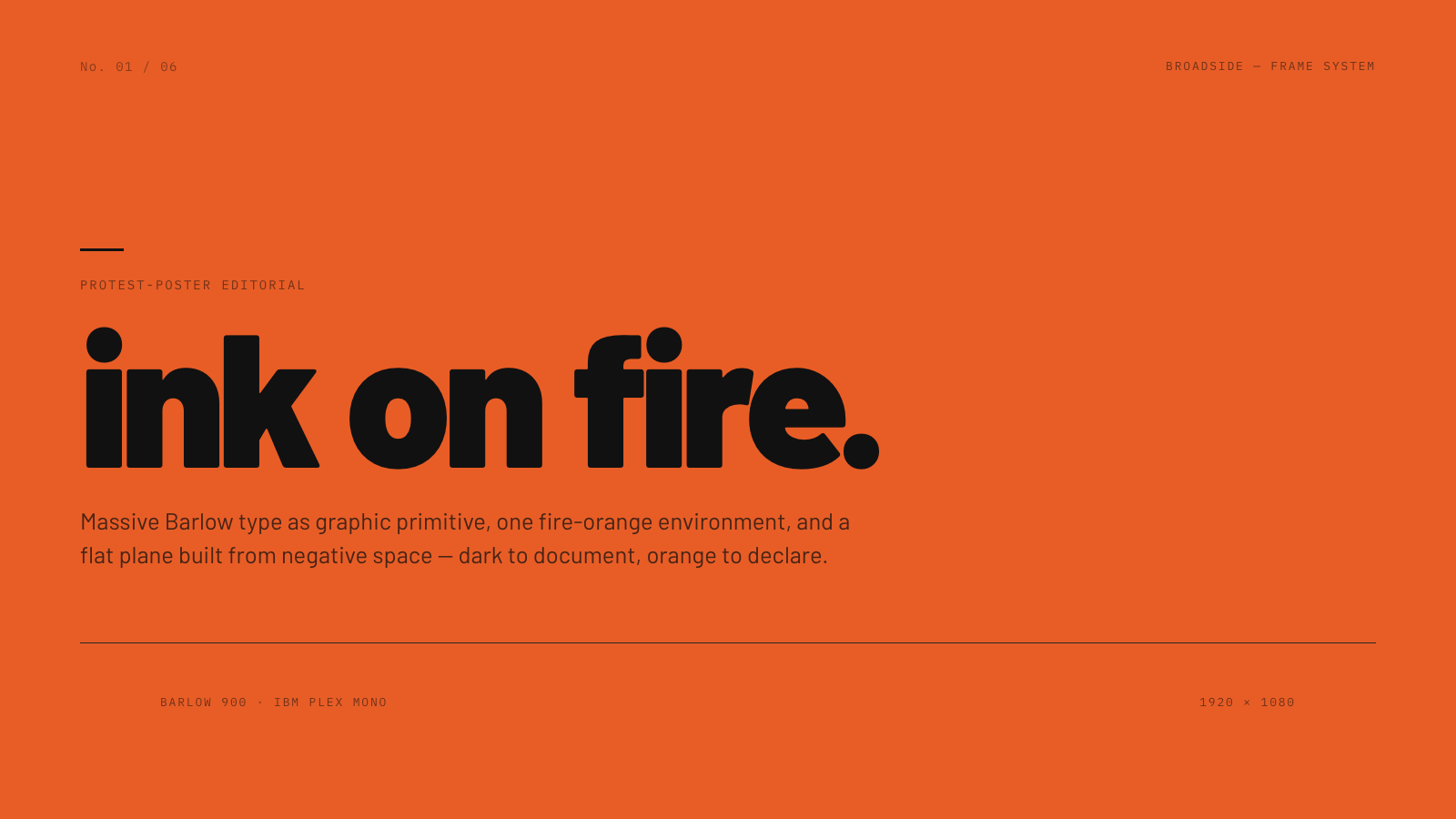
Broadside |
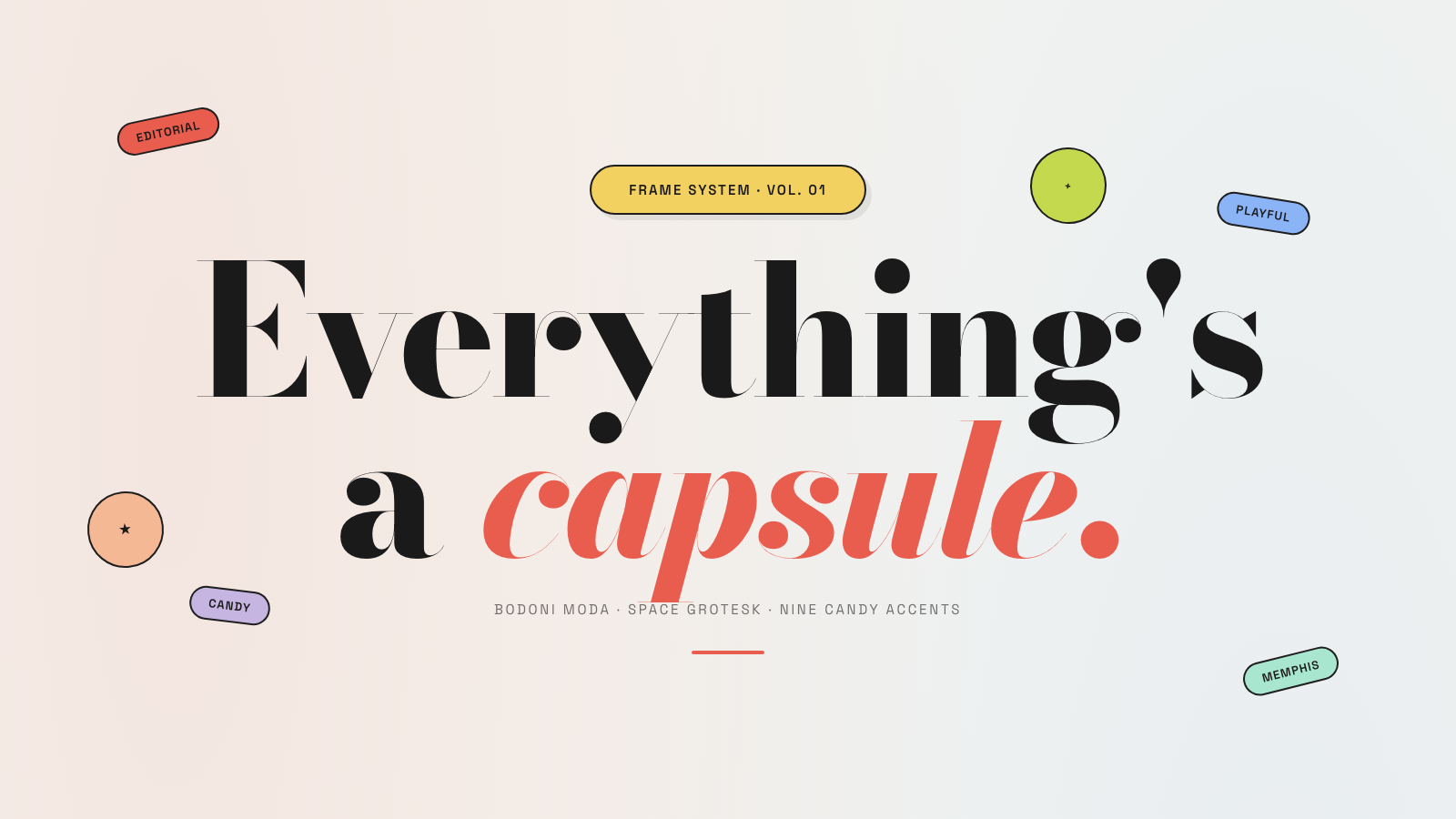
Capsule |
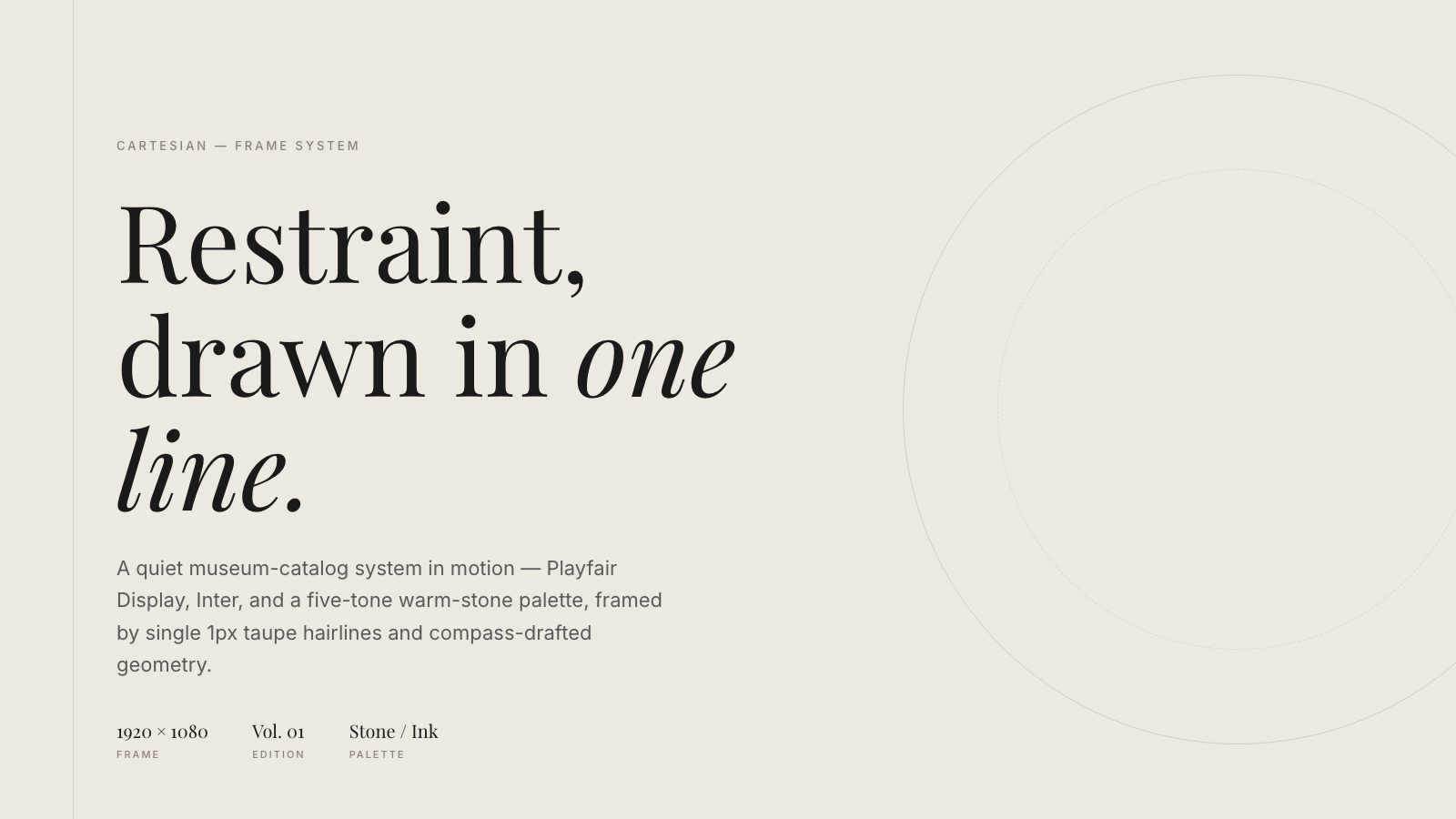
Cartesian |
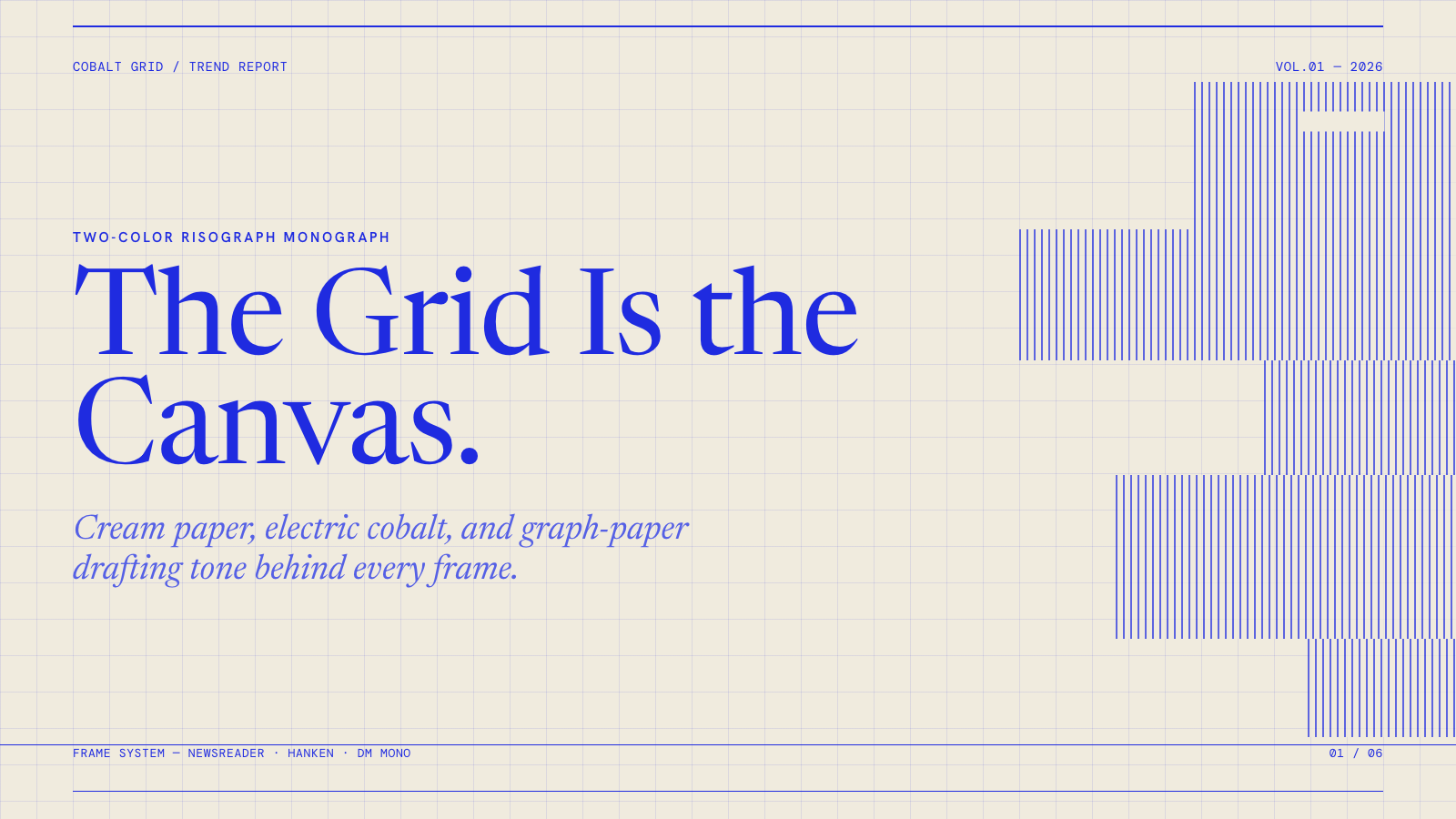
Cobalt Grid |

Coral |
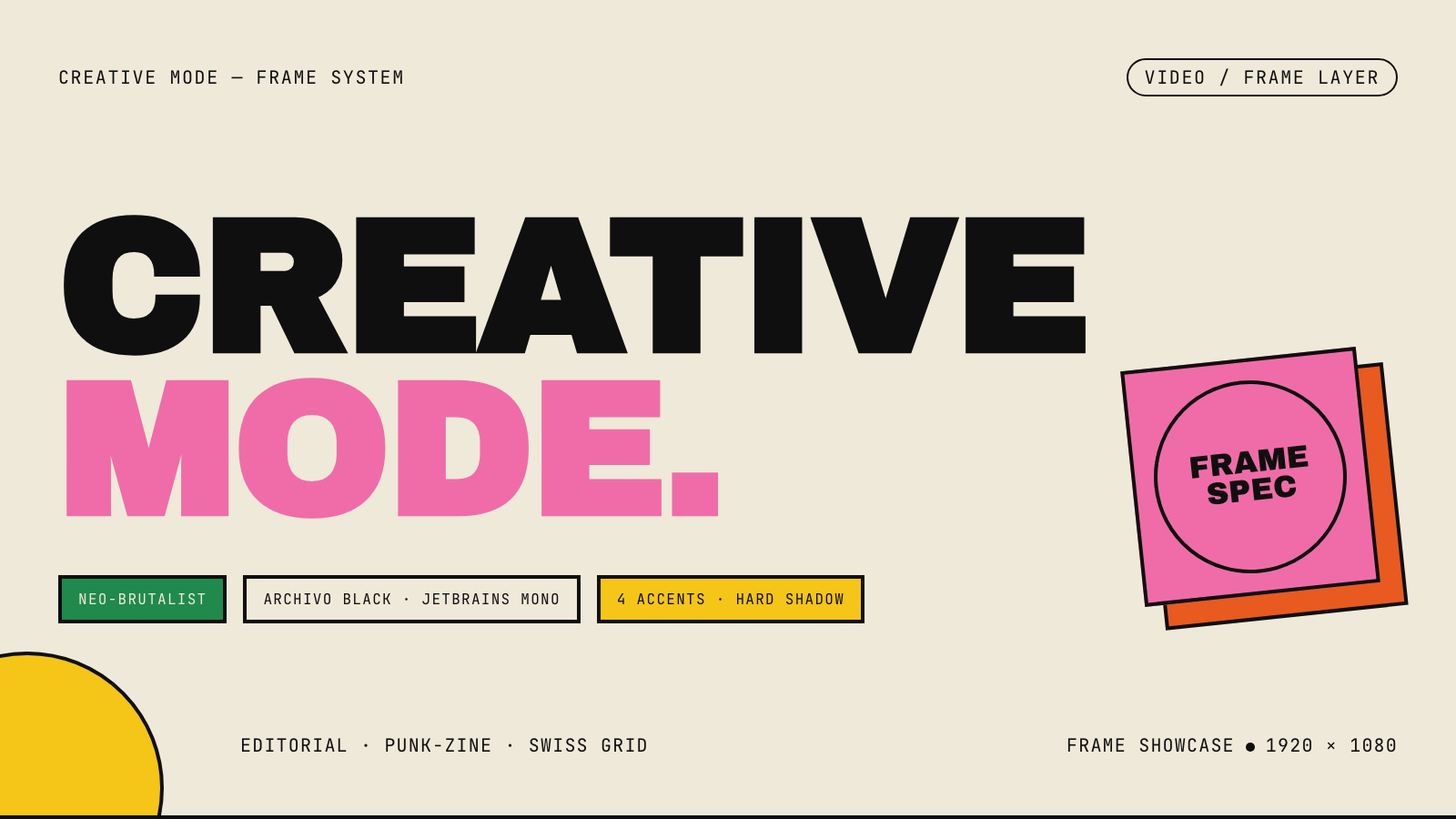
Creative Mode |
Browse and remix them all at hyperframes.dev/design.
How It Works
Define a video as HTML. Add data attributes for timing and tracks. Use GSAP, CSS, Lottie, Three.js, Anime.js, WAAPI, or your own frame adapter for seekable animation.
<div id="stage" data-composition-id="launch" data-start="0" data-width="1920" data-height="1080">
  <video
    class="clip"
    data-start="0"
    data-duration="6"
    data-track-index="0"
    src="intro.mp4"
    muted
    playsinline
  ></video>

  <h1 id="title" class="clip" data-start="1" data-duration="4" data-track-index="1">Launch day</h1>

  <audio
    data-start="0"
    data-duration="6"
    data-track-index="2"
    data-volume="0.5"
    src="music.wav"
  ></audio>

  <script src="https://cdn.jsdelivr.net/npm/gsap@3/dist/gsap.min.js"></script>
  <script>
    const tl = gsap.timeline({ paused: true });
    tl.from("#title", { opacity: 0, y: 40, duration: 0.8 }, 1);
    window.__timelines = window.__timelines || {};
    window.__timelines.launch = tl;
  </script>
</div>
Preview instantly in the browser. Render locally or in Docker. The renderer seeks each frame in headless Chrome and encodes the result with FFmpeg, so the same input produces the same video.
HyperFrames Stack
HyperFrames is the open-source rendering engine, plus a growing set of tools around HTML-native video creation.
| Piece | Status | What it does |
|---|---|---|
| CLI | Available | Scaffold, preview, lint, inspect, and render local video projects |
| Core / Engine / Producer | Available | Parse compositions, drive headless Chrome, encode video, and mix audio |
| Catalog | Available | Reusable blocks and components for transitions, overlays, captions, charts, maps, and effects |
| Agent skills | Available | Teach coding agents the video-production patterns that generic web docs miss |
| Studio | Available, evolving | Browser surface for previewing and editing compositions |
| AWS Lambda rendering | Available | Deploy a distributed render stack and drive renders from your laptop or CI |
| hyperframes.dev | Available | Community playground for previewing, iterating, sharing, and rendering HTML-native video projects |
| frame.md | Available | Invert your design system for the camera — a DESIGN.md superset an agent can compose video from |
Catalog
Install ready-to-use blocks and components:
npx hyperframes add flash-through-white   # shader transition
npx hyperframes add instagram-follow      # social overlay
npx hyperframes add data-chart            # animated chart
Browse the catalog at hyperframes.heygen.com/catalog.
Why HyperFrames?
- HTML-native: compositions are HTML files with data attributes. No React requirement, no proprietary timeline format.
- Agent-friendly: agents already write HTML, and the CLI is non-interactive by default.
- Deterministic: same input, same frames, same output. Built for CI, regression tests, and automated rendering.
- No build step: an
index.htmlcomposition plays as-is and can be previewed directly in the browser. - Adapter-based animation: bring GSAP, CSS animations, Lottie, Three.js, Anime.js, WAAPI, or a custom runtime.
- Open source: Apache 2.0 license, with no per-render fees or commercial-use thresholds.
HyperFrames vs Remotion
HyperFrames is inspired by Remotion. Both tools render video with headless Chrome and FFmpeg. The main difference is the authoring model: Remotion's bet is React components; HyperFrames' bet is plain HTML that humans and agents can both write easily.
| HyperFrames | Remotion | |
|---|---|---|
| Authoring | HTML + CSS + seekable animation | React components |
| Build step | None; index.html plays as-is |
Bundler required |
| Agent handoff | Plain HTML files | JSX / React project |
| Library-clock animations | Seekable, frame-accurate via adapters | Wall-clock animation patterns need care |
| Distributed rendering | Local and AWS Lambda render paths | Remotion Lambda, mature cloud renderer |
| License | Apache 2.0 | Source-available Remotion License |
Read the full comparison in the HyperFrames vs Remotion guide.
Documentation
Full documentation: hyperframes.heygen.com/introduction
Packages
| Package | Description |
|---|---|
hyperframes |
CLI for creating, previewing, linting, and rendering compositions |
@hyperframes/core |
Types, parsers, generators, linter, runtime, and frame adapters |
@hyperframes/engine |
Seekable page-to-video capture engine using Puppeteer and FFmpeg |
@hyperframes/producer |
Full rendering pipeline for capture, encode, and audio mix |
@hyperframes/studio |
Browser-based composition editor UI |
@hyperframes/player |
Embeddable <hyperframes-player> web component |
@hyperframes/shader-transitions |
WebGL shader transitions for compositions |
@hyperframes/aws-lambda |
AWS Lambda SDK and deployment surface for distributed renders |
Community
HyperFrames is used in production at HeyGen, with community examples from teams like tldraw, TanStack, and others in ADOPTERS.md. Open a PR if your team is using HyperFrames.
- Questions and ideas: Discord
- Bugs and feature requests: GitHub Issues
- User research: Book a casual 30-minute conversation with the HyperFrames team — no preparation or sales pitch
- Security reports: SECURITY.md
- Contributions: CONTRIBUTING.md
Development Note
The repo uses Git LFS for golden regression-test baselines under packages/producer/tests/**/output.mp4 (about 240 MB of .mp4 files). If you're cloning the full repo for development, install Git LFS first:
# macOS
brew install git-lfs

# Ubuntu / Debian
sudo apt install git-lfs

# Windows
winget install GitHub.GitLFS

# Then, once per machine
git lfs install
If you only need source files, you can skip LFS content:
GIT_LFS_SKIP_SMUDGE=1 git clone https://github.com/heygen-com/hyperframes.git