 Miguel Ángel
ea7c48f372
Miguel Ángel
ea7c48f372
* fix(add): apply --vars to components, and explain a failed download

Customising an item on the catalog page, copying the printed command and
running it did nothing for a component. `--vars` was accepted, documented
and then dropped: buildSnippet put the values on a block's mount element
and returned a bare "paste from ..." comment for a component, so 221 of
the 375 catalog items silently ignored every value the page produced.

A component has no mount element to hang values on. It is markup pasted
into a host, and it resolves values through __hyperframes.getVariables(),
which merges the declared defaults of every [data-composition-variables]
element in the document with render-time overrides. So the component's
own declaration is the only place a chosen value can live and still be
there after the paste. `add --vars` now rewrites those defaults.

Blocks keep the mount attribute. Per-mount values are strictly better
where a mount exists: the file on disk stays byte-identical to the
registry's, so a later reinstall can still tell an edit from an update,
and two mounts of the same block can differ.

A value the item cannot accept is now refused rather than written. An
out-of-range number or an unlisted enum value falls back at runtime and
warns, so writing one would produce a file that renders exactly as if the
value had been ignored -- the failure this change exists to remove. Ids
the item never declared are reported too, instead of vanishing. Only the
requested item is rewritten; a dependency dragged in behind it never
declared these variables.

Separately, `Install failed: fetch failed` is now a sentence. Item FILES
are not cached (only manifests are), so a network blip surfaces as node's
bare message with no URL and no cause, immediately after the user copied
a command off a web page -- which reads as "the command was wrong" rather
than "the network was". It now names what failed, says it is usually
connectivity or a proxy rather than a bad command, and mentions
HTTPS_PROXY.

Also fixes the two transcribe tests that were failing before this branch.
They assert the whisper soft-skip path but never pinned the engine, and
`auto` picks Parakeet whenever parakeet-mlx is installed -- so on those
machines the test shelled out to a real ASR binary, failed with "Parakeet
did not produce output", and landed in the generic failure branch it
claims is never taken. Pinned to `engine: "whisper"`, plus an assertion
that the mocked transcribe actually ran, which is what stops the test
passing on a machine without Parakeet while testing nothing on one with
it. The file now runs in 18ms rather than 3.7s, because it no longer
launches a subprocess.

Test plan: 10 new tests for the rewrite (enum and range refusal, the
numeric-string coercion the catalog URL depends on since every query
value is a string, delimiter escaping, unparseable declarations) and 3
for the failure message. Full CLI suite: 2661 passed, ZERO failures.

Verified as a user, not just in unit tests: installed blur-in with the
exact reported command, confirmed the declaration carried 76 / accent /
center, pasted it into a composition and ran `check` -- which reported
canvas_overflow at 76px, which only happens if the baked size is really
in effect. Bad values warn and are refused; blocks still emit
data-variable-values.

* fix(player): load the runtime before the body, not after

Customising a component on a catalog page did nothing to the preview.
badge-pop with count 10 and a green accent rendered 3, in red.

The probe injects the runtime by appending a script to an already loaded
document, and only once it has a reason to: a nested composition, or five
polls with a timeline present. A component has neither. It is markup
pasted into a composition, and it reads its values in an inline IIFE that
runs while the body is parsing:

    var vars = window.__hyperframes && window.__hyperframes.getVariables
      ? window.__hyperframes.getVariables() : {};

With the runtime arriving afterwards that guard always took the empty
branch, so the component used the defaults hardcoded in its own script
and every chosen value was dropped. The values were never the problem:
the preview sets window.__hfVariables correctly, and nothing was there to
read it.

prepareSrcdocForElement now puts the same runtime URL in the document's
head before the srcdoc is set. A classic external script in head is
parser-blocking, so it runs before body scripts without changing what
gets loaded or adding a dependency the player did not already have. A CLI
render never had this bug because the engine already orders it this way.

Skipped when the page carries the runtime already, so a CLI-rendered page
(which inlines it) does not get a second copy re-initialising the runtime
underneath a live composition. The probe's late injection stays for the
src= path, where there is no srcdoc to prepare. The runtime URL moved to
its own module so the two injection points cannot drift apart.

Test plan: 8 new tests for the injection (ordering against the reading
script, head placement, both no-op guards, missing head/body, attributes
on the head tag). Three srcdoc tests asserted byte-identical forwarding
and now assert what they were actually protecting -- that the composition
arrives intact -- plus the new runtime guarantee. player 338 passed,
studio 4249 passed.

Verified end to end against the real runtime and a real registry
component, asking for size 96 / accent / right:
  before  52px, rgb(243,243,243), flex-start, runtime absent
  after   96px, rgb(60,230,172),  flex-end,   runtime present
rgb(60,230,172) is #3ce6ac, the accent green. That is the reported bug
before, and the chosen values after.

* fix(add): name the registry and the real reason an install failed, and retry

`Install failed: fetch failed` was two words that describe every network
problem equally badly. Three things were missing, and each of them was
the whole answer in a different case.

The URL. undici throws with no URL attached, so a project that points
`registry` at a private host in hyperframes.json got a message that
looked like the public registry had failed. Naming the URL is the entire
diagnosis there.

The cause. undici buries the real reason one or two levels down in
`cause`, and it was being dropped. The reported failure turned out to be
`self-signed certificate in certificate chain`: a private registry whose
certificate node refuses and curl accepts, which is why the host looked
healthy from a terminal. That sentence tells the reader which knob to
turn; `fetch failed` sends them to check a connection that is working.

The retry. Item files are the one uncached path -- manifests fall back to
a stale copy, but every install downloads its files fresh -- so a single
blip killed the whole command. Now two extra attempts with short backoff,
and deliberately NOT for TLS failures: a self-signed certificate fails
identically every time, so retrying it only makes the user wait three
times as long for the same message.

Also retypes the declaration reader. It modelled variables as a local
interface of six `unknown` fields and re-checked each one at every use.
Core already owns this shape as a discriminated union and exports
`isCompositionVariable`, the same predicate `parseCompositionVariables`
filters with, so the union is used directly and the duplicate type is
gone. A declaration the schema rejects now leaves the file untouched
rather than being partially rewritten from guesses.

Test plan: 4 retry and URL tests, 5 cause-chain tests, and the add-side
tests now cover the custom-registry hint and its absence on the default
registry. The variableDefaults fixtures gained the `label` the schema
actually requires; without it they were not valid declarations, which the
stricter reader caught. CLI suite 2671 passed, zero failures.

Verified with the BUILT dist rather than the source, in the reporter's
own project directory. The failure now reads:

  File fetch failed: https://<host>/registry/components/blur-in/blur-in.html
    - fetch failed (self-signed certificate in certificate chain
      [SELF_SIGNED_CERT_IN_CHAIN])

and once the project points back at the public registry the original
command succeeds with `variables applied: size, tone, align`.

* fix(registry): name the registry on the not-found path too

The item-file failure now names the host it could not reach, but the
sibling path did not. A project whose registry is unreachable at the
MANIFEST stage got `Item "blur-in" not found - registry unreachable or
empty`, which reads as the public catalog having lost the item and sends
the reader to search a registry that never saw the request.

Same fix, same reason, applied where the other three call sites live so
one of them cannot stay behind: the message names the host and says it
came from this project's hyperframes.json, and only when it is not the
public registry, so the common case stays short.

Test plan: 3 tests covering the private-registry hint and its absence on
the default registry and on no registry at all. CLI suite 2674 passed,
zero failures. Verified with the built dist against a host with a bad
certificate:

  Item "blur-in" not found - registry unreachable or empty. Contacted
  https://self-signed.badssl.com/registry, set by this project's
  hyperframes.json, not the public registry.

* fix(catalog): reconcile the two spellings of a compound word

`countdown` returned exactly one item, the only thing tagged with that
spelling. `count down timer` returned sixteen, and that one was in none
of them. The tokenizer splits on word boundaries, so the two spellings of
a single idea produced disjoint sets, and whichever phrasing an author
happened to type decided which half of the answer they saw. Neither half
was the whole answer: the one-word spelling hid count-up and
decline-chart, which are the two things you would actually build with.

Both directions now, each gated on the catalog's own vocabulary so this
can only add signal. A query token is split when both halves are words
the catalog uses, and adjacent tokens are joined when the compound is.
A word in neither form, like `timer` which appears in no item, is left
alone: this widens phrasing, it does not invent matches.

Everything inferred this way carries a fraction of a real token's weight.
That is the part worth keeping honest, because the first version relied
on the halves being statistically common in a 375-item catalog, which is
not the same as making them count for less. In a small corpus that
version let `type` matching the name of `type-match-cut` outrank
`typewriter` matching the name of `typewriter`: searching a word returned
something that merely contained half of it. Two tests written against
that real failure caught it.

All spellings now return the same 17 items, and each still ranks its own
exact match first: `countdown` leads with yt-circle-pointer, `count down`
leads with the two-word items, and count-up and decline-chart appear in
both.

Test plan: 6 new tests covering both directions, the identical-set
property that was the actual defect, exact-match precedence, an unknown
word left alone, and the typewriter case. Eval set unchanged at 33/39
top-1 and 39/39 top-3, so no query regressed. CLI suite 2680 passed.






Write HTML. Render video. Built for agents.
Quickstart | Showcase | Playground | Catalog | Docs | Discord

HyperFrames is an open-source framework for turning HTML, CSS, media, and seekable animations into deterministic MP4 videos. Use it locally with the CLI, from AI coding agents with skills, or as the rendering core behind hosted authoring workflows.
Quick Start
With an AI coding agent
Install the HyperFrames skills, then describe the video you want:
npx skills add heygen-com/hyperframes --full-depth
The picker opens with nothing pre-selected — the Core Skills group is all you need: the
/hyperframesrouter installs each creation workflow on demand. Agents and non-interactive runs should usenpx hyperframes skills updateinstead — it installs exactly the core set, whereas a non-interactiveskills addwithout--skillinstalls all 20.
--full-depthdoes a full clone of the repo's currentmain. Without it,skills addfetches the skills.sh registry blob, which lagsmainby hours — you'd get an older copy of a skill. (hyperframes skills updatealready installs full-depth.)
Try a prompt like:
Using
/hyperframes, create a 10-second product intro with a fade-in title, a background video, and subtle background music.
The skills teach agents the HyperFrames production loop: plan the video, write valid HTML, wire seekable animations, add media, lint, preview, and render. They work with Claude Code, Cursor, Gemini CLI, Codex, and other coding agents that support skills.
Skills
HyperFrames ships 20 skills agents load on demand. Read /hyperframes first — it's the router and capability map; it picks a workflow for any "make me a…" request — video, deck, or composition port — and points to the domain skills below.
Default to the core set — the router installs each creation workflow on demand. npx hyperframes skills update installs exactly that from anywhere; the interactive picker (npx skills add heygen-com/hyperframes --full-depth) lists it as the "Core Skills" group, nothing pre-selected. The picker is interactive-only — a non-interactive or agent run without --skill installs all 20. Use npx skills add heygen-com/hyperframes --all --full-depth to install all 20 deliberately (skips the picker), or npx skills add heygen-com/hyperframes --skill <name> --full-depth for just one (bare name, no leading /). Keep --full-depth — it installs the current main; without it skills add fetches the skills.sh blob, which lags by hours.
Installs stay lean after that: npx hyperframes init keeps the core set fresh (the router, the hyperframes-* domain skills, and media-use — plus whatever is already installed; /figma stays on demand) and never expands a partial install; the creation workflows install on demand — the router runs npx hyperframes skills update <workflow> before entering one. Nothing re-pulls the full set behind your back.
Upload to Codex
Build the upload-ready Codex plugin archive from the committed HEAD version of the manifest, brand assets, and skills:
bun run package:codex-plugin
This writes dist/hyperframes-plugin.zip with a hyperframes/ root folder and fails if the archive exceeds Codex's 100 MB upload limit.
Router
| Skill | Use when |
|---|---|
/hyperframes |
Read first for any request to make / create / edit / animate / render a video, animation, or motion graphic. Capability map for the domain skills, the intent layer that confirms every creation brief up front, and intent router for the creation workflows below. |
Creation workflows
| Skill | Use when |
|---|---|
/product-launch-video |
Any website — marketing / launching / promoting a product (from its URL, a brief, or a script), or a site tour / showcase / social clip featuring the site's own visuals. Up to ~3 min (sweet spot 30-90s). |
/faceless-explainer |
Explaining a topic / concept from arbitrary text — no product, no URL, no website capture; every visual is LLM-invented (typography / abstract / diagram / data-viz). |
/pr-to-video |
A GitHub pull request (PR URL, owner/repo#N ref, or "this PR") → changelog / feature-reveal / fix / refactor explainer, read via the gh CLI. |
/embedded-captions |
Adding captions / subtitles to an existing talking-head video (footage untouched) — verbatim rail, embedded climax behind the subject, or pure-cinematic embed. |
/talking-head-recut |
Packaging an existing talking-head / interview / podcast video with designed graphic overlays — lower-thirds, data callouts, kinetic titles, pull-quotes, side panels, PiP. |
/motion-graphics |
A short, unnarrated, design-led motion graphic (~under 10s) — kinetic type, stat / chart hit, logo sting, lower-third, animated tweet / headline. MP4 or transparent overlay. |
/music-to-video |
A music track (audio file, video to pull audio from, or one generated from a mood brief) → a beat-synced video — lyric, slideshow, or kinetic promo; music drives pacing. |
/slideshow |
A presentation / pitch deck / interactive deck — discrete slides, fragment reveals, branching, hotspot navigation, presenter mode. Output is a navigable deck, not a rendered video. |
/general-video |
Anything else — longer or multi-scene pieces, brand / sizzle reel, title card, static loop, freeform composition. Input- and length-agnostic fallback, and the home of companion mode (co-create with the full toolbox). |
/remotion-to-hyperframes |
Porting an existing Remotion (React) composition's source to HyperFrames HTML. One-way migration, not creation. |
Domain skills (loaded on demand)
Atomic capabilities the creation workflows compose against — pull one when you need that specific layer.
| Skill | Covers |
|---|---|
/hyperframes-core |
The composition contract — data-* timing attributes, class="clip", tracks, sub-compositions, variables, framework-owned media playback, determinism rules. |
/hyperframes-animation |
All animation knowledge — atomic motion rules, scene blueprints, transitions, runtime adapters (GSAP / Lottie / Three.js / Anime.js / CSS / WAAPI / TypeGPU). |
/hyperframes-keyframes |
Seek-safe keyframe authoring across runtimes — GSAP timelines, CSS keyframes, Anime.js, WAAPI, FLIP, paths, masks, SVG morph/draw, 3D depth — plus hyperframes keyframes diagnostics for rendered motion. |
/hyperframes-creative |
Non-animation creative direction — frame.md / design.md, palettes, typography, narration, beat planning, audio-reactive visuals, composition patterns. |
/media-use |
The media OS — resolve any media need (BGM, SFX, image, icon, logo, voice, color grade, LUT) into a frozen local file or paste-ready block + ledger record, generate via TTS/music/image models when the catalog misses, transcribe, caption, remove backgrounds, and reuse assets across projects. One shared audio engine + manifest tracking. |
/hyperframes-cli |
CLI dev loop — init, lint, check, snapshot, preview, render, publish, doctor, plus HeyGen-hosted cloud rendering (cloud render) and AWS Lambda rendering (lambda deploy / render / progress). |
/hyperframes-audio |
Mix the audio already placed in a composition — voiceover carve (dip a music bed only in the bands the voice occupies, static or dynamic, level match included), the effect chain (EQ, compressor, limiter, gate, saturation, delay, reverb, chorus, phaser, bitcrush), and automation envelopes on volume or any effect parameter. Sourcing the audio is /media-use. |
/hyperframes-registry |
Install and wire registry blocks and components into compositions via hyperframes add. Authoring a new block or component to contribute upstream. |
/figma |
Import Figma assets, tokens, components, and storyboard sections → reconstructed motion (frames read as states, not slides) (REST/CLI) plus Motion animations (MCP) and shaders (MCP source / native export) into a composition. |
For visual design handoff workflows, see the Claude Design guide and Open Design guide.
Manually with the CLI
npx hyperframes init my-video
cd my-video
npx hyperframes preview      # preview in browser with live reload
npx hyperframes render       # render to MP4
Requirements: Node.js 22+, FFmpeg
What You Can Build
Need ideas? Browse the Showcase for finished videos you can watch, read, run, and remix.
- Product launch videos and feature announcements
- PR walkthroughs with animated code diffs, narration, and captions
- Data visualizations, chart races, and map animations
- Social videos with kinetic captions, overlays, and music
- Docs-to-video, PDF-to-video, and site-tour explainers
- Reusable motion graphics for automated content pipelines
Frame.md
frame.md — your design system, ready for video.
Every brand has a design.md. None of them were written for a camera. frame.md is the missing translation layer: it takes your web-context design spec and inverts it for the frame — the same tokens, the same rules, but rewritten so an AI agent can compose a promo video without guessing at scale or reaching for web chrome.
The output is a DESIGN.md superset your whole toolchain can read. Atoms stay sacred. Composition stays free. Numbers come from the script.

Biennale Yellow |

BlockFrame |
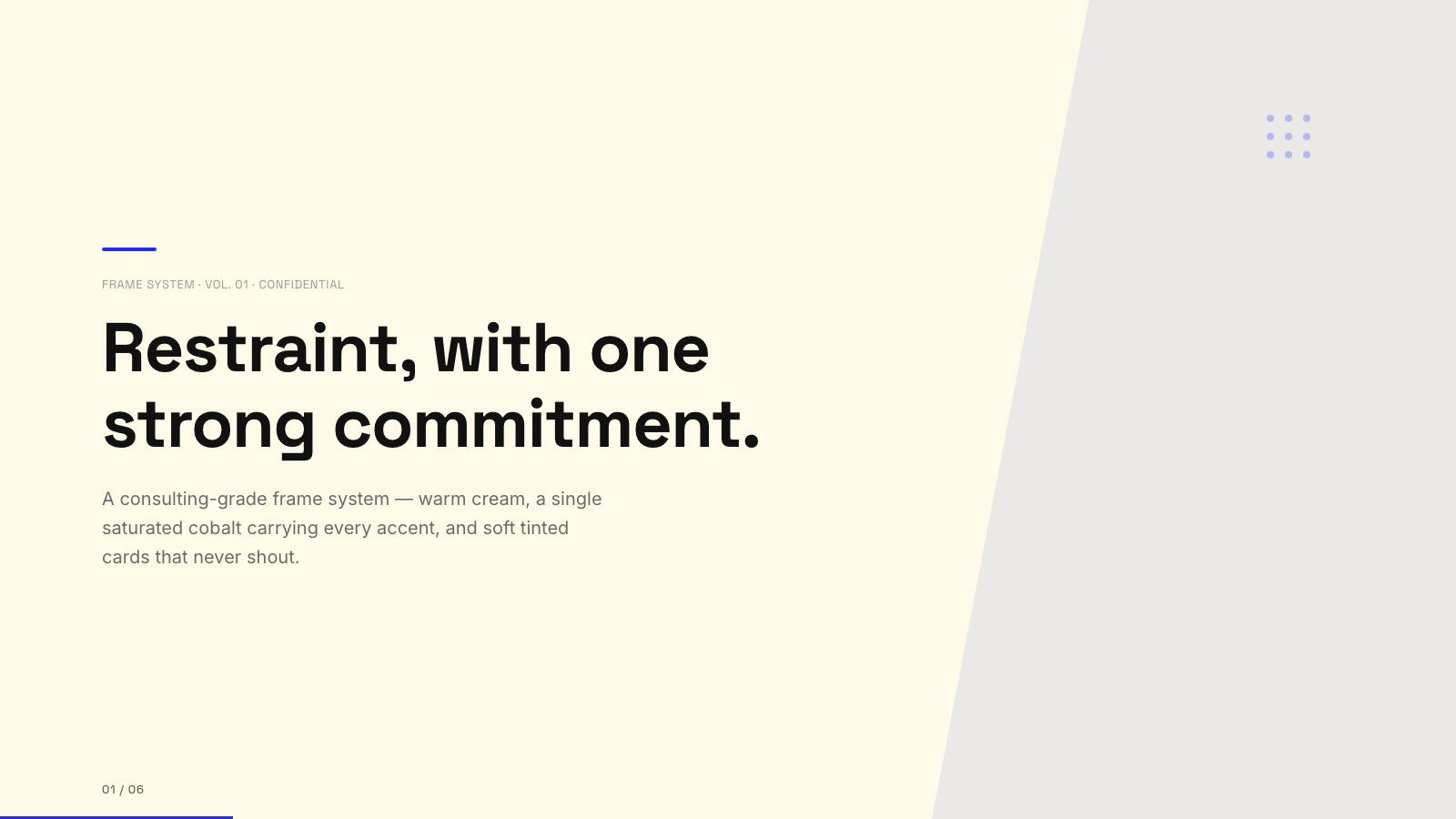
Blue Professional |

Bold Poster |
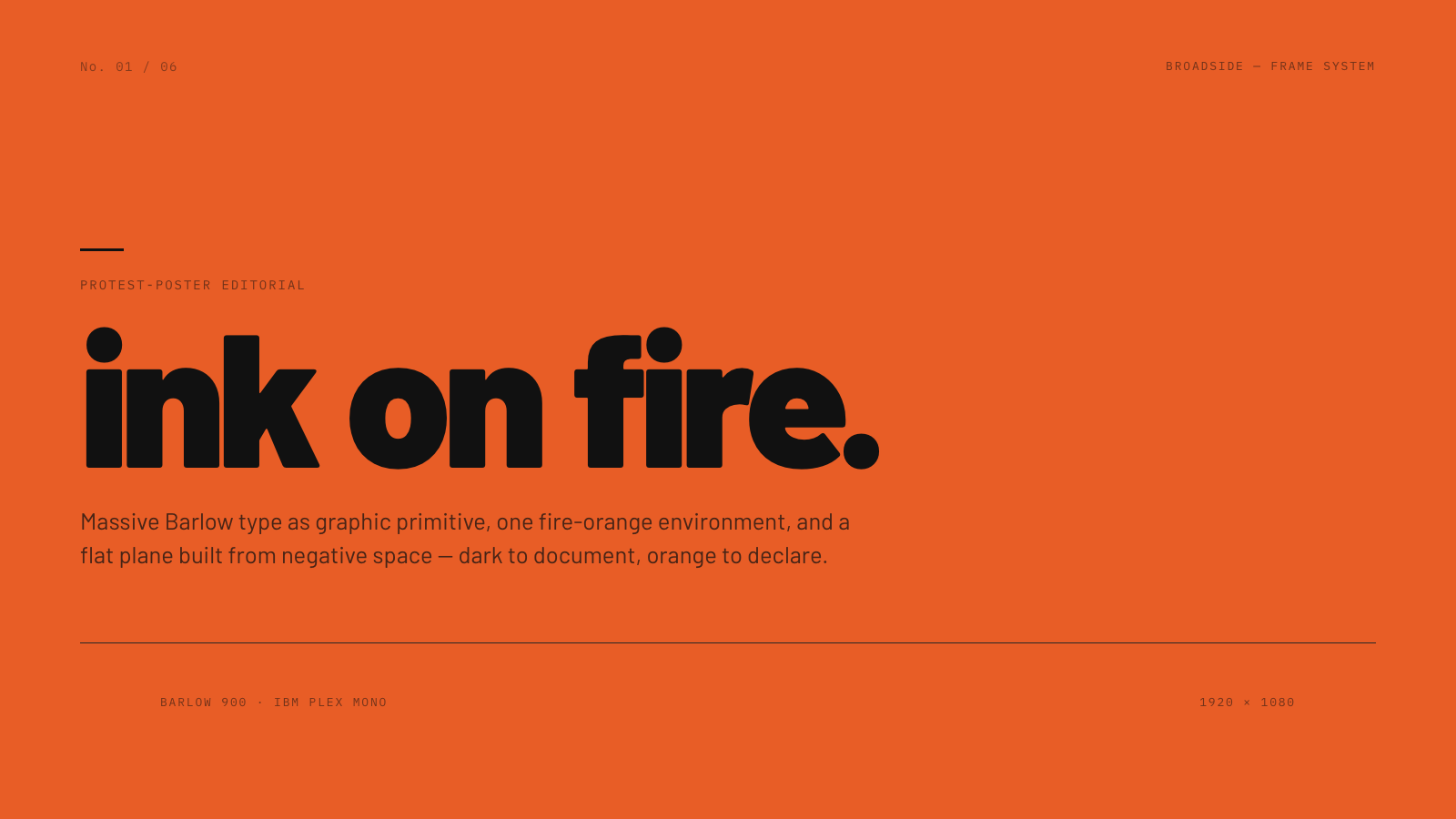
Broadside |
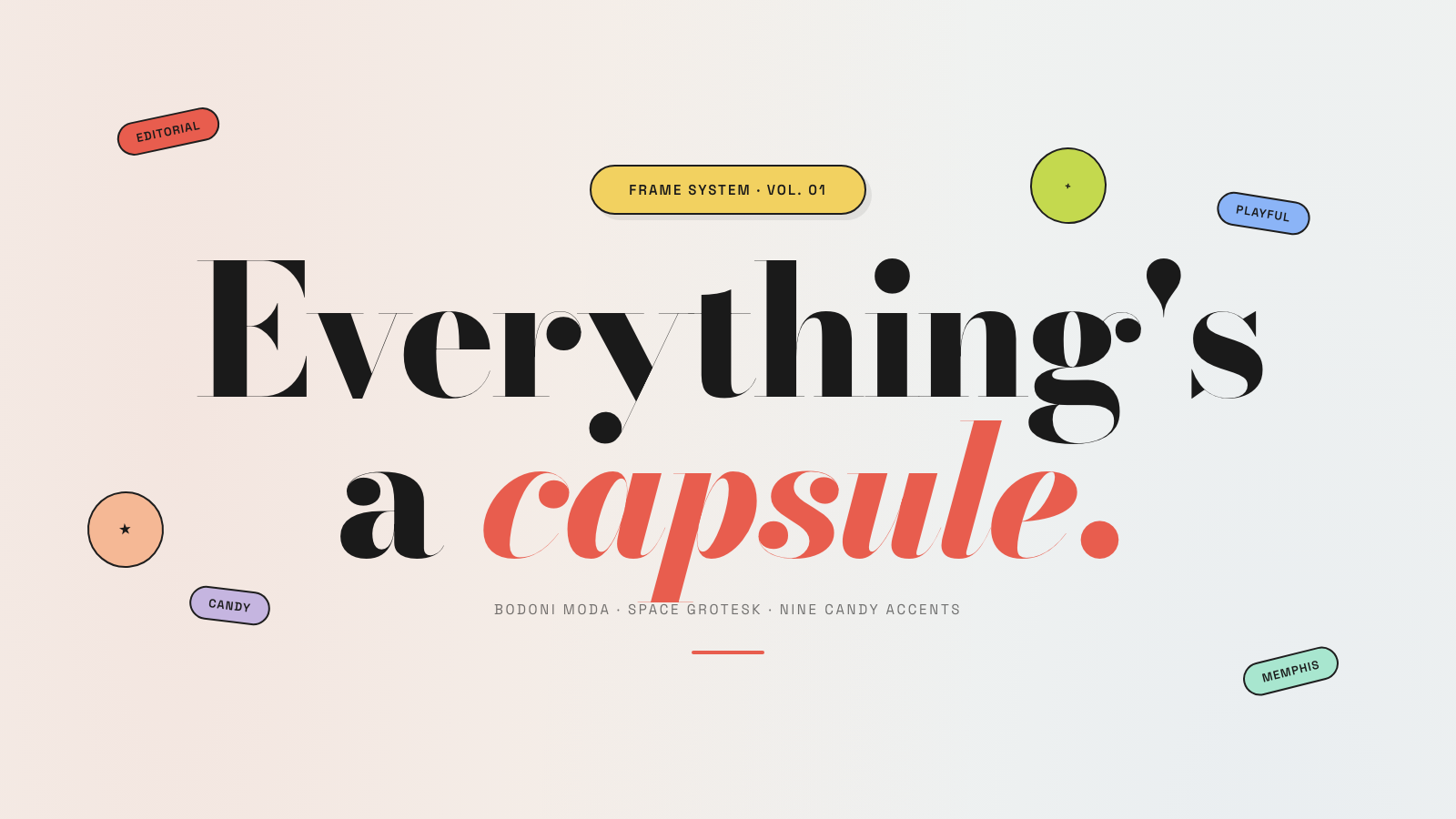
Capsule |
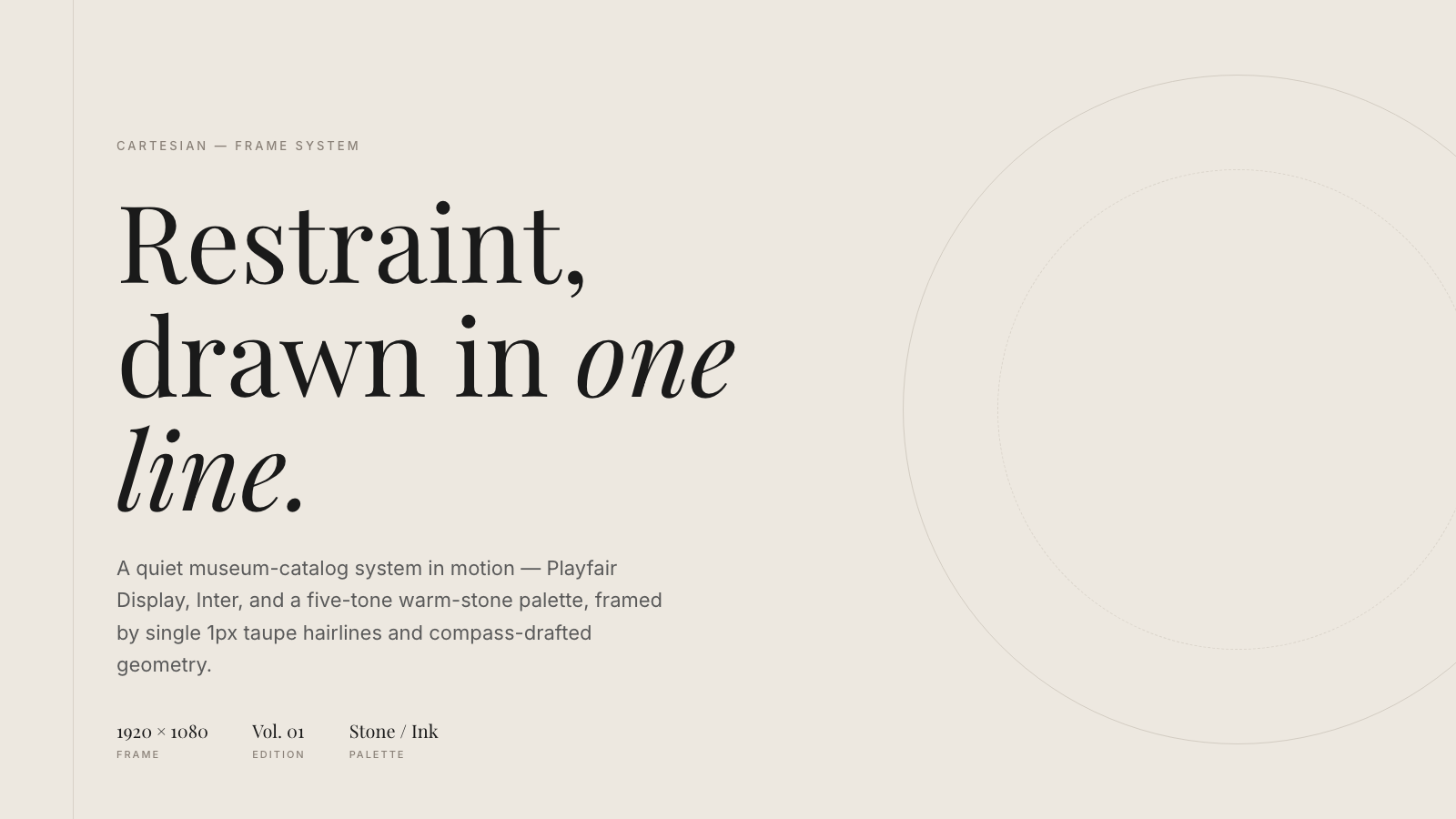
Cartesian |
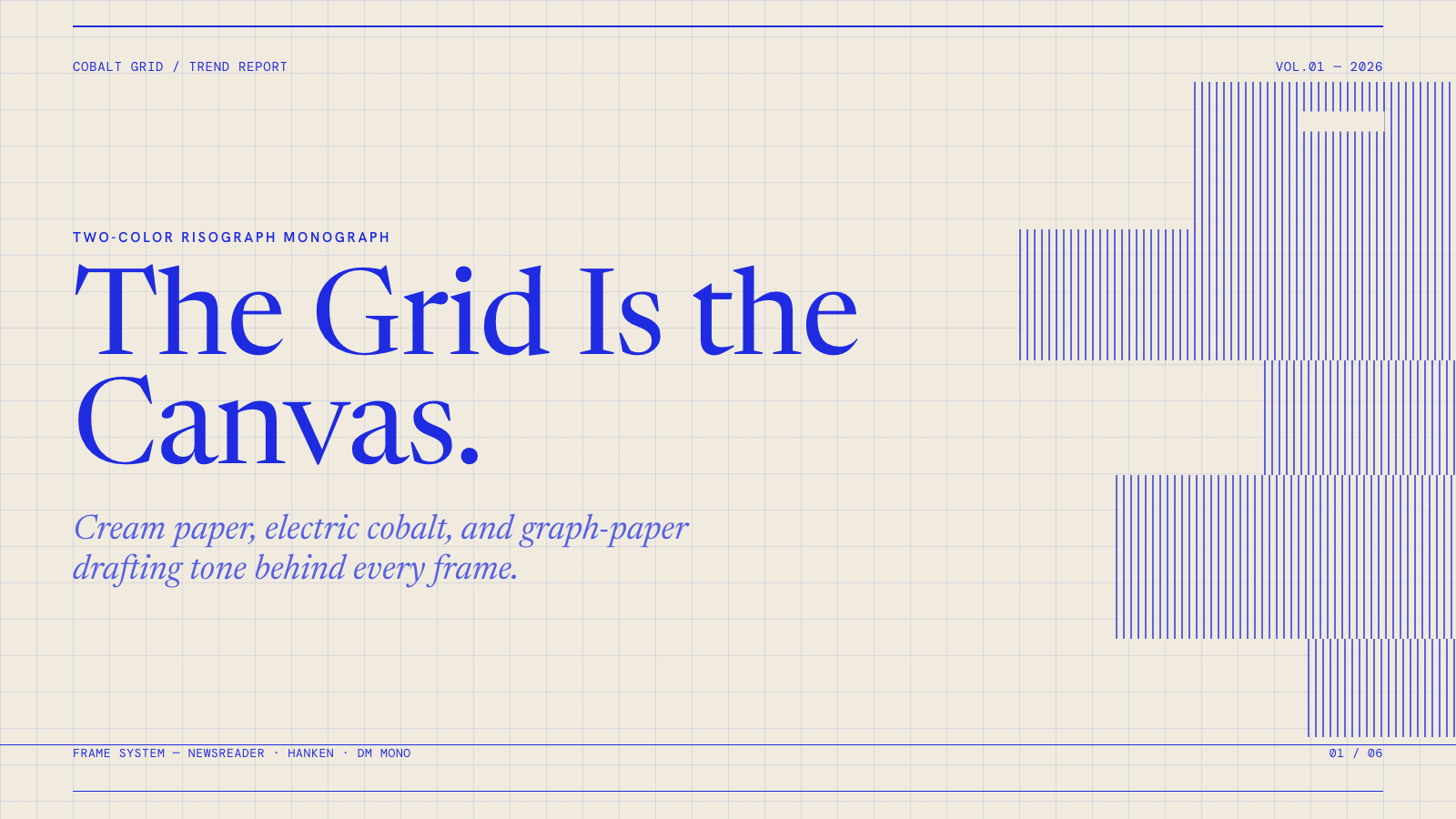
Cobalt Grid |
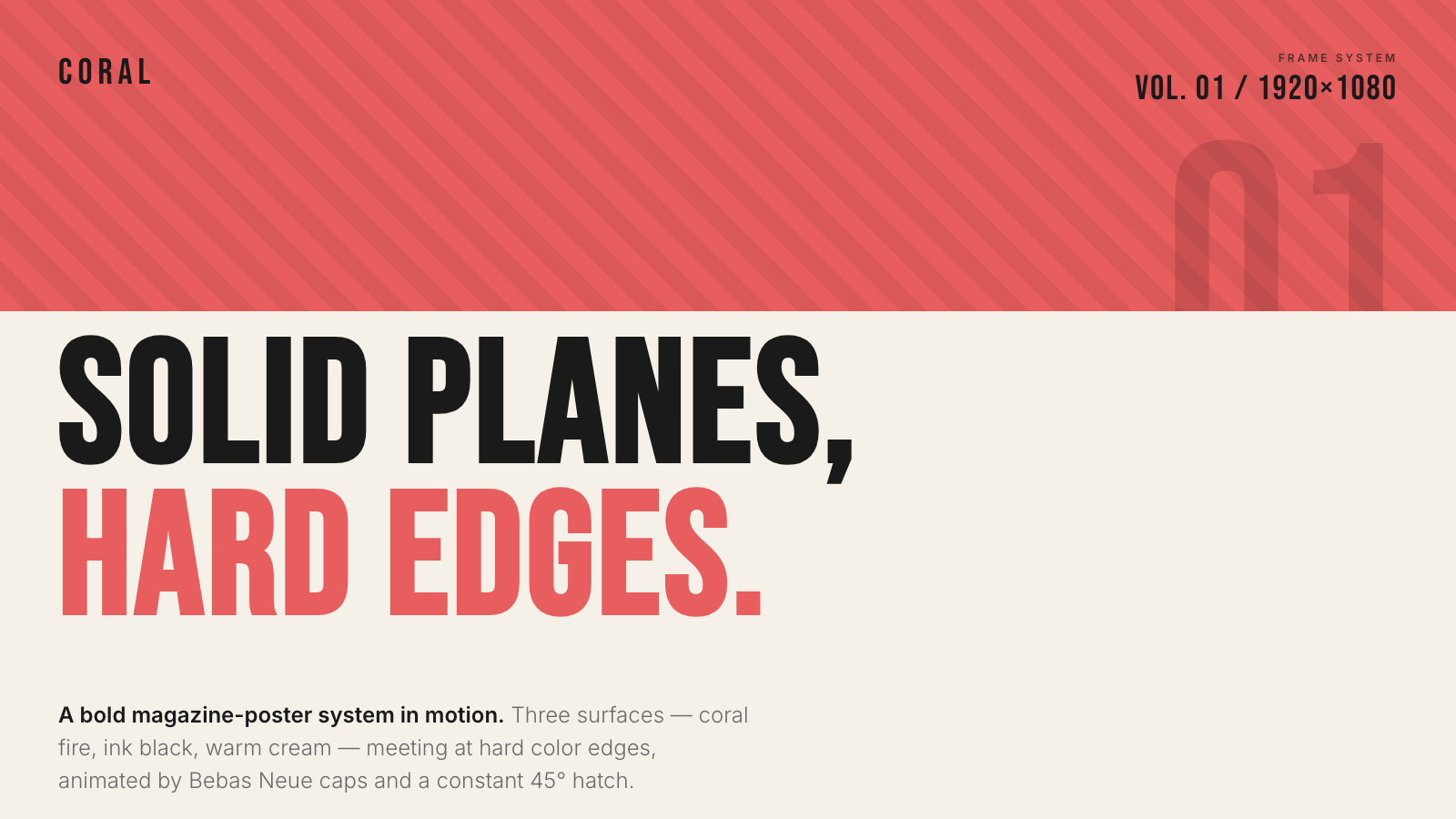
Coral |
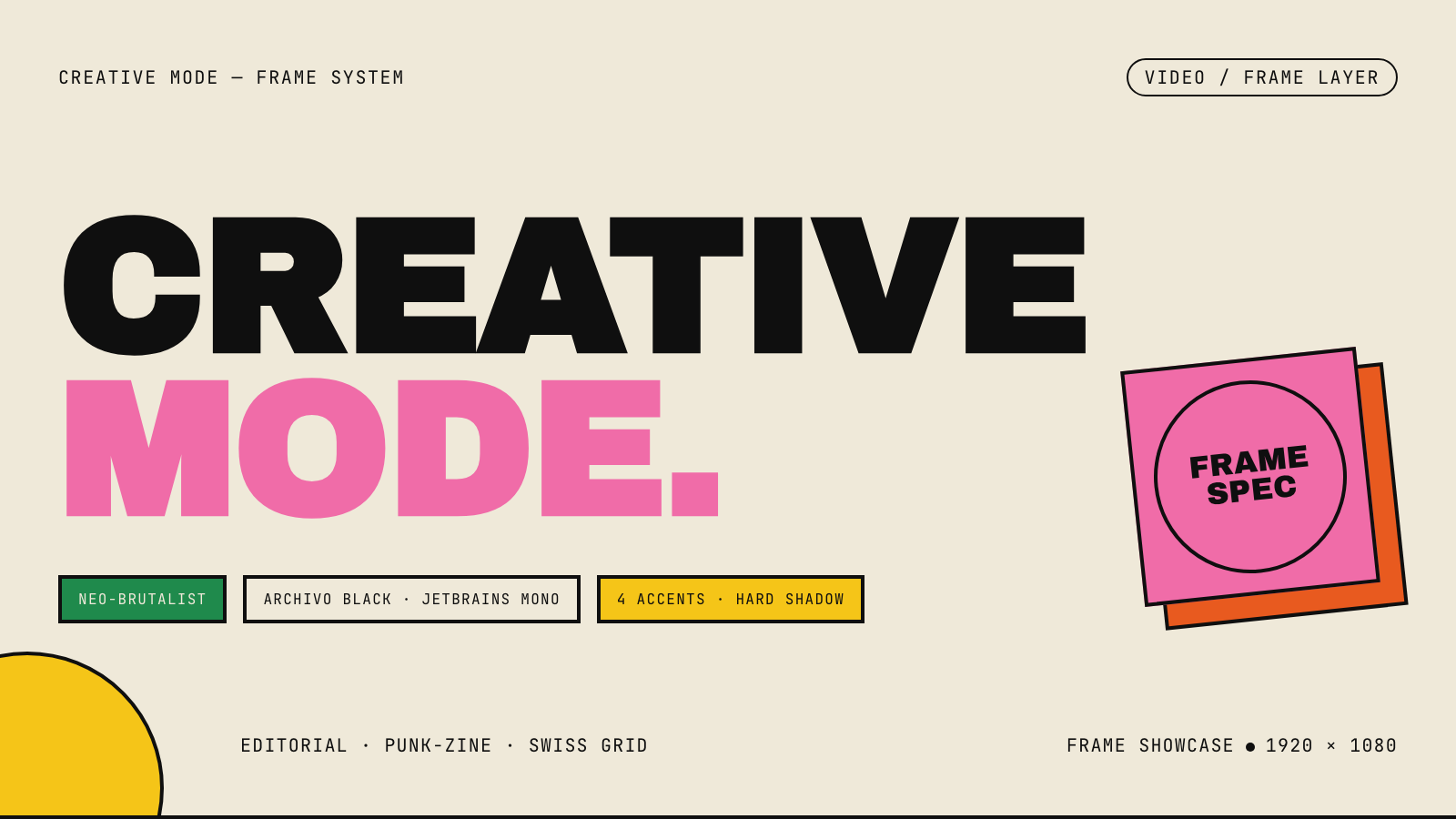
Creative Mode |
Browse and remix them all at hyperframes.dev/design.
How It Works
Define a video as HTML. Add data attributes for timing and tracks. Use GSAP, CSS, Lottie, Three.js, Anime.js, WAAPI, or your own frame adapter for seekable animation.
<div id="stage" data-composition-id="launch" data-start="0" data-width="1920" data-height="1080">
  <video
    class="clip"
    data-start="0"
    data-duration="6"
    data-track-index="0"
    src="intro.mp4"
    muted
    playsinline
  ></video>

  <h1 id="title" class="clip" data-start="1" data-duration="4" data-track-index="1">Launch day</h1>

  <audio
    data-start="0"
    data-duration="6"
    data-track-index="2"
    data-volume="0.5"
    src="music.wav"
  ></audio>

  <script src="https://cdn.jsdelivr.net/npm/gsap@3/dist/gsap.min.js"></script>
  <script>
    const tl = gsap.timeline({ paused: true });
    tl.from("#title", { opacity: 0, y: 40, duration: 0.8 }, 1);
    window.__timelines = window.__timelines || {};
    window.__timelines.launch = tl;
  </script>
</div>
Preview instantly in the browser. Render locally or in Docker. The renderer seeks each frame in headless Chrome and encodes the result with FFmpeg, so the same input produces the same video.
HyperFrames Stack
HyperFrames is the open-source rendering engine, plus a growing set of tools around HTML-native video creation.
| Piece | Status | What it does |
|---|---|---|
| CLI | Available | Scaffold, preview, lint, inspect, and render local video projects |
| Core / Engine / Producer | Available | Parse compositions, drive headless Chrome, encode video, and mix audio |
| Catalog | Available | Reusable blocks and components for transitions, overlays, captions, charts, maps, and effects |
| Agent skills | Available | Teach coding agents the video-production patterns that generic web docs miss |
| Studio | Available, evolving | Browser surface for previewing and editing compositions |
| AWS Lambda rendering | Available | Deploy a distributed render stack and drive renders from your laptop or CI |
| hyperframes.dev | Available | Community playground for previewing, iterating, sharing, and rendering HTML-native video projects |
| frame.md | Available | Invert your design system for the camera — a DESIGN.md superset an agent can compose video from |
Catalog
Install ready-to-use blocks and components:
npx hyperframes add flash-through-white   # shader transition
npx hyperframes add instagram-follow      # social overlay
npx hyperframes add data-chart            # animated chart
Browse the catalog at hyperframes.heygen.com/catalog.
Why HyperFrames?
- HTML-native: compositions are HTML files with data attributes. No React requirement, no proprietary timeline format.
- Agent-friendly: agents already write HTML, and the CLI is non-interactive by default.
- Deterministic: same input, same frames, same output. Built for CI, regression tests, and automated rendering.
- No build step: an
index.htmlcomposition plays as-is and can be previewed directly in the browser. - Adapter-based animation: bring GSAP, CSS animations, Lottie, Three.js, Anime.js, WAAPI, or a custom runtime.
- Open source: Apache 2.0 license, with no per-render fees or commercial-use thresholds.
HyperFrames vs Remotion
HyperFrames is inspired by Remotion. Both tools render video with headless Chrome and FFmpeg. The main difference is the authoring model: Remotion's bet is React components; HyperFrames' bet is plain HTML that humans and agents can both write easily.
| HyperFrames | Remotion | |
|---|---|---|
| Authoring | HTML + CSS + seekable animation | React components |
| Build step | None; index.html plays as-is |
Bundler required |
| Agent handoff | Plain HTML files | JSX / React project |
| Library-clock animations | Seekable, frame-accurate via adapters | Wall-clock animation patterns need care |
| Distributed rendering | Local and AWS Lambda render paths | Remotion Lambda, mature cloud renderer |
| License | Apache 2.0 | Source-available Remotion License |
Read the full comparison in the HyperFrames vs Remotion guide.
Documentation
Full documentation: hyperframes.heygen.com/introduction
Packages
| Package | Description |
|---|---|
hyperframes |
CLI for creating, previewing, linting, and rendering compositions |
@hyperframes/core |
Types, parsers, generators, linter, runtime, and frame adapters |
@hyperframes/engine |
Seekable page-to-video capture engine using Puppeteer and FFmpeg |
@hyperframes/producer |
Full rendering pipeline for capture, encode, and audio mix |
@hyperframes/studio |
Browser-based composition editor UI |
@hyperframes/player |
Embeddable <hyperframes-player> web component |
@hyperframes/shader-transitions |
WebGL shader transitions for compositions |
@hyperframes/aws-lambda |
AWS Lambda SDK and deployment surface for distributed renders |
Community
HyperFrames is used in production at HeyGen, with community examples from teams like tldraw, TanStack, and others in ADOPTERS.md. Open a PR if your team is using HyperFrames.
- Questions and ideas: Discord
- Bugs and feature requests: GitHub Issues
- User research: Book a casual 30-minute conversation with the HyperFrames team — no preparation or sales pitch
- Security reports: SECURITY.md
- Contributions: CONTRIBUTING.md
Development Note
The repo uses Git LFS for golden regression-test baselines under packages/producer/tests/**/output.mp4 (about 240 MB of .mp4 files). If you're cloning the full repo for development, install Git LFS first:
# macOS
brew install git-lfs

# Ubuntu / Debian
sudo apt install git-lfs

# Windows
winget install GitHub.GitLFS

# Then, once per machine
git lfs install
If you only need source files, you can skip LFS content:
GIT_LFS_SKIP_SMUDGE=1 git clone https://github.com/heygen-com/hyperframes.git